
TL;DR:
- The AC condenser unit releases heat outside the home by using refrigerant and coils. Regular cleaning and professional inspections help prevent failure and extend its lifespan. Signs of trouble include reduced cooling, strange noises, and ice buildup, requiring expert repairs.
An AC condenser unit is the outdoor component of a central air conditioning system that releases heat collected from inside your home into the outside air. Most homeowners walk past this boxy metal unit every day without knowing what it actually does. Understanding what is an AC condenser unit, how it works, and what it needs to keep running well can save you real money and prevent a breakdown on the hottest day of the year. This guide covers the full picture: function, types, maintenance, and warning signs.
What is an AC condenser unit and what does it do?
The condenser unit is the outdoor half of your split air conditioning system. Its core job is simple: take the heat your indoor unit pulled from your home and dump it outside. It receives hot gaseous refrigerant from the indoor unit, uses a compressor to pressurize it, and forces that heat out through a set of metal coils while a fan blows air across them.
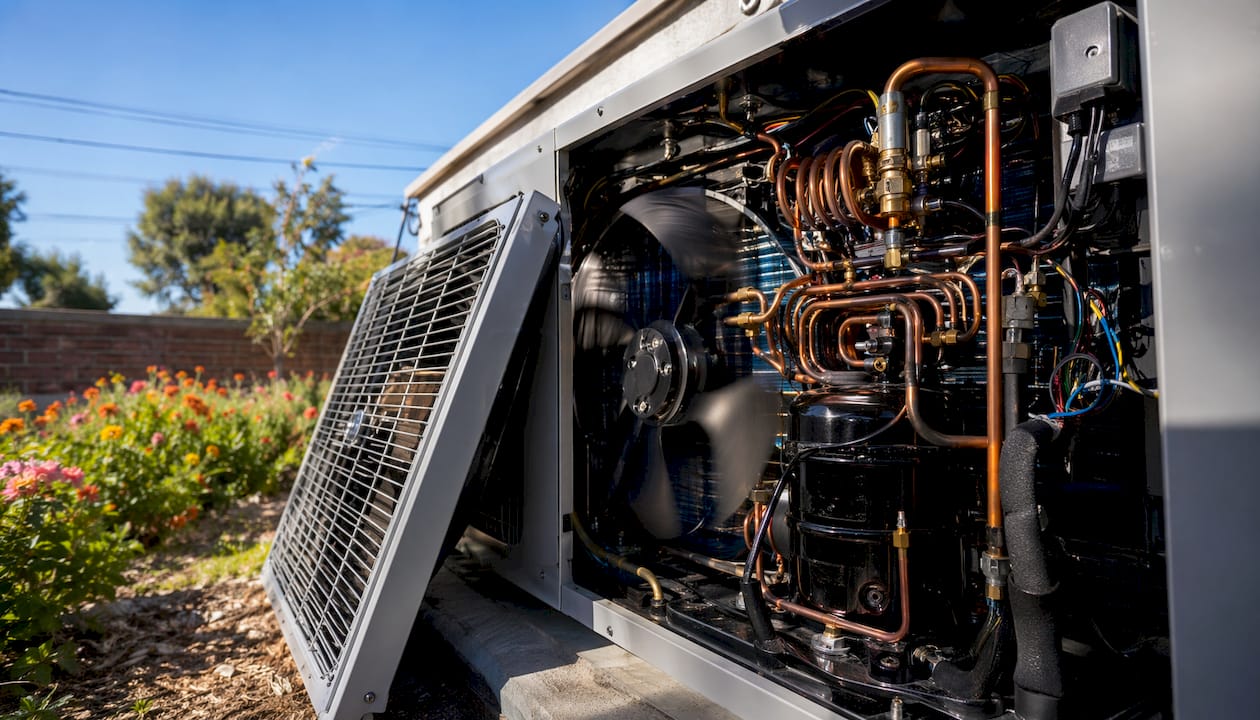
The refrigerant enters the condenser as a hot, high-pressure gas. As it moves through the condenser coils, the fan pulls outside air across the coils and carries the heat away. The refrigerant cools down and converts back into a liquid. That liquid then travels back inside to the evaporator coil, where the cycle starts again.
The compressor sits inside the condenser cabinet and is the heart of the whole process. Without it, refrigerant cannot move through the system. The condenser coils, the fan motor, and the compressor all work together as one unit. If any one of them fails, your home stops cooling.
How does an AC condenser work step by step?
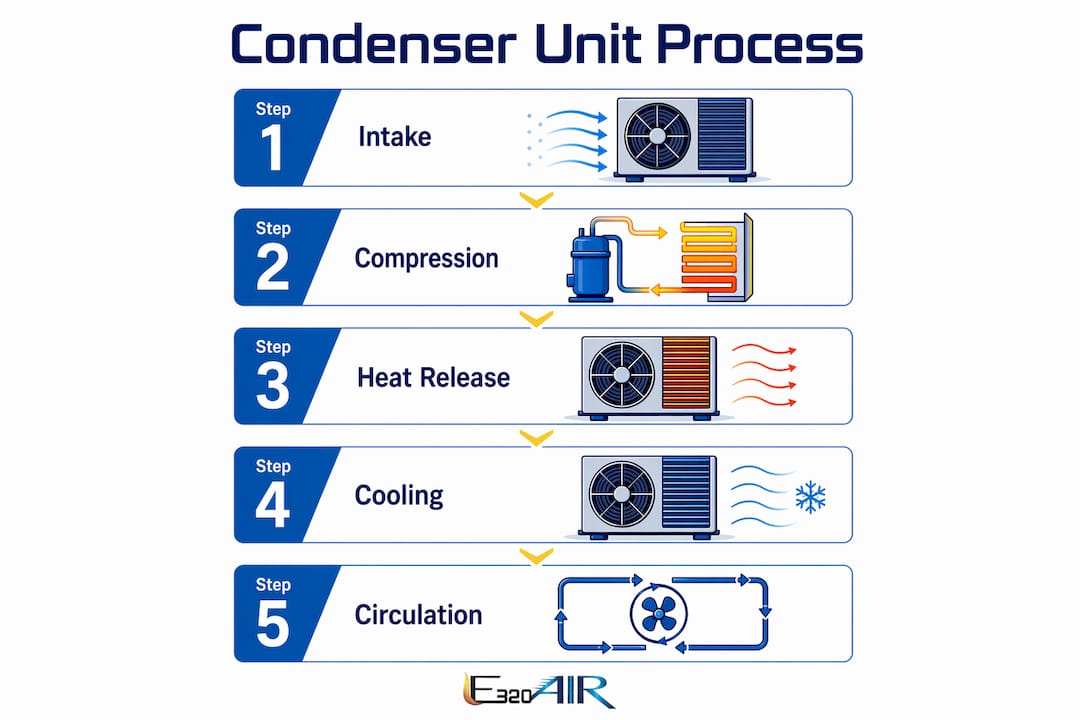
The refrigeration cycle is a continuous loop. Here is how each step plays out in the condenser:
- Step 1: Refrigerant arrives as hot gas. The indoor evaporator coil absorbs heat from your home's air and sends warm, gaseous refrigerant to the outdoor unit through copper lines.
- Step 2: The compressor pressurizes the gas. Higher pressure raises the refrigerant's temperature even further, making it easier to shed heat to the outdoor air.
- Step 3: The condenser coils release heat. The hot refrigerant flows through the coils. The condenser fan pulls outdoor air across those coils, carrying heat away from the refrigerant.
- Step 4: Refrigerant converts to liquid. As it loses heat, the refrigerant condenses from gas back into a cool liquid. This is where the unit gets its name.
- Step 5: Liquid refrigerant returns indoors. The cooled liquid travels back to the evaporator coil, expands, absorbs more heat from your indoor air, and the cycle repeats.
Think of the condenser as the exhaust side of your AC system. Your indoor unit is the intake, pulling heat in. The condenser is the exhaust, pushing heat out. Both sides depend on each other completely. Understanding the difference between AC and HVAC components helps clarify why the condenser's location and condition matter so much.
What are the different types of AC condenser units?
Different types of AC condenser units commonly used in homes include split system condensers, packaged units, and heat pump condensers. Each one suits a different home setup and climate.
| Type | How it works | Best for |
|---|---|---|
| Split system condenser | Outdoor unit pairs with a separate indoor air handler or furnace | Most American homes with existing ductwork |
| Packaged unit | Condenser, evaporator, and air handler are all in one outdoor cabinet | Homes without indoor mechanical space or basements |
| Heat pump condenser | Runs the refrigeration cycle in reverse to heat or cool | Mild climates where both heating and cooling are needed |
Split system condensers are the most common type in American residential homes. They offer the widest range of sizes and energy efficiency ratings. Packaged units are popular in warmer climates like the Southwest, where the entire system sits on a rooftop or concrete pad outside. Heat pump condensers are worth considering if you want one unit to handle both heating and cooling, since they move heat rather than generate it.
Energy efficiency ratings matter when choosing a unit. The SEER2 rating (Seasonal Energy Efficiency Ratio) measures how efficiently a condenser converts electricity into cooling. Higher SEER2 numbers mean lower electricity bills. A high efficiency AC unit with a strong SEER2 rating can make a noticeable difference on your monthly utility costs.
What maintenance does an AC condenser unit need?
The condenser sits outside year-round, exposed to sun, rain, leaves, grass clippings, and cottonwood. That exposure makes regular care non-negotiable. Dirty condenser coils coated with debris reduce heat release efficiency and force your system to work harder to cool your home.
Here are the key maintenance tasks every homeowner should know:
- Clear debris around the unit. Keep at least two feet of clearance on all sides. Trim back shrubs, pull weeds, and remove any leaves or grass that have collected against the cabinet.
- Rinse the coils with a garden hose. A gentle spray from the inside out removes surface dirt without damaging the fins. Rinsing coils with a garden hose on a gentle setting is effective and safe.
- Never use a pressure washer. The aluminum fins on condenser coils are thin and easily crushed by high-pressure water. Bent fins block airflow permanently and reduce efficiency.
- Check the fins visually. Look for bent or flattened sections. A fin comb, available at hardware stores, can straighten minor damage.
- Schedule a professional tune-up once a year. Spring is the best time, before the cooling season starts.
Pro Tip: Before you rinse the coils, turn off power to the unit at the disconnect box. This takes 10 seconds and prevents electrical hazards while you work around the cabinet.
Professional HVAC technicians use low-pressure sprayers and mild detergents to clean condenser coils safely, and they straighten bent fins with specialized tools. A professional cleaning during a spring tune-up also includes inspecting and testing the coil to maintain a system lifespan of 10–15 years or longer. For a deeper look at professional coil cleaning, the process involves more than a rinse and is worth the cost.
Restricted airflow and dirty coils are among the top causes of reduced AC efficiency and premature compressor failure, according to the U.S. Department of Energy. Keeping the coils clean is the single highest-return maintenance task a homeowner can do.
What are the signs of a faulty AC condenser?
Condenser problems rarely appear without warning. Catching them early prevents a small repair from turning into a full replacement.
- Reduced cooling performance. Your home takes much longer to reach the set temperature, or it never quite gets there. This is often the first sign that the condenser is struggling.
- Unusual noises. Banging, rattling, or grinding from the outdoor unit points to fan motor issues or debris caught in the fan blades. A failing compressor produces a loud clanking or screeching sound.
- Frequent cycling. The unit turns on and off more often than normal. Short cycling puts extra stress on the compressor and drives up electricity costs.
- Warm air from vents. If the air coming from your registers is not cold, the condenser may have a refrigerant leak or a failed compressor.
- Ice on the unit or refrigerant lines. Ice buildup signals restricted airflow or low refrigerant, both of which trace back to condenser problems.
Common condenser problems include fan motor malfunction, refrigerant leaks, and compressor failure. All three lead to poor cooling and unusual sounds. Refrigerant leaks require a licensed technician by law, since handling refrigerants without EPA certification is illegal.
Pro Tip: If you notice ice on the refrigerant lines, turn the system to "fan only" mode for a few hours to let it thaw. Then call a technician. Running the compressor while frozen can cause permanent damage.
Basic cleaning is the only condenser task homeowners should handle themselves. Anything involving refrigerant, electrical components, or the compressor requires a licensed HVAC professional. Attempting those repairs without training risks injury and voids most equipment warranties. If you spot any of the signs above, a repair guide for homeowners can help you decide what to describe when you call for service.
Key Takeaways
The AC condenser unit is the outdoor component that releases indoor heat to the outside, and keeping its coils clean and airflow clear is the most effective way to protect your system.
| Point | Details |
|---|---|
| Core function | The condenser releases heat from inside your home to the outdoor air through refrigerant and coils. |
| Three main types | Split system, packaged, and heat pump condensers each suit different homes and climates. |
| Top maintenance task | Clean coils annually with a gentle hose rinse; never use a pressure washer on aluminum fins. |
| Warning signs | Reduced cooling, unusual noises, and frequent cycling all signal condenser trouble. |
| When to call a pro | Refrigerant leaks, compressor issues, and electrical faults require a licensed HVAC technician. |
What I've learned from years of condenser calls
Most homeowners assume the outdoor unit is basically indestructible because it sits outside in all weather. That assumption leads to the most expensive repairs I see. A unit that gets an annual rinse and a cleared perimeter will routinely last 15 years or more. A unit that gets ignored often fails in 8 to 10.
The pressure washer mistake comes up constantly. Homeowners see a dirty unit, grab the pressure washer, and feel good about doing something. What they have actually done is crush hundreds of aluminum fins and cut airflow by a meaningful amount. The unit then runs longer, works harder, and the compressor wears out faster. A garden hose on a gentle setting takes the same 20 minutes and does no damage.
The other misconception I see regularly is treating the condenser as a standalone problem when something goes wrong. The condenser and the evaporator are one system. If the condenser is struggling, the evaporator is usually affected too. Diagnosing only one side often means the problem comes back within a season. A full system inspection catches both sides at once and saves a second service call.
My honest recommendation: schedule a professional tune-up every spring before you turn the system on for the first time. The cost is low. The payoff in avoided repairs and lower energy bills is real. Proactive care is always cheaper than reactive repair.
— Edward
E320air can handle your condenser unit service
Knowing what your condenser does is the first step. Getting it properly maintained is the next one.

E320air provides professional AC condenser maintenance, cleaning, and full HVAC installation for homeowners across the region. Whether you need a spring tune-up, a coil cleaning, or a full condenser replacement, the E320air team handles it correctly the first time. Visit E320air to schedule an inspection or request a quote. Keeping your condenser in good shape is one of the best investments you can make in your home's comfort and your monthly energy bill.
FAQ
What is an AC condenser unit in simple terms?
The AC condenser unit is the outdoor box that removes heat from your home by pushing it into the outside air through refrigerant coils and a fan.
How often should I clean my AC condenser unit?
Cleaning the condenser coil annually takes about 30 minutes and is the key maintenance task to keep the system running efficiently. Spring, before the cooling season, is the best time.
What is the difference between an AC condenser and an evaporator?
The condenser is the outdoor unit that releases heat outside, while the evaporator is the indoor coil that absorbs heat from your home's air. Both are required for the system to cool your home.
How much does AC condenser coil cleaning cost?
Professional coil cleaning typically costs $80–$200 and restores the coil's heat transfer capability, which directly improves cooling performance and efficiency.
When should I call a professional for condenser problems?
Call a licensed HVAC technician any time you notice warm air from vents, ice on the unit, unusual noises, or frequent cycling. Refrigerant leaks and compressor issues always require professional service.