
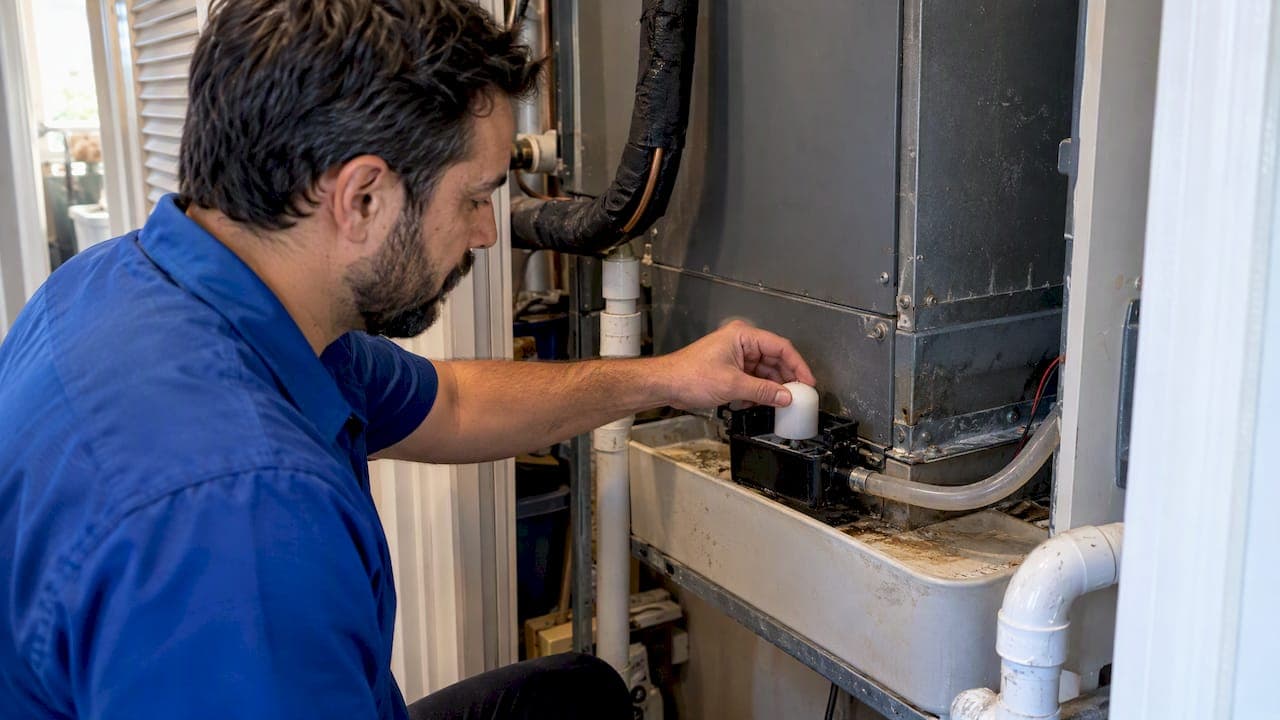
An AC float switch is a safety device that stops your air conditioner when condensate backs up so the unit does not flood your home. It works by breaking the 24 volt control circuit the moment water rises too high in the drain pan. If you spot a tripped switch, clear any obvious clog near the drain line first. Call a technician if water keeps rising or the system will not reset.
TL;DR:
- Proper placement of the float switch is crucial; it should trip before the drain pan overflows and be easily accessible for cleaning.
- Wiring configuration determines whether the entire system or only the compressor stops when the switch trips, affecting system behavior during an overflow.
- Regular maintenance involves cleaning the float and drain line every three months to prevent debris buildup and recurring clogs.
- If lifting the float does not stop the system or water continues rising, a wiring fault or upstream clog likely requires a professional inspection.
- The switch's primary purpose is to prevent flooding by shutting off the air conditioner, and false alarms often result from incorrect installation or wiring errors.
Table of Contents
- How an AC Float Switch Works
- Where Float Switches Get Installed and Why Placement Matters
- Signs Your Float Switch Has Tripped or Failed
- Simple Checks and Maintenance You Can Do Yourself
- When a Tripped Switch Means You Need a Technician
- Why a Tripped Float Switch Is Usually Good News
- How We Can Help With Float Switch Repairs and Replacements
- FAQ
- Sources
How an AC Float Switch Works
A float switch is a level sensing device. A small buoyant float sits in the condensate pan or drain line, and it rises as water accumulates. Once the float reaches a set height, it triggers a switch that interrupts the low voltage control circuit powering your thermostat or compressor, which stops the air conditioner before water spills over the pan. Float switches are common in HVAC systems, sump pumps, and water tanks anywhere a liquid level needs monitoring.
You will find a few common designs on residential systems:
- Clip-on pan float: mounts directly to the edge of the primary drain pan and catches overflow right where it starts.
- Inline tee float: installs into the drain line itself, often near the evaporator coil.
- Auxiliary port float: threads into a secondary drain port built into the coil cabinet.
Wiring matters here. Some installers connect the float switch into the red power wire, which shuts the entire system down. Others wire it into the yellow compressor circuit, which stops cooling but leaves the fan running. Connecting a float switch into the thermostat's low voltage circuit will shut the whole system down when wired into the red wire, while wiring into the yellow circuit stops only the compressor, a distinction that explains why two homes with tripped switches can behave differently.
Many float switches reset automatically once the water level drops, but some models include a manual reset button that has to be pressed before the system restarts. When a switch does not reset on its own, that is often a wiring detail worth having a technician check.
Where Float Switches Get Installed and Why Placement Matters
Where the switch sits determines whether it actually catches a problem before water spreads. Typical mounting points include:
- Auxiliary drain port on the evaporator coil, catching overflow directly at the source.
- Secondary safety pan beneath the air handler, a backup layer if the primary line clogs.
- Clip-on mounts on the main condensate pan, positioned to trip before the pan fills completely.
- Inline tee fittings in the drain line, intercepting water as it travels toward the exterior drain.
Technicians generally agree the switch should be set to trip before the pan overflows, mounted level, and kept accessible for cleaning, though exact placement varies by installer and by system layout. Getting this wrong causes real problems. A switch installed too high lets water rise further than it should before tripping. A switch placed below a clog in the drain line never sees the water at all, since the float can only react to liquid that reaches it. Debris buildup on the float itself can also keep it from rising freely, defeating the purpose entirely.
Signs Your Float Switch Has Tripped or Failed
A tripped float switch usually announces itself clearly. Your air conditioner stops cooling, and depending on the wiring, the fan may keep running or shut off completely. You might notice standing water in the drain pan, water stains near the air handler, or ceiling drips if the unit sits in an attic above living space. Some newer thermostats display an error code tied to the condensate circuit.
A few quick checks help confirm what you are dealing with:
- Look at the drain pan and the line leading away from it for visible water or blockages.
- Lift the float by hand to see whether the system shuts off as expected.
- Check your thermostat display or control board for a fault indicator.
There is a confusing exception worth knowing about. If the float rises but the unit keeps running, the switch is likely wired into the yellow compressor circuit rather than the red power circuit, or there is a wiring fault altogether. Common culprits include incorrect circuit integration and upstream clogs that keep water from ever reaching the switch.
Pro Tip: If lifting the float does not stop the system, do not assume the switch is broken. Check the wiring before replacing anything.
Simple Checks and Maintenance You Can Do Yourself
Before touching anything near the air handler, shut the system off at the thermostat or at the breaker. This protects you from the low voltage wiring and gives you a clear view of the pan and switch.
- Inspect the drain pan and the condensate line for standing water or visible debris.
- Clear what you can reach with a shop vacuum or soft brush.
- Lift the float by hand and confirm the unit powers down.
- Press the manual reset button if your model has one.
- Run a controlled test by temporarily blocking the downstream drain and letting the system run briefly to confirm the float trips before the pan would overflow.
A few habits keep the switch working:
- Clean the float and surrounding area during seasonal maintenance, roughly every three months.
- Keep the drain line clear year round rather than waiting for a clog to force the issue.
If the drain line itself is the recurring problem, our guide on clearing condensate drain clogs walks through a quick vacuum method that handles most blockages in under two minutes.
When a Tripped Switch Means You Need a Technician
Lifting the float should stop the unit. If it does not, you are likely looking at a wiring problem rather than a simple clog, and that calls for a licensed technician rather than guesswork. The same goes for water that keeps rising after you clear visible debris, a float switch tucked into an attic or ceiling unit where you cannot safely reach it, or any sign of water staining that suggests damage has already started.
Never work on a live 24 volt circuit without shutting power off first, and consider an inline fuse on that circuit for added protection. A technician will verify whether the switch is wired into the red or yellow circuit, test the system properly, and correct any miswiring. A typical service visit covers inspection, drain cleaning, float adjustment or replacement, and condensate pump installation where standing water is a recurring issue.

Why a Tripped Float Switch Is Usually Good News
A tripped float switch almost always means the device did exactly what it was built to do: it stopped water before it spread across your floor or ceiling. That is not a sign of a failing air conditioner, it is a sign the safety device worked. The switch only earns its keep, though, when it is placed and maintained correctly, so take a few minutes to check nearby surfaces for water damage once the system is back up.
— Edward
How We Can Help With Float Switch Repairs and Replacements
We handle various condensate issues that cause a float switch to trip, from drain cleaning to wiring corrections and switch replacements. Our technicians check systems regularly and work on many major brands with flexible payment options available.

A typical visit includes:
- A full inspection of the drain pan, line, and float switch wiring.
- Drain cleaning and float switch replacement or adjustment where needed.
- Condensate pump installation for systems with recurring drainage trouble.
- A written estimate before any repair work begins.
If your air conditioner shut off unexpectedly or you want the float switch checked before it becomes a bigger problem, schedule a visit through our residential HVAC services and we will get it sorted out.
FAQ
How do you know if an AC float switch is bad?
If lifting the float by hand does not stop the unit, the switch itself may have failed, though a wiring issue can cause the same symptom. A technician can test the switch directly and rule out wiring errors before replacing anything.
What are signs of a faulty float switch?
Common signs include the air conditioner shutting off with no clear cause, water visible in the drain pan, or the system running but not cooling if the switch is wired into the compressor circuit only. Water stains near the air handler or ceiling drips are also warning signs worth checking right away.
How do I reset an AC float switch?
Clear any visible clog or debris around the float first, since many switches reset automatically once the water level drops. If your model has a manual reset button, press it after confirming the pan and drain line are clear.
What is an AC switch?
In this context, an AC float switch is a small level sensing device that shuts off your air conditioner when condensate water rises too high, protecting your home from overflow. It works by breaking the low voltage control circuit that powers the thermostat or compressor.