
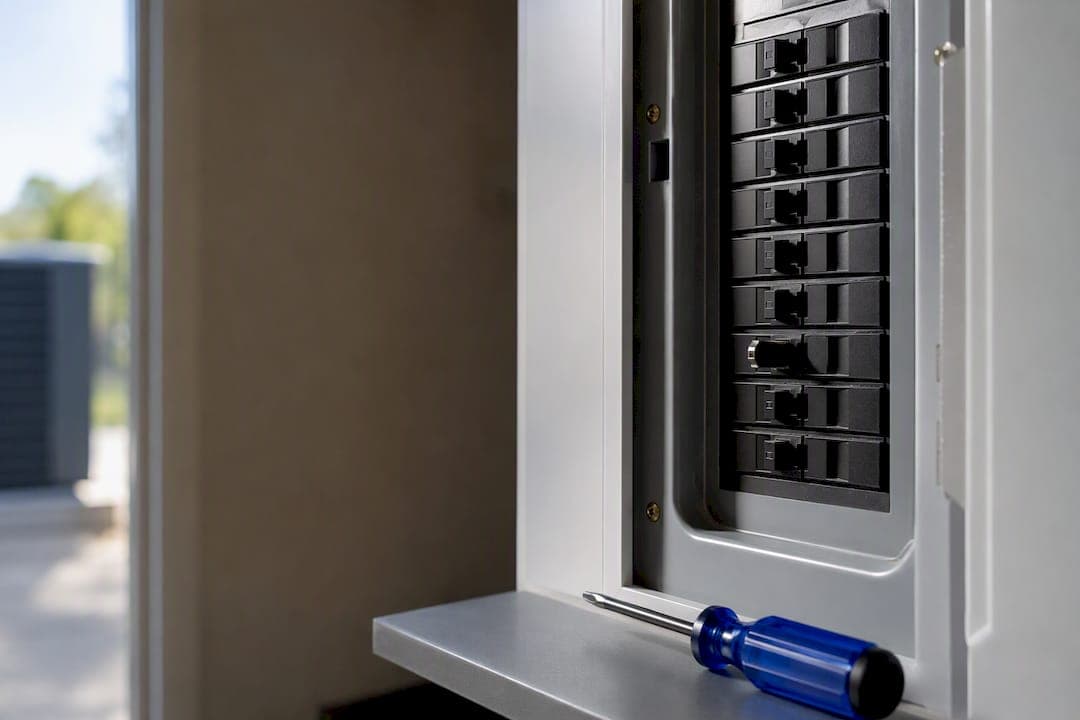
Most breaker trips on an air conditioner come from one of a handful of causes: a clogged filter choking airflow, a failing capacitor, a struggling compressor, loose wiring, or a breaker that has simply worn out. If the panel feels hot, smells burnt, or won't reset, shut off power and call an electrician. If none of that applies, start with the filter and note when the trip happens.
TL;DR:
- A dirty filter, blocked vents, or iced coils increase compressor load and trip the breaker by reducing airflow.
- Faulty start capacitors, stuck contactors, or compressor internal shorts cause immediate current spikes at startup.
- The timing of the trip provides clues: instant trips suggest short circuits, while trips after minutes indicate cooling system issues.
- Resetting a breaker repeatedly without diagnosing underlying causes can worsen the problem and pose safety risks.
- An experienced technician tests electrical components, refrigerant pressure, and system pressures to identify and repair the real fault.
Table of Contents
- Mechanical and electrical reasons an AC trips a breaker
- How to troubleshoot a tripping AC breaker safely
- What the timing of the trip tells you
- Reset it safely, or stop and call for help
- What a professional checks and what repairs typically cost
- What I check first on every service call
- Getting a licensed diagnosis from E320 Air
- Sources
- FAQ
Mechanical and electrical reasons an AC trips a breaker
Air conditioners pull the most current at startup, so any fault that makes the compressor or fan motor work harder shows up as a breaker trip. The causes split roughly into two groups: airflow problems and electrical failures.
Airflow restriction is the most common starting point. A dirty filter or blocked return vent starves the system of air, and the evaporator coil can ice over as a result, which forces the compressor to run harder and draw more current. A dirty outdoor condenser coil creates the same effect from the other end, trapping heat the system can't shed.
Electrical component failures are the second group. A failing start or run capacitor can't deliver the jolt of energy a compressor needs at startup, so the motor draws excess current trying to start. A worn contactor can stick or arc. The compressor itself can develop a locked rotor or an internal short that spikes amperage the instant power reaches it.
- Airflow restriction: dirty filters, blocked returns, or an iced evaporator coil reduce airflow and raise amp draw.
- Outdoor unit problems: a dirty condenser coil, a failing fan motor, or debris around the unit trap heat and stress the compressor.
- Start and run components: a weak capacitor or a sticking contactor forces higher startup amps.
- Compressor faults: a locked rotor or internal short draws a current spike large enough to trip the breaker instantly.
- Wiring and breaker issues: loose connections, a short circuit, or a breaker that has simply aged out can trip well before the AC draws its rated load.
- Refrigerant problems: low charge or a restriction makes the compressor run longer and hotter, to hit the target temperature, straining the same components. The Building America measure guide documents how incorrect refrigerant charge and fouled coils change system pressures enough to raise amp draw and trigger trips.
How to troubleshoot a tripping AC breaker safely
Before touching anything, know what you're allowed to touch. You can change a filter and clear debris around the outdoor unit. You should not open an electrical panel, touch a capacitor, or attempt any wiring repair. The Electrical Safety Foundation International warns that contact with energized cooling equipment is a common cause of severe electrical injury among HVAC workers, and a homeowner without training faces the same risk.
Work through this sequence in order:
- Turn the thermostat off so the system doesn't try to restart while you're working.
- Replace the air filter if it's dirty or hasn't been changed in the last one to three months.
- Clear the outdoor unit of leaves, grass clippings, or anything blocking airflow, and gently rinse visible dirt off the condenser coil with a garden hose.
- Check the refrigerant line for frost or ice, and listen for hissing or look for oil residue near fittings, both signs of a possible leak.
- Reset the breaker safely: flip it fully off, wait one to five minutes to let any capacitors discharge, then flip it back on and watch what happens.
- Note the timing: does it trip the instant you reset it, a few seconds after the compressor kicks on, or only after the system has run for several minutes?
Pro Tip: Take a photo of the breaker panel and a phone note with the exact time the AC started and the time it tripped. That timestamp tells a technician more than a description ever will.
If the breaker trips the moment you reset it, stop resetting it. Repeated resets on a faulty circuit don't fix anything and can make a bad situation worse. This is also the point to call in help rather than keep guessing, since anything past a filter change or a visual check around the outdoor unit means opening equipment you shouldn't be handling yourself.
What the timing of the trip tells you
The moment a breaker trips is a clue in itself, and it narrows the list of suspects fast.
- Trips the instant you reset it: suspect a short circuit or a breaker that's simply failing. Don't keep resetting it.
- Trips right at startup, when the compressor kicks on: points to a failing start capacitor or a compressor with a locked rotor.
- Trips after several minutes of running: usually dirty coils, low refrigerant, or a compressor overheating under sustained load.
- Trips only on hot afternoons or intermittently: often a weak breaker, a loose connection, or an outdoor unit overheating in direct sun with restricted airflow.
Reset it safely, or stop and call for help
Treat a breaker trip as a warning, not an inconvenience to work around. The U.S. Consumer Product Safety Commission has long advised that a circuit breaker is a protective device, and repeated tripping means you should investigate the cause instead of resetting it again and again.
Statistic Callout: ESFI identifies contact with energized cooling equipment as a leading cause of severe electrical injury among HVAC workers, a risk that applies just as much to an untrained homeowner poking around a panel.
The correct reset sequence is simple: thermostat off, breaker to OFF, wait one to five minutes, then breaker back to ON. Watch closely for an immediate trip.

Stop immediately and call an electrician or emergency services if you notice a burning smell, a hot breaker or panel, visible arcing or sparks, smoke, exposed wiring, or a breaker that won't reset at all. An electrician handles the panel and wiring; an HVAC technician handles the unit itself. When you're not sure which one you need, our emergency shutoff guide walks through the safest way to cut power while you sort that out.
What a professional checks and what repairs typically cost
A technician's visit starts with measurements, not guesswork. Expect an amp-draw test on the compressor and fan motor, a capacitor test, a check of the contactor for pitting or sticking, a locked-rotor test on the compressor, a refrigerant pressure check, and an inspection of panel connections for loose or corroded wiring.
- Filter or coil cleaning is the least expensive fix and often the first thing checked.
- Capacitor replacement is a low to moderate cost repair and one of the most common fixes for startup trips.
- Contactor or fan motor repair runs a bit higher, given the labor involved.
- Breaker replacement or other electrical work falls in a similar mid range but requires a licensed electrician.
- Compressor replacement is the most expensive outcome and sometimes signals that replacing the whole system makes more financial sense.
A good diagnosis includes actual voltage and amp readings, a note on when the trip occurred, and a plain explanation of the options, not just a part number and a price. Bring your notes, photos, and any recent maintenance records to the call. Our HVAC repair services guide covers what a full repair visit typically involves.
What I check first on every service call

Three things almost always move the needle fast: a fresh filter, a clear condenser, and watching exactly when the trip happens. I've seen homeowners spend weeks resetting a breaker that was warning them about a $40 capacitor the entire time.
The biggest mistakes I see are repeated resets, DIY attempts inside the electrical panel, and ignoring the pattern of when the trips happen. That timing detail is the fastest way to a real answer, and it costs nothing to write down.
— Edward
Getting a licensed diagnosis from E320 Air
If you've replaced the filter, cleared the condenser, and the breaker still trips, the next step is a licensed diagnostic rather than another guess. Technicians test amp draw, capacitors, contactors, and refrigerant pressure to find the actual fault instead of swapping parts at random.

- Bring a symptom log noting when the trip happens: immediately, at startup, or after several minutes.
- Have photos of the breaker panel and outdoor unit ready.
- Mention any recent maintenance or repairs so the technician isn't starting from zero.
Visit the E320 Air services page to schedule a diagnostic visit, or check out the problem solving gallery for examples of past breaker-trip repairs.
Sources
- Cpsc
- Air conditioner and fan safety | Electrical Safety Foundation International
- Air conditioner diagnostics, maintenance, and replacement (Building America measure guide)
FAQ
How do I fix an AC that keeps tripping the breaker?
Start with a fresh air filter and clear debris from around the outdoor unit, then do a safe reset and watch the timing of any new trip. If it trips immediately on reset or you notice ice on the lines, burning smells, or a hot panel, stop and call a licensed technician instead of continuing to reset it.
Is it safe to reset a tripped AC breaker?
A single, careful reset is generally safe: thermostat off, breaker off for one to five minutes, then back on while you watch closely. The CPSC warns against resetting repeatedly, since a breaker that keeps tripping is signaling a fault that needs investigation, not another reset.
How do I tell if my AC breaker is bad?
A breaker that trips the instant you reset it, feels hot to the touch, or won't stay on even with the AC disconnected is likely failing rather than the AC unit itself. A licensed electrician can test the breaker directly to confirm whether it needs replacement.
Will low refrigerant cause a breaker to trip?
Low refrigerant can indirectly cause a trip because it forces the compressor to run longer and work harder to reach the set temperature, raising amp draw over time. The Building America measure guide notes that incorrect charge changes system pressures enough to produce these overload symptoms.
What are common causes of an AC circuit breaker tripping?
The most frequent causes are a dirty filter or coil restricting airflow, a failing start capacitor, a struggling compressor, and loose or aging wiring at the panel. Weather-related overheating and an undersized or worn breaker can also contribute, especially on older systems.