
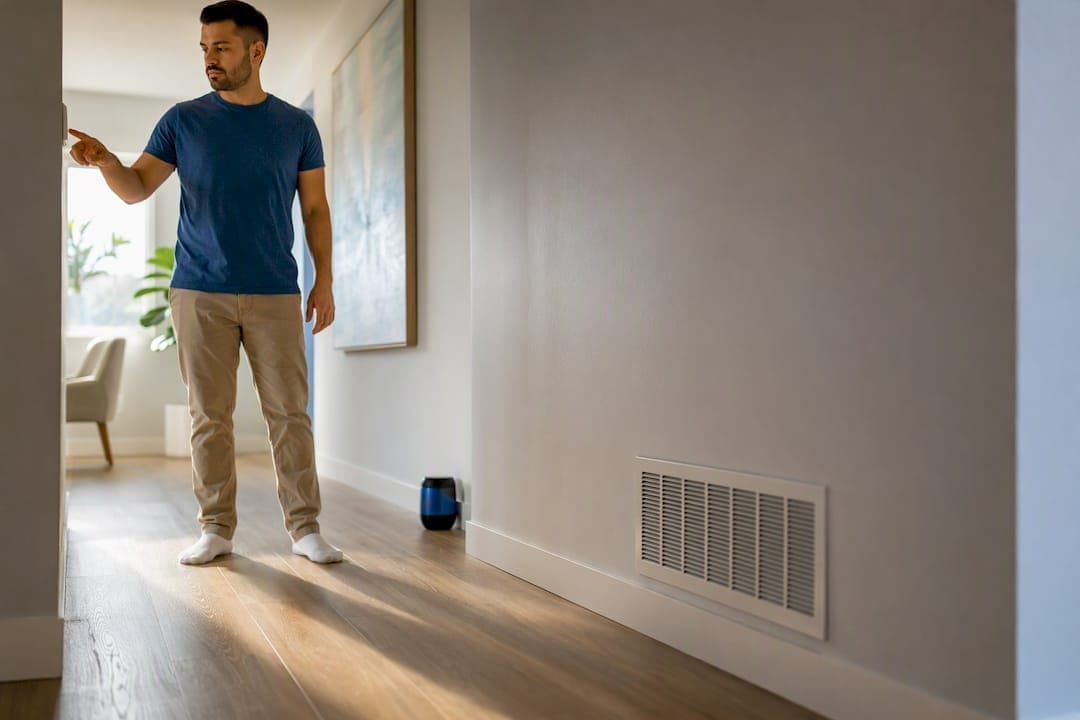
A burning smell from your air conditioner often signals overheating parts or an electrical fault, and both can turn dangerous fast. If the odor is strong, doesn't fade within a few minutes, or comes with smoke or unusual heat, shut the system off at the thermostat and the breaker right away. Common causes range from harmless dust burn-off to motor strain, wiring faults, or a refrigerant leak.
TL;DR:
- A persistent burning smell from your AC, especially if accompanied by smoke or sparks, requires immediate power shutoff and emergency assistance.
- Electrical faults, such as failing capacitors or overheated wiring, produce the sharpest odors and pose the highest fire risks, often showing early warning signs.
- Dust burn-off typically causes a mild odor that disappears within 30 minutes, while prolonged or recurring smells indicate mechanical or electrical issues.
- Basic safe checks include inspecting the filter and outdoor debris, but never open electrical panels or handle refrigerant, which need professional intervention.
- A licensed technician should be called if the smell lasts over 30 minutes, the breaker trips repeatedly, or there are signs of electrical arcing or refrigerant leaks.
Table of Contents
- What to do first: shutting down and calling for help
- Common causes behind a burning AC smell
- Why electrical components are the real danger
- Safe checks you can do without any tools
- When it's time to call a licensed technician
- What E320 Air's diagnostic checklist covers
- Why waiting on that smell rarely pays off
- Getting your AC checked without the runaround
- Sources
- FAQ
What to do first: shutting down and calling for help
Start at the thermostat: switch the system to "off," not just fan mode. If the smell continues, gets stronger, or you hear buzzing or popping, cut power at the breaker panel too. If you smell something more like rotten eggs or see sparks, treat it as a gas or fire risk and evacuate before calling for help.
- Turn the thermostat off first, then check whether the smell persists.
- Flip the AC's dedicated breaker if the odor continues or intensifies.
- Open windows near the unit to ventilate without lingering in the space.
- Call 911 or your fire department for visible smoke, sparks, or a smell that won't clear.
- Contact a licensed HVAC technician once the immediate danger has passed.
Pro Tip: Note the exact time the smell started and whether it changes when the system cycles. That detail helps a technician diagnose the problem faster.
Common causes behind a burning AC smell
Most burning smells trace back to one of five things, and the smell itself often hints at which one you're dealing with.
- Dust burn-off: a light, dusty odor when you first run the AC after months of idle time, usually gone within 15 to 30 minutes.
- Restricted airflow: a dirty filter or blocked return forces the blower motor to work harder, which can produce a warm, slightly burnt smell.
- Outdoor unit debris: leaves, grass clippings, or nesting material against the condenser can cause friction or hot bearings.
- Electrical faults: a sharper, plastic-like smell often points to wiring, a failing capacitor, or arcing components.
- Refrigerant leaks: a sweet or chemical smell rather than a true burning smell, which WebMD notes can carry health risks and needs professional handling.
Here's how to narrow it down without opening anything up:
- Check whether the smell is strongest near the indoor vents or the outdoor unit.
- Replace the filter if it's visibly gray or clogged; that alone often resolves the issue.
- Look for debris around the outdoor condenser with the power off.
- Ask yourself if the smell is fading over time or holding steady, since a transient smell is far less urgent than a persistent one.
Dust burn-off is normal and temporary. Anything that lingers past 30 minutes, or that returns every time the system runs, points to a mechanical or electrical cause instead.
Why electrical components are the real danger
Electrical failures produce the sharpest, most concerning burning smells, and they're also the ones most likely to escalate. A failing capacitor can leak or rupture. Overheated wiring insulation gives off a distinct singed-plastic odor. A blower motor bearing that's seizing up will smell hot and sometimes throw sparks visible through vent covers.
- A capacitor that's swelling, leaking, or burnt-looking needs replacement, not repair.
- Warm or discolored outlets and breaker panels suggest arcing somewhere in the circuit.
- A breaker that trips repeatedly when the AC starts often means a short or an overworked motor.
- Melted or brittle wire insulation near the unit is a sign of sustained overheating.
The U.S. Fire Administration has found that electrical fires frequently show early warning signs like unusual smells or localized warmth before any flame appears, and these fires can smolder behind walls undetected. That's part of why manufacturer guidance from Bryant and Carrier both recommend shutting the system down and calling a technician rather than waiting it out.
Recalls back this up. The CPSC documented a case where electrical arcing inside an air-cleaner's collection cell could overheat nearby materials, which is exactly the kind of hidden fault a homeowner has no safe way to inspect. Never open an electrical compartment or touch a capacitor. Capacitors hold a charge even after the unit is powered down, and control boards carry line voltage that isn't obvious just by looking.
Safe checks you can do without any tools
Before calling anyone, a few low-risk steps can help confirm what you're dealing with and give a technician a head start.
- Confirm where the smell is coming from: near a vent, the indoor unit, or the outdoor condenser.
- Pull the filter and check if it's dirty enough to restrict airflow; replace it if so.
- With the unit powered off, look at the outdoor condenser for leaves, debris, or a fan that won't spin freely.
- Check the condensate drain pan for standing water or buildup that could be affecting airflow.
- Note whether the smell fades, stays constant, or gets worse over the next hour.
What you should not do: open the electrical access panel, touch the capacitor, poke at wiring, or attempt any refrigerant work. These require a license in most places and carry real injury risk.
Pro Tip: Take a few photos of the filter, the outdoor unit, and any visible debris. A technician can often shorten the visit when they already know what you found.

If you want a broader rundown of DIY-safe steps beyond the burning smell itself, this air conditioner troubleshooting guide covers more ground.
When it's time to call a licensed technician
Some signs mean call now, not later.
- Smoke, sparks, or visible flame anywhere near the unit or electrical panel.
- A burning smell that persists longer than 30 minutes or returns every cycle.
- A breaker that keeps tripping when the AC starts.
- Outlets, switches, or the electrical panel that feel warm to the touch.
- A sweet or chemical smell suggesting a possible refrigerant leak.
A technician arriving for a burning-smell call typically starts by isolating power, then inspects the blower motor, capacitor, and wiring connections before testing control voltage. Common fixes include capacitor replacement, motor repair or replacement, and wiring correction, along with cleaning debris that's causing friction or heat buildup. Costs and timelines vary widely by region and the specific part involved, so treat any number you hear before diagnosis as a rough estimate, not a quote.
What E320 Air's diagnostic checklist covers
A thorough burning-smell inspection isn't guesswork. E320 Air technicians follow a defined sequence: isolate power at the breaker, inspect the blower motor and capacitor for visible damage, test control voltage, check wiring and terminal connections for looseness or discoloration, and examine any air-cleaner cells for arcing.
- Ask for before-and-after photos of any replaced part.
- Request the receipt or part number for anything swapped out.
- Ask what caused the failure, not just what was fixed.
- Confirm whether the fix addresses the smell's root cause or just the symptom.
Knowing this checklist helps you evaluate whether a repair was thorough, whether you're working with E320 Air or another contractor. For examples of completed diagnostic and repair work, the problem-solving gallery shows real before-and-after cases.
Why waiting on that smell rarely pays off
Homeowners often wait out a burning smell hoping it resolves on its own, and sometimes it does, if it's dust burn-off. But I've seen the same delay turn a $200 capacitor swap into a full motor replacement because nobody caught the early warning. Keep a simple log of when the smell started and how it changed. Routine maintenance catches most of these problems before they ever produce a smell at all.
— Edward
Getting your AC checked without the runaround
A burning smell shouldn't mean guessing whether it's safe to keep running your system. Technicians diagnose the cause on the same visit, whether it's a capacitor, a motor, or a wiring fault, and service is available around the clock, including weekends and holidays.

- Emergency Repairs for burning smells, tripped breakers, or smoke you need addressed immediately.
- Residential HVAC service covering diagnostics, repair, and system checks.
- HVAC Installation when a technician recommends replacing an aging motor or unit outright.
- Routine Maintenance to catch filter, airflow, and component issues before they produce a smell.
Before the technician arrives, have your filter's last-changed date and any photos you took ready. Book a visit through E320 Air and a technician will walk through the same isolate-and-inspect checklist described above, so you know exactly what's being checked and why.
Sources
FAQ
Should I turn off the AC if it smells burnt?
Yes, switch it off at the thermostat first, and cut power at the breaker if the smell continues or intensifies. This limits the risk while you figure out the cause or wait for a technician.
What can be mistaken for a burning smell?
A musty or moldy smell is sometimes confused with burning, but it usually points to drain or mold issues rather than heat. A sweet or chemical odor is often a refrigerant leak rather than true burning, and it needs different handling.
Is electrical burning smell toxic in a house?
Burning plastic or wire insulation can release irritating fumes, and prolonged exposure isn't something to sit through. Ventilate the area, leave if the smell is strong, and treat it as a signal to shut off power and call a technician.
Is a bad AC smell harmful?
It depends on the source: dust burn-off is generally harmless and temporary, while chemical or electrical smells can pose health or fire risks. When in doubt, ventilate the space, shut the system down, and have it inspected rather than assuming it's nothing.