

TL;DR:
- Indoor air quality encompasses the health and comfort of home occupants, influenced by pollutants, ventilation, humidity, and filtration. Combustion byproducts, VOCs, biological contaminants, and outdoor pollutants pose invisible risks, especially in wildfire-prone areas. Effective IAQ management requires integrated source control, improved ventilation, and proper filtration to create a healthier indoor environment.
Most homeowners think indoor air quality (IAQ) is about whether the house smells fresh. Open a window, light a candle, and problem solved. The reality is far more complex. The definition of indoor air quality centers on the health and comfort of everyone living inside your home — and it involves pollutant sources, ventilation rates, humidity levels, and filtration working together. For homeowners in Riverside and San Bernardino counties, where heat, dust, and wildfire smoke are part of life, understanding IAQ is not optional. It is how you protect your family.
Table of Contents
- What indoor air quality means and why it matters
- Key indoor air quality problems and their causes
- Main strategies to improve indoor air quality in your home
- Managing biological contaminants in your indoor air
- Practical HVAC tips for improving indoor air quality while cooking and daily use
- A homeowner's perspective on mastering indoor air quality through HVAC
- Enhance your home's air quality with expert HVAC solutions
- Frequently asked questions
Key Takeaways
| Point | Details |
|---|---|
| Definition of IAQ | Indoor air quality means the air inside your home affects your health and comfort. |
| Main IAQ problems | Pollution sources and poor ventilation are the primary indoor air quality problems. |
| Three improvement strategies | Source control, ventilation, and filtration together improve your home’s IAQ effectively. |
| Biological contaminants need a full approach | Controlling moisture, ventilating well, and using filters reduce risks from mold and allergens. |
| Effective HVAC actions | Using proper filters and running exhaust fans are key steps for better indoor air while cooking. |
What indoor air quality means and why it matters
Indoor air quality refers to the condition of the air inside buildings and how it affects the health and comfort of the people who occupy them. That definition sounds straightforward, but the implications run deep. Poor IAQ is not always obvious. You cannot always smell carbon monoxide. You cannot see mold spores floating through your living room. You cannot feel particulate matter settling into your lungs after wildfire season.
Common indoor pollutants that affect homes in Riverside and San Bernardino include:
- Combustion byproducts from gas stoves, fireplaces, and attached garages
- Volatile organic compounds (VOCs), which are chemical gases released from paint, cleaning products, and new furniture
- Particulate matter, including fine dust and ash carried in from outdoor air during Santa Ana wind events
- Biological contaminants such as mold spores, pet dander, and pollen
- Carbon dioxide buildup from insufficient fresh air exchange in tightly sealed homes
Understanding why indoor air quality matters goes beyond comfort. Long-term exposure to indoor pollutants is linked to respiratory conditions, headaches, fatigue, and worsening allergies. Children, elderly residents, and anyone with asthma face the highest risk. Knowing what you are dealing with is the first step toward fixing it.
Key indoor air quality problems and their causes
The primary causes of IAQ problems are indoor pollution sources and insufficient ventilation, with temperature and humidity making both worse. When you combine a tightly sealed home with a Southern California summer, you create conditions where pollutants concentrate quickly.
Here is what drives poor air quality in most homes:
- Pollution sources inside the home: Gas appliances, hobby materials, pesticides, and even certain types of flooring continuously release gases or particles into your indoor air.
- Insufficient ventilation: Modern homes are built tight for energy efficiency. That is great for your utility bill but terrible for air exchange. Without enough fresh air coming in, pollutants accumulate.
- High temperature and humidity: Heat speeds up the off-gassing of VOCs from building materials. High humidity encourages mold growth and creates conditions where biological contaminants thrive.
- Outdoor air infiltration: In Riverside and San Bernardino, wildfire smoke, traffic exhaust, and agricultural dust regularly push their way indoors through gaps, open windows, and air intakes.
Pro Tip: Check the air filter in your HVAC system right after a period of Santa Ana winds or nearby wildfire activity. You will likely find it loaded with fine particulate matter that would otherwise be circulating through your home.
The good news is that ventilation systems in Southern California homes can be designed to address all of these causes at once when they are properly matched to your home's layout and local conditions.
Main strategies to improve indoor air quality in your home
The three foundational IAQ strategies are source control, improved ventilation, and air cleaning through filtration. Each one targets a different part of the problem, and the best results come from using all three together.
-
Source control: This means removing or reducing the pollutant at its origin. Seal off attached garages. Switch to low-VOC paints and cleaning products. Fix moisture problems before mold gets a foothold. Source control is the most effective strategy because it stops pollutants from entering your indoor air in the first place.
-
Improved ventilation: Bring in fresh outdoor air to dilute contaminants that cannot be eliminated at the source. This includes home ventilation strategies like energy recovery ventilators (ERVs), which exchange stale indoor air for fresh outdoor air without throwing away your heating or cooling energy.
-
Air cleaning and filtration: Filters and air purifiers remove particles and some biological contaminants from circulating air. They supplement the first two strategies but cannot replace them. A filter cannot stop VOCs from off-gassing. It cannot compensate for a home with zero fresh air exchange.
Pro Tip: If upgrading your HVAC filter, check your system's maximum MERV rating first. Putting a MERV 16 filter into a system designed for MERV 8 restricts airflow so severely that it can damage your equipment and actually worsen air distribution through your home.
Here is a quick comparison of how these three strategies stack up:
| Strategy | What it targets | Limitations |
|---|---|---|
| Source control | Pollutants at the origin | Requires behavioral changes or upgrades |
| Ventilation | Overall pollutant concentration | Less effective during wildfire events |
| Filtration | Airborne particles and some biologicals | Cannot remove gases or VOCs |
Learning the basics of HVAC filter essentials is a smart starting point before making any changes to your system.
Managing biological contaminants in your indoor air
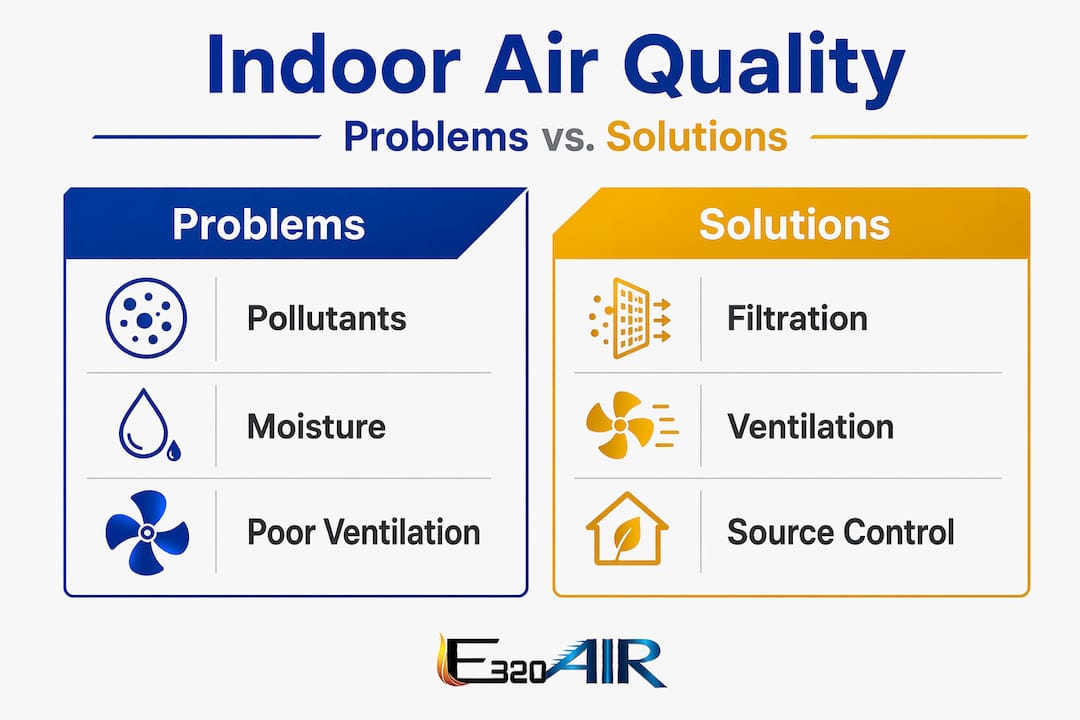
Biological contaminants are a category all their own. Mold, pollen, pet dander, and bacteria all fall into this group, and they each require a slightly different approach to control effectively. The stakes are real: people spend roughly 90% of their time indoors, which means the biologicals in your home have sustained, concentrated access to your respiratory system.
The most common biological contaminants found in Riverside and San Bernardino homes include:
- Mold and mildew: Thrive in bathrooms, under sinks, in attics with poor insulation, and anywhere moisture collects after plumbing leaks or condensation buildup.
- Pet dander: Microscopic skin flakes from cats, dogs, and other animals that stay airborne for hours and penetrate deep into HVAC systems.
- Pollen: Enters through open windows, doors, and on clothing, peaking during spring and fall in the Inland Empire.
- Dust mites: Live in bedding, carpets, and upholstered furniture, producing allergens that circulate through the air whenever disturbed.
- Bacteria and viruses: Can spread through shared air in poorly ventilated spaces, with HVAC systems either helping or hurting depending on maintenance.
Controlling these contaminants requires the same integrated approach used for chemical pollutants. Moisture control and pest management are the most critical source controls. Fixing a dripping pipe under the sink or running a bathroom exhaust fan properly can prevent mold colonies that no filter can address after the fact. Ventilation dilutes biological contaminants when outdoor air quality permits. And biological contaminant control techniques through filtration help capture what source control and ventilation cannot fully eliminate.
Practical HVAC tips for improving indoor air quality while cooking and daily use
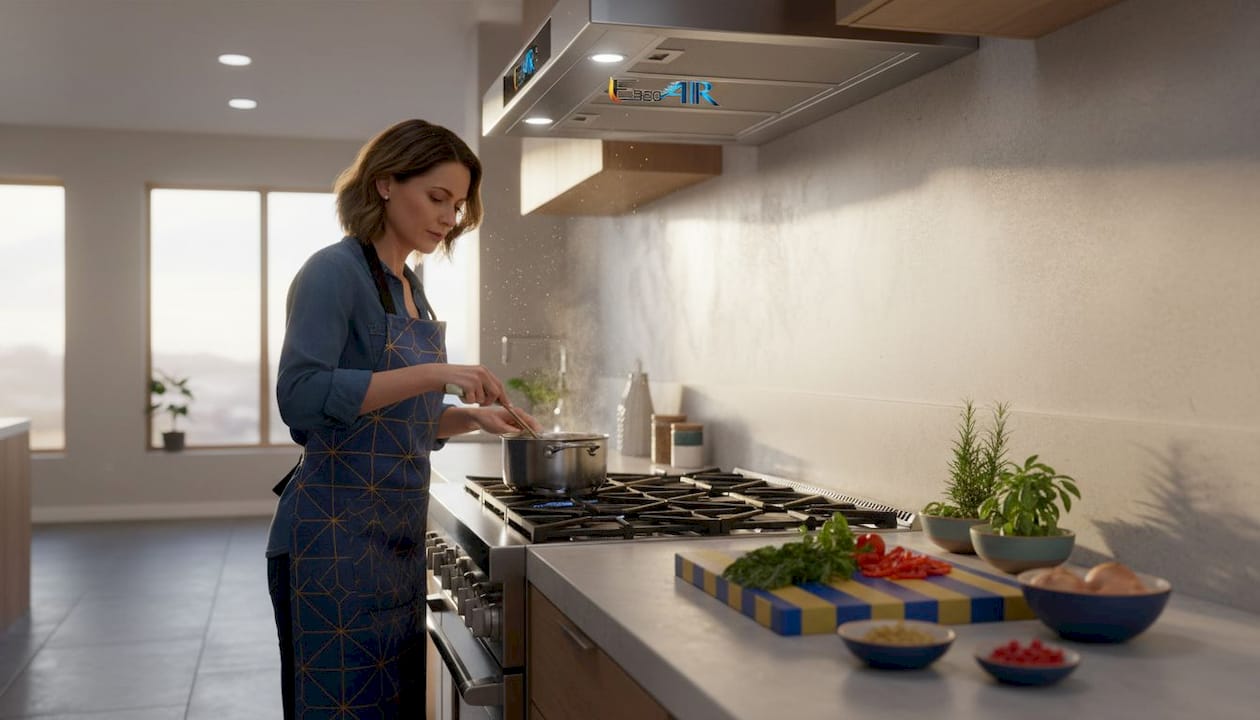
Cooking is one of the biggest drivers of indoor air pollution that homeowners overlook. Gas burners, high-heat frying, and even toasting bread release particulate matter, nitrogen dioxide, and VOCs directly into your kitchen air. Here is what the evidence supports for everyday HVAC practice:
-
Use a MERV 13 or higher filter if your HVAC system can support it, especially if your range hood does not vent to the outside. MERV 13 filters are effective at capturing fine particles generated during cooking that recirculating hoods miss entirely.
-
Run your outdoor-venting range hood while you cook and for 10 to 20 minutes after you finish. Most people turn the hood off when they take the pan off the stove. The combustion byproducts and fine particles linger in the air long after the burner is off.
-
Open windows and doors when outdoor air is clean and weather allows. Cross-ventilation through your kitchen can dramatically reduce pollutant concentrations during cooking, particularly during mild weather in fall and spring.
-
Combine all three strategies: Filter the recirculating air, vent pollutants out with the range hood, and bring in fresh outdoor air when conditions allow. No single action covers all the bases.
Pro Tip: Recirculating range hoods with charcoal filters do almost nothing for particulate matter. They reduce odors but do not address the fine particles that matter most for lung health. If your hood does not duct outside, choosing effective HVAC filters and opening a window during cooking become even more important.
Ventilation tips for better indoor air during daily activities go beyond cooking and are worth building into your household routine year-round.
A homeowner's perspective on mastering indoor air quality through HVAC
Here is a view that most filter marketing will not tell you: installing a better air filter without addressing ventilation and source control is like buying a better mop for a leaky roof. It feels productive, but you are managing symptoms rather than fixing the problem.
We see this regularly in Riverside and San Bernardino homes. A homeowner upgrades to a MERV 13 filter, which is a smart move. But their home has no mechanical ventilation beyond the HVAC system itself, bathroom exhaust fans that vent into the attic instead of outdoors, and a gas range with a recirculating hood. The filter helps, but source control and ventilation are still key to achieving real IAQ improvement. The filter is doing 10% of the work with 100% of the credit.
Moisture is the factor homeowners most consistently underestimate. One bathroom that steams up without proper exhaust creates enough sustained humidity to grow mold inside wall cavities within months. That mold releases spores into your HVAC system, and no filter catches them all. Fix the exhaust fan first. Then talk about filtration upgrades.
Kitchen exhaust is the second most underestimated factor. The combination of heat, combustion, and aerosolized cooking oils makes kitchens the single highest-output pollution source in most homes, yet it gets almost no attention compared to outdoor air quality events. A properly ducted range hood removes more pollutants in one cooking session than your HVAC filter removes in a week.
The integrated HVAC IAQ solutions that actually work treat your home as a system. Filtration, ventilation, moisture control, and source reduction each play a role. When one is missing, the others compensate poorly. That is not pessimism. It is how the physics of air quality works.
Enhance your home's air quality with expert HVAC solutions
Understanding the definition of indoor air quality is one thing. Translating it into real improvements in your home is another. That is where E320 Air comes in.
Whether your home needs a professional HVAC installation with proper filtration and ventilation design, or you want to see how other Inland Empire homeowners have solved their specific IAQ challenges through our HVAC problem solutions gallery, we have the experience to guide you. We serve Riverside and San Bernardino county homeowners with repairs, maintenance, equipment upgrades, and full system installations designed for the specific climate and air quality challenges of Southern California. Better air quality is not a luxury. It is a realistic goal with the right system and the right team behind it.
Frequently asked questions
What exactly does indoor air quality mean?
Indoor air quality refers to the condition of the air inside buildings, specifically how it affects occupants' health and comfort by measuring pollutants, humidity, ventilation rates, and other environmental factors.
What are the main causes of indoor air pollution in homes?
The primary causes are indoor pollution sources that emit gases or particles and insufficient ventilation that fails to dilute and remove those pollutants before they accumulate to harmful concentrations.
Can air filters alone fix indoor air quality issues?
No. Filtration removes some particles and biological contaminants but must be combined with source control and proper ventilation to address the full range of IAQ problems, particularly gases, VOCs, and moisture-driven biological growth.
What HVAC recommendations improve indoor air quality during cooking?
Use MERV 13 filters or higher if your system supports it, run an outdoor-venting range hood during and for 10 to 20 minutes after cooking, and open windows when outdoor air conditions allow.