
TL;DR:
- Setting your thermostat to 68°F during occupied hours and lowering it to 60-65°F during sleep and absences can significantly cut heating costs in California homes. Using a programmable thermostat to automate these adjustments maximizes savings, especially when combined with air sealing, zoning, and proper maintenance. Heat pumps require modest setbacks to avoid costly auxiliary heat, and smart features like geofencing enhance overall energy efficiency.
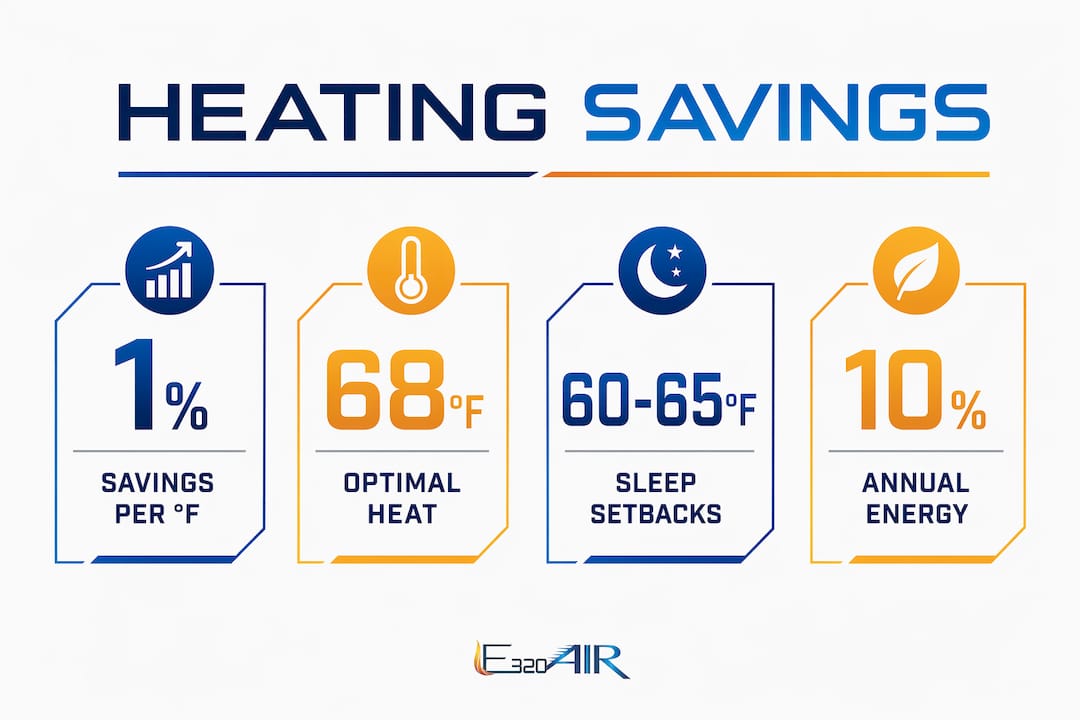
The energy efficient heating temperature for any occupied California home is 68°F during waking hours and 60 to 65°F during sleep or absence. The Department of Energy and industry professionals agree on this range because it balances thermal comfort with measurable cost reduction. A setback of 7 to 10°F for 8 hours a day cuts annual heating costs by up to 10%. That is not a rounding error on your utility bill. It is a real, repeatable result that requires nothing more than adjusting your thermostat settings.
Why 68°F is the recommended energy efficient heating temperature
The 68°F standard is not arbitrary. Energy.gov endorses it as the sweet spot where most people stay comfortable without forcing the heating system to work harder than necessary. At this temperature, your furnace or heat pump runs shorter cycles, consumes less fuel or electricity, and extends its own service life.
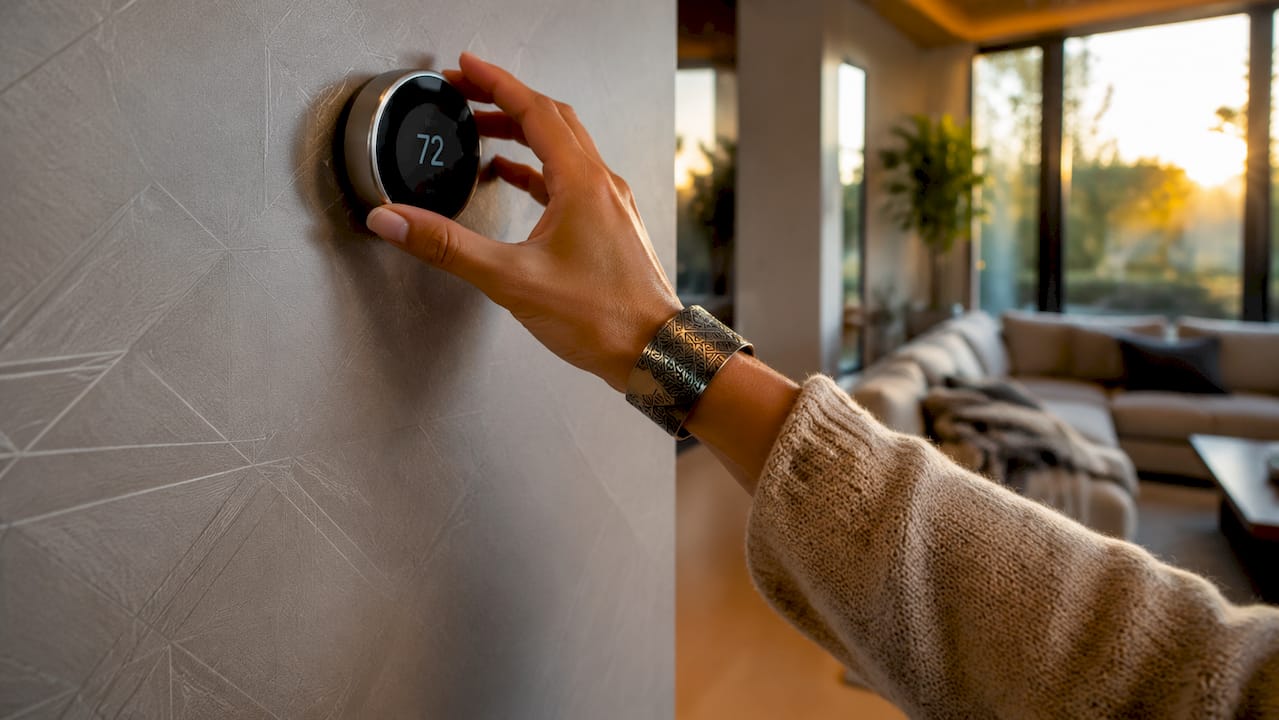
The math behind degree setbacks is direct. Each degree you lower your thermostat reduces heating costs by roughly 1%. That figure varies based on your home's insulation quality, window type, and local energy rates, but the direction never changes. Lower the set point, lower the bill.
| Set Temperature | Relative Energy Use | Estimated Monthly Savings vs. 72°F |
|---|---|---|
| 72°F | Baseline | $0 |
| 70°F | Moderate | ~2% savings |
| 68°F | Recommended | ~4% savings |
| 65°F | Setback range | ~7% savings |
One misconception worth addressing directly: cranking the thermostat to 78°F does not heat your home faster. Heating systems run at a fixed output rate. A higher set point only extends how long the system runs, which wastes energy without delivering faster warmth. Setting 68°F and waiting is always more efficient than setting 80°F and turning it back down.
California's mild winters make 68°F even more practical here than in colder states. In the Central Valley, Bay Area, or Southern California, outdoor temperatures rarely drop far enough to make 68°F feel insufficient. Many residents find 66°F or 67°F equally comfortable once they adjust over a few days.
How setbacks to 60 to 65°F during sleep and away times save more energy
The biggest gains in heating efficiency come not from your daytime setting but from what you do when the house is empty or everyone is asleep. Experts recommend 60 to 65°F for these periods because the body generates its own heat during sleep and an empty home has no occupants to keep comfortable.
A practical setback schedule for a California household looks like this:
- Wake time (6 a.m. to 8 a.m.): Ramp up to 68°F about 30 minutes before you get up so the home is comfortable when you need it.
- Daytime occupied (8 a.m. to 5 p.m.): Hold at 68°F while people are home.
- Away period (9 a.m. to 5 p.m. for working households): Drop to 62°F. The home loses heat slowly, and your system barely runs.
- Evening occupied (5 p.m. to 10 p.m.): Return to 68°F.
- Sleep (10 p.m. to 6 a.m.): Set to 60 to 62°F. Extra blankets handle the rest.
This schedule, applied consistently, is what produces that up to 10% annual savings cited by the Department of Energy. The key is consistency. Manual adjustments that get skipped on busy mornings erase the benefit. That is exactly why programmable thermostats exist. They store multiple daily settings and execute them without any action from you.
Pro Tip: Start your setback 20 to 30 minutes before you actually leave or go to sleep. The home stays comfortable right up to the moment you need it to, and the system transitions smoothly rather than abruptly.
Does your HVAC type change the optimal settings?
Heat pump owners in California need a different strategy than those with gas furnaces, and getting this wrong can actually increase your energy bill.
Furnaces produce heat by burning fuel at a fixed rate. They respond well to setbacks because they simply turn off during the setback period and fire back up when needed. The energy savings are direct and predictable.
Heat pumps work differently. They extract heat from outdoor air and move it inside. When a heat pump falls too far behind a large temperature setback, it triggers auxiliary or emergency heat strips to catch up. Those strips are far less efficient than the heat pump itself, and the energy cost of that recovery can wipe out everything you saved during the setback.
Key guidance for heat pump households:
- Keep setbacks modest. A 2 to 3°F setback is safer than a 7 to 10°F drop if you have a heat pump without smart recovery logic.
- Use a heat pump compatible thermostat. Devices like the Google Nest Thermostat E or Ecobee SmartThermostat Premium include algorithms that calculate the slowest possible recovery to avoid triggering aux heat.
- Check your aux heat indicator. If your thermostat shows aux heat running during recovery, your setback is too aggressive.
- Consider California's mild climate as an advantage. Because outdoor temperatures here rarely drop below 40°F, heat pumps maintain efficiency longer into the evening than they would in colder climates.
Pro Tip: If you are unsure whether your system uses a heat pump or a furnace, check the outdoor unit. A heat pump has an outdoor unit that runs in both heating and cooling seasons. A furnace only has an indoor unit with no outdoor component.
Understanding how your HVAC type affects thermostat strategy is one of the most overlooked factors in home energy management.
What smart thermostat features actually improve heating efficiency?
Smart thermostats move beyond simple scheduling and address the real reason most setback strategies fail: human inconsistency. Here are the features that deliver measurable results.
- Geofencing. Geofencing uses your smartphone's GPS to detect when you leave or approach home and adjusts the temperature automatically. You never forget to set a setback because the thermostat handles it without input.
- Eco mode. This feature sets a minimum and maximum temperature range and holds the home within it during unoccupied periods, preventing both energy waste and pipe freeze risk.
- Time-to-temperature algorithms. Instead of starting the heating cycle at a fixed time, the thermostat calculates how long your specific home takes to reach the target temperature and starts accordingly. The result is comfort on arrival without running the system any longer than necessary.
- Fan circulation mode. Running the HVAC fan for 15 to 20 minutes per hour without active heating mixes air throughout the home, reduces hot and cold spots, and delays the next heating cycle. This is particularly useful in two-story California homes where heat stratifies near the ceiling.
- Time-of-use rate integration. California utilities including PG&E, SCE, and SDG&E offer time-of-use pricing where electricity costs more during peak hours (typically 4 p.m. to 9 p.m.). Smart thermostats can schedule pre-heating before peak hours begin, storing thermal energy in the home's mass and reducing system run time when rates are highest.
For more on how thermostats interact with your full HVAC system, the E320air guide on thermostat and HVAC efficiency covers the mechanics in detail.
Practical tips for maximizing heating efficiency beyond the thermostat
The thermostat setting is your most powerful lever, but it works best when the rest of the home supports it. These measures reduce how hard your heating system has to work to maintain any given temperature.
- Seal air leaks first. Gaps around doors, windows, and electrical outlets allow conditioned air to escape. Weatherstripping and caulk cost under $30 and can reduce heat loss significantly before you spend anything on equipment. Ceiling fans set to run in reverse at low speed push warm air down from the ceiling, which pairs well with the energy efficient fan principle of moving air without adding heat load.
- Use window treatments strategically. Open south-facing blinds during daylight hours in California to capture passive solar heat. Close all window coverings after sunset to retain it.
- Zone your heating. If you have a multi-room home, HVAC zoning lets you heat only the rooms in use. A two-zone system in a three-bedroom home can cut heating demand substantially during evenings when everyone is in one area.
- Schedule annual maintenance. A dirty air filter forces the system to work harder to move the same volume of air. A clogged heat exchanger or low refrigerant level reduces output efficiency. The E320air guide on heater maintenance outlines what to check and when.
- Layer up at home. Wearing a light sweater indoors allows you to stay comfortable at 66°F instead of 70°F. That 4°F difference translates to roughly 4% in heating cost reduction every month.
Key takeaways
The single most effective action California homeowners and renters can take is setting the thermostat to 68°F when occupied and dropping it to 60 to 65°F during sleep and away periods, consistently, every day.
| Point | Details |
|---|---|
| Optimal occupied temperature | Set to 68°F during waking hours for the best balance of comfort and energy savings. |
| Setback saves up to 10% | A 7 to 10°F setback for 8 hours daily cuts annual heating costs by up to 10%. |
| Heat pump strategy differs | Limit setbacks to 2 to 3°F with heat pumps to avoid costly auxiliary heat activation. |
| Smart thermostats automate savings | Geofencing and time-to-use scheduling remove human error from setback strategies. |
| Home envelope matters | Air sealing, window treatments, and zoning reduce how hard the system works at any set temperature. |
What I've learned from years of HVAC work in California homes
Most homeowners I talk to are surprised that the answer to lower heating bills is not a new system. It is a number: 68°F. The equipment they already have is capable of delivering real savings. The problem is almost always how it is being used.
The most common mistake I see is treating the thermostat like a gas pedal. People set it to 75°F because they are cold, then turn it off when they get warm. That pattern is harder on the equipment and more expensive than holding a steady 68°F. Heating systems are not designed for that kind of cycling.
The second mistake is ignoring HVAC type. I have seen California homeowners with heat pumps apply aggressive setback schedules they read about online, then wonder why their bill went up. The advice was correct for a furnace. For a heat pump, it triggered aux heat every morning and cost them more than the setback saved.
My honest recommendation for renters is to invest in a smart thermostat even if you are not sure how long you will stay. Models like the Google Nest or Ecobee typically cost $150 to $250, and the savings at 68°F with proper scheduling can recover that cost within one heating season in a California home. Many landlords will approve the swap if you offer to restore the original thermostat when you leave.
The 2026 California HVAC efficiency standards are pushing the industry toward systems that are better matched to these temperature strategies. If your system is more than 12 years old, the gap between what you have and what is available now is worth a conversation with a qualified contractor.
— Edward
How E320air helps California homes heat more efficiently
E320air provides HVAC installation, maintenance, and equipment sales specifically for California homeowners and renters. Whether you need a smart thermostat installed correctly, a heat pump tuned for California's climate, or a full HVAC installation that meets 2026 efficiency standards, the E320air team handles it from start to finish. The right equipment set to the right temperature is the combination that actually reduces utility costs. Visit E320air to explore heating solutions matched to your home's size, system type, and budget.
FAQ
What is the most energy efficient temperature for heating?
The most energy efficient heating temperature is 68°F when the home is occupied and 60 to 65°F during sleep or absence. This range, endorsed by the Department of Energy, delivers comfort without unnecessary system run time.
Does lowering the thermostat by 1°F actually save money?
Yes. Lowering your thermostat by 1°F saves approximately 1% on heating costs, with the exact amount depending on your home's insulation and local energy rates.
Should heat pump owners use the same setback strategy as furnace owners?
No. Heat pumps can trigger inefficient auxiliary heat during recovery from large setbacks, which increases costs. Heat pump households should limit setbacks to 2 to 3°F or use a thermostat with heat pump specific recovery logic.
What is a normal heater setting for a California home at night?
A normal heater setting for nighttime in California is 60 to 62°F. The mild climate means outdoor temperatures rarely drop low enough to require more, and blankets compensate for the lower indoor temperature.
Do smart thermostats actually reduce heating bills?
Smart thermostats with geofencing and scheduling features reduce heating bills by automating setbacks that manual adjustments often miss. In California homes with time-of-use electricity rates, scheduling features can further reduce costs by pre-heating before peak pricing hours begin.