
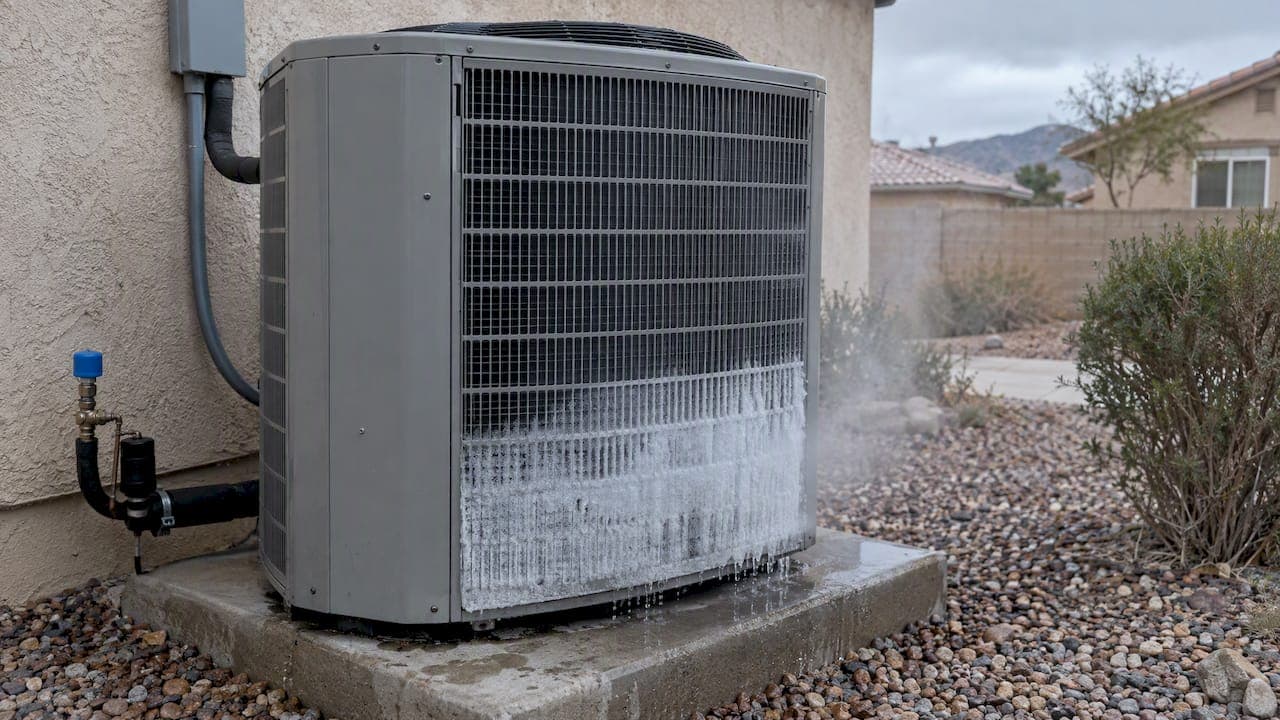
A heat pump defrost cycle is an automatic, short reversal of the refrigerant flow that melts frost from the outdoor coil. Occasional brief defrost cycles are normal, and the unit typically clears the coil and returns to heating within minutes. Long or repeated cycles, or a loss of indoor heat that does not recover, mean it is time to call a technician.
TL;DR:
- Short, regular defrost cycles are normal and usually last under ten minutes, but frequent or lengthy cycles indicate a potential issue requiring professional inspection.
- A failed defrost thermostat, control board, or refrigerant leak can cause excessive icing, especially when auxiliary heat runs constantly after defrosts.
- Proper outdoor unit maintenance, such as clearing debris and ensuring adequate clearance, significantly reduces the risk of frequent or prolonged defrost cycles.
- A technician should diagnose defrost problems by testing sensors, verifying valve operation, and inspecting refrigerant and electrical components during a full cycle review.
- Frost can form on the outdoor coil above freezing temperatures due to the coil running significantly colder than ambient air, especially in high humidity conditions.
Table of Contents
- What is a heat pump defrost cycle?
- How the defrost cycle works, step by step
- Why defrost can happen above freezing
- How often and how long defrost cycles should run
- If defrost seems excessive: homeowner checklist and likely causes
- Reducing icing with regular maintenance
- How a technician diagnoses a defrost problem
- How E320air can help with defrost problems
- Sources
- FAQ
What is a heat pump defrost cycle?
A defrost cycle is the process a heat pump uses to clear frost and ice from its outdoor coil so the system can keep transferring heat efficiently. Frost is a normal side effect of pulling warmth from cold outdoor air, but too much of it blocks airflow across the coil and cuts heating performance.
Several parts work together to make this happen:
- The outdoor coil, where frost forms and later melts.
- The reversing valve, which temporarily switches the system into cooling mode to send warm refrigerant outside.
- The outdoor fan, which shuts off during defrost so it doesn't blow away the heat meant for the coil.
- A defrost thermostat or sensor, which tracks coil temperature.
- The defrost control board, which times and ends the cycle.
- Auxiliary heat strips, where fitted, which keep indoor air warm while the system is briefly in cooling mode.
Seeing frost on the coil, or the unit stepping into defrost now and then, is not a malfunction on its own.
How the defrost cycle works, step by step
Most systems decide it's time to defrost using a timer, a coil-mounted sensor, or a pressure reading that signals airflow has dropped because of ice buildup. Once triggered, the sequence follows a predictable path:
- The reversing valve switches the system into cooling mode.
- The outdoor fan stops running.
- Hot refrigerant flows through the outdoor coil, melting the frost.
- Indoor auxiliary heat, if the system has it, kicks in to offset the brief dip in heating.
- The cycle ends when the coil reaches a set termination temperature or a maximum time limit is reached, and the system switches back to normal heating.
Homeowners often notice steam or a light cloud rising off the outdoor unit as the ice melts, a short dip in indoor warmth, a burst of auxiliary heat, or a few mechanical clicks as valves shift. These are the visible footprints of a process that's otherwise happening inside the control board.
Defrosting carries a real cost. DOE and national lab research shows that reversing the cycle to defrost lowers a heat pump's seasonal coefficient of performance, since the system briefly runs as an air conditioner and may call on supplemental heat. That is also why manufacturers keep refining defrost controls, aiming to clear ice with the least energy penalty possible.
Why defrost can happen above freezing
It seems counterintuitive, but a heat pump can enter defrost mode even when the outdoor air feels mild. The reason is that the outdoor coil runs far colder than the surrounding air while the system heats. According to Trane, the coil can sit 10 to 20 degrees Fahrenheit below ambient temperature during heating, which means frost can form on the coil surface even when a thermometer outside reads well above freezing.
High humidity makes this more likely, since moist air condenses and freezes onto that cold coil faster than dry air does. A defrost cycle on a damp, 40 degree afternoon isn't a sign anything is wrong. It's the coil doing exactly what it's designed to do.

How often and how long defrost cycles should run
A typical defrost cycle lasts a few minutes, usually well under ten, before the system returns to normal heating. How often that happens depends on the weather, how clean the outdoor coil is, whether the unit has proper clearance, and whether the equipment is sized correctly for the home.
Consider it excessive when you see:
- Multiple short defrost cycles within a short span, rather than occasional ones.
- A single cycle that runs much longer than a few minutes without the unit returning to heat.
- Auxiliary heat running heavily or continuously after each defrost cycle ends.
Any of these patterns points to a problem worth investigating rather than normal winter operation.
If defrost seems excessive: homeowner checklist and likely causes
Start by watching for the clearest warning signs: a solid block of ice on the coil that doesn't clear, a unit that seems stuck in defrost mode, indoor temperatures that don't recover afterward, or heat strips that run constantly once defrost ends.
Several mechanical or control issues commonly cause this. A failed defrost thermostat or sensor can misread coil temperature. A faulty defrost control board can mistime or fail to end the cycle. Fan relay or fan motor problems, a bad reversing valve, low refrigerant, or even poor outdoor clearance and condensate that drips back onto the coil can all trigger repeat icing.
There's plenty a homeowner can safely check first:
- Clear snow, ice, leaves, or debris from around the outdoor unit.
- Confirm the unit has the clearance the manufacturer recommends on all sides.
- Check that condensate is draining away from the coil, not onto it.
Pro Tip: Never open an energized outdoor unit or jumper terminals to force a defrost cycle yourself. That procedure uses model-specific test terminals or speed-up pins, and it's a job for a trained technician, as outlined in Hvac.
If basic checks don't resolve the pattern, it's time to bring in a professional rather than keep guessing. Our guide on what contractors check first when a heat pump isn't heating walks through what a visit typically covers.
Reducing icing with regular maintenance
A lot of excessive defrost activity traces back to simple maintenance gaps rather than major failures. A few habits go a long way toward keeping the system running the way it should:
- Keep the outdoor unit clear of snow, ice, fallen leaves, and overgrown vegetation year-round.
- Maintain the clearance space the manufacturer specifies so air can flow freely around the coil.
- Schedule annual maintenance that includes coil cleaning, a fan inspection, and a check of filters and the thermostat.
- Address site issues like poor drainage or a unit positioned too close to a wall, and have a technician confirm the system is properly sized if problems keep recurring.
Our winterizing guide covers pre-season prep in more depth, and the heat pump maintenance checklist breaks these steps into a sequence you can follow room by room and season by season.
How a technician diagnoses a defrost problem
A proper diagnosis means watching the whole sequence, not just the start. A tech confirms the reversing valve switches, the fan shuts off, the coil actually warms, and the system returns to heating. From there, testing defrost sensor resistance, checking terminal voltages, and inspecting the defrost board and pressure switches usually points to the failure, whether that's a worn sensor, a bad board, a fan motor, or a refrigerant issue.
— Edward
How E320air can help with defrost problems
Chasing down an intermittent defrost fault without the right test equipment usually means more guesswork and more time without reliable heat. A professional diagnostic visit checks the full defrost sequence the way a technician would, from sensor resistance to board voltages, so you get a clear answer instead of a repeat service call.

Depending on what we find, that can mean:
- Replacing a failed defrost sensor or control board.
- Cleaning a dirty or restricted outdoor coil.
- Fixing site issues like poor clearance or condensate drainage.
- Scheduling routine maintenance to catch problems before they cause icing.
Every visit includes tests run by the technician, confirmation that the unit completes a full defrost and heat recovery cycle, and a written summary of findings. If your system shows any of the warning signs above, book a heater repair visit or reach out through E320air to get it checked before the next cold snap.
Sources
- Hvac
- What Is a Heat Pump Defrost Cycle? — Trane
- Quantifying and reducing defrost energy use — DOE / BTO peer review (2024)
- Troubleshooting the Heat Pump Defrost Cycle: A Step-By-Step Guide — ACHR News
FAQ
How long should my heat pump be in defrost mode?
A typical defrost cycle runs for a few minutes before the system switches back to heating. If it stretches on far longer than that or the unit never seems to finish, it's worth having a technician check the defrost sensor and control board.
What happens when my heat pump goes into defrost mode?
The reversing valve temporarily switches the system into cooling mode, the outdoor fan stops, and hot refrigerant warms the coil to melt accumulated frost. Indoor auxiliary heat may briefly kick in to offset the pause in heating, and the system returns to normal operation once the coil warms up or a timer ends the cycle.
How do you force a heat pump into a defrost cycle?
Forcing a defrost cycle requires using model-specific test terminals or speed-up pins on the defrost control board, a procedure covered in manufacturer service guidance. This isn't a homeowner task: it involves working inside an energized outdoor unit and should be left to a trained technician.
What is the 20 degree rule for heat pumps?
This isn't a standardized industry rule, and definitions vary depending on who's using the term. It's generally used informally to describe the point at which outdoor temperatures drop low enough that a heat pump may need more help from auxiliary or backup heat to keep up with demand.
Why does my heat pump defrost even when it's not freezing outside?
The outdoor coil runs noticeably colder than the surrounding air while heating, sometimes 10 to 20 degrees Fahrenheit colder, so frost can form on the coil even when the outdoor temperature itself is mild. High humidity adds to the effect, making defrost cycles at above-freezing temperatures a normal occurrence rather than a malfunction.