
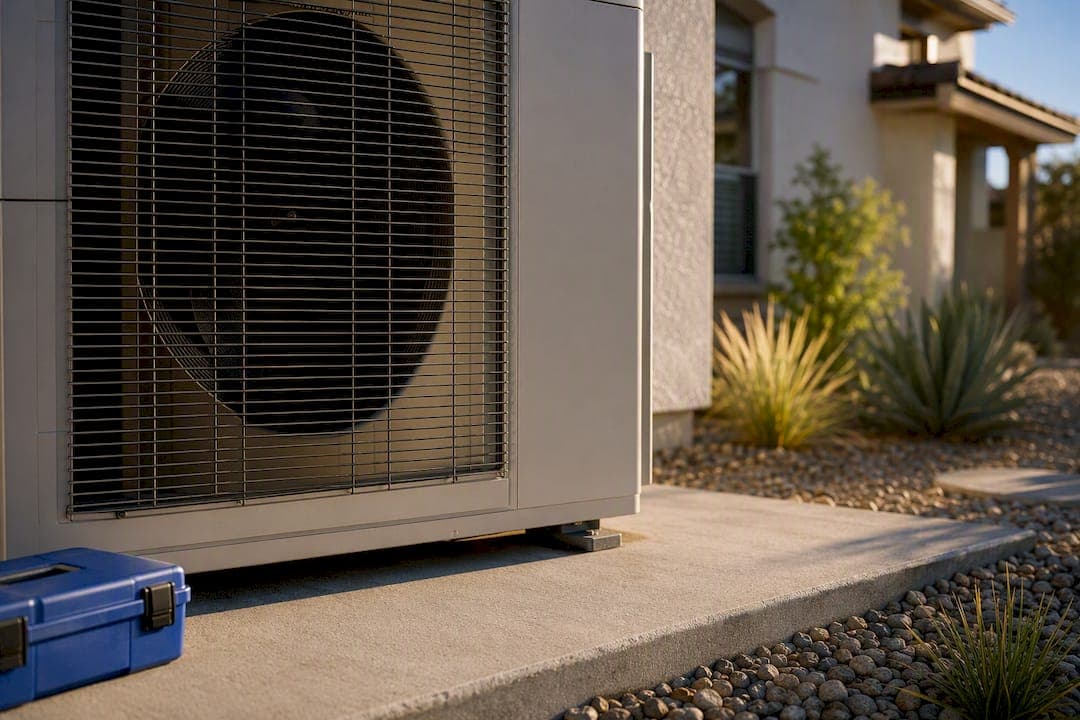
Most heat pumps last 10 to 20 years, with well-maintained units and geothermal systems often running longer. The single biggest lever you control is twice-yearly professional maintenance, timed before cooling and heating seasons. Type, climate, and installation quality all shift that range, but neglect is what shortens it fastest.
TL;DR:
- Proper twice-yearly professional maintenance can significantly extend a heat pump's lifespan beyond the 10 to 15-year average, especially for well-maintained units.
- Ductless mini-splits and geothermal systems tend to last longer, often exceeding 20 years, with geothermal units frequently reaching 25 or more years due to less weather exposure.
- Mismatched installation, poor sizing, or neglecting filters and coils are common causes of early failure, emphasizing the importance of correct system pairing and routine upkeep.
- Homeowners should consider replacing their heat pump primarily after 15 to 20 years, especially if experiencing frequent repairs, steadily rising energy bills, or difficulty maintaining temperature.
- Regular in-person technician checks, including refrigerant, coil, and airflow assessments, help pinpoint aging issues early and inform decision-making on repairs versus replacement.
Table of Contents
- Heat Pump Lifespan by Type: What the Studies Actually Show
- What Actually Shortens or Extends a Heat Pump's Life
- The Maintenance Routine That Actually Extends Life
- Repair or Replace? A Simple Way to Decide
- What Contractors Actually Check When They Inspect a Heat Pump
- Edward's Take: What Homeowners Should Do This Week
- Get a Professional Read on Your System's Remaining Life
- Sources
- FAQ
Heat Pump Lifespan by Type: What the Studies Actually Show
The range you'll hear from most contractors is 10 to 15 years, with premium, well-cared-for systems reaching 20 to 25 years. That's a fair baseline, but it undersells what recent program data shows.
A 2023 CPUC-related study found median operational lives for residential systems that run longer than those conservative trade estimates, with survival curves showing many units still functioning past 20 years under decent upkeep. Utility program planners, meanwhile, use standardized figures for rebate math, and one evaluation report recommended expected useful life values of 20 years for residential air-source heat pumps and 17 years for ductless systems.
Here's how the categories typically break down:
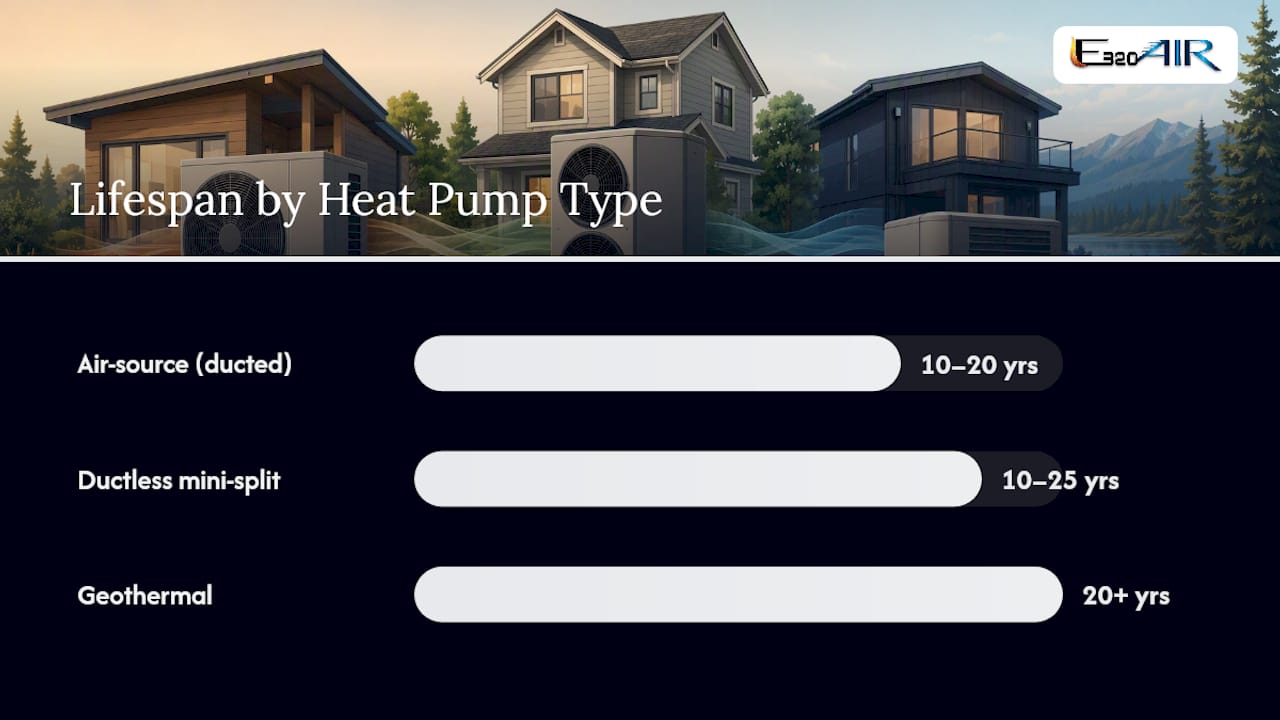
- Air-source and ducted heat pumps: commonly 10 to 20 years, depending heavily on maintenance history and climate.
- Ductless mini-splits: typically 10 to 25 years in reported cases, since each zone runs independently and puts less strain on any single compressor.
- Geothermal systems: often 20-plus years, because the ground loop and buried components face far less weather exposure than an outdoor condenser.
Program-level EUL numbers are built conservatively on purpose. That's a planning tool, not a ceiling, which is why plenty of homeowners get more life out of a system than the spreadsheet predicted.
What Actually Shortens or Extends a Heat Pump's Life
Installation quality sets the ceiling before the unit ever runs a single cycle. Pairing a new outdoor condenser with a mismatched or aging indoor air handler is a documented cause of inefficiency and early failure, and undersized or oversized systems (a load calculation problem covered by ACCA Manual J standards) short-cycle constantly, which wears out compressors years ahead of schedule.
From there, a handful of variables do most of the damage:
- Maintenance frequency. DIY filter swaps help, but skipped professional visits let refrigerant charge drift and coils cake with debris.
- Climate exposure. Cold-climate units run longer duty cycles each winter; coastal units face salt spray that corrodes coils and cabinets faster.
- Usage patterns. A system that's constantly cycling to cover a poorly insulated house works harder than one sized correctly for a tight envelope.
- Ductwork and accessories. Leaky ducts, dirty indoor air, and add-on humidifiers or UV lights all add load if they aren't serviced alongside the main unit.
- Component failure modes. Compressor burnout, coil corrosion, refrigerant leaks, and electrical control failures account for the bulk of major repairs.
Pro Tip: If you're comparing quotes for a new install, ask specifically how the contractor is sizing the indoor unit to the outdoor condenser. A mismatched pair is one of the most common, and most preventable, causes of a short lifespan.
The Maintenance Routine That Actually Extends Life
Maintenance doesn't just save you money on utility bills. It's the single most effective way to push a heat pump toward the upper end of its expected life rather than the lower end. Skipped filters and dirty coils force the compressor and fan motor to work harder for the same output, and that extra strain compounds year after year.
What you handle monthly:
- Check the filter and replace or clean it, generally every one to three months depending on the filter type and your household's dust load.
- Clear leaves, mulch, and debris from around the outdoor unit, leaving at least a couple of feet of open space.
- Look at the condensate line for visible clogs or standing water near the indoor unit.
What a professional visit covers, ideally twice a year before your heaviest cooling and heating months:
- Refrigerant charge verification and leak checks
- Coil cleaning, both indoor and outdoor
- Electrical connection and capacitor testing
- Condensate drain and pan inspection
- Airflow and ductwork balance checks
ENERGY STAR's maintenance guidance backs nearly all of this, and it's worth following even in mild climates, since neglected condensate drains alone can cause water damage that has nothing to do with the compressor. For a room-by-room walkthrough, E320air's heat pump maintenance checklist breaks down what each visit should include.
Repair or Replace? A Simple Way to Decide
Age is the first data point, but it's not the only one. A 12-year-old unit that's never missed a tune-up can outlast a 7-year-old unit that's been neglected. Still, a few signals reliably point toward replacement rather than another repair.
- The system is at or past the median expected life for its type (roughly 15 to 20 years for most air-source units).
- You've had two or more major repairs in the last two years.
- Energy bills have climbed steadily even though usage hasn't changed.
- The unit struggles to hit set temperature or runs constantly without catching up.
A useful rule of thumb: if a single repair costs a substantial portion of a full replacement, or if repairs are becoming annual events rather than rare ones, replacement usually wins on cost over the next few years. ENERGY STAR-qualified units often deliver meaningful energy savings, which shortens the payback period on a new system considerably. Also factor in refrigerant phaseouts and parts availability. Older systems using discontinued refrigerants can turn a simple repair into an expensive retrofit. For a broader look at where upgrade dollars pay back fastest, E320air's guide on energy efficiency upgrades walks through the math in more detail.
What Contractors Actually Check When They Inspect a Heat Pump
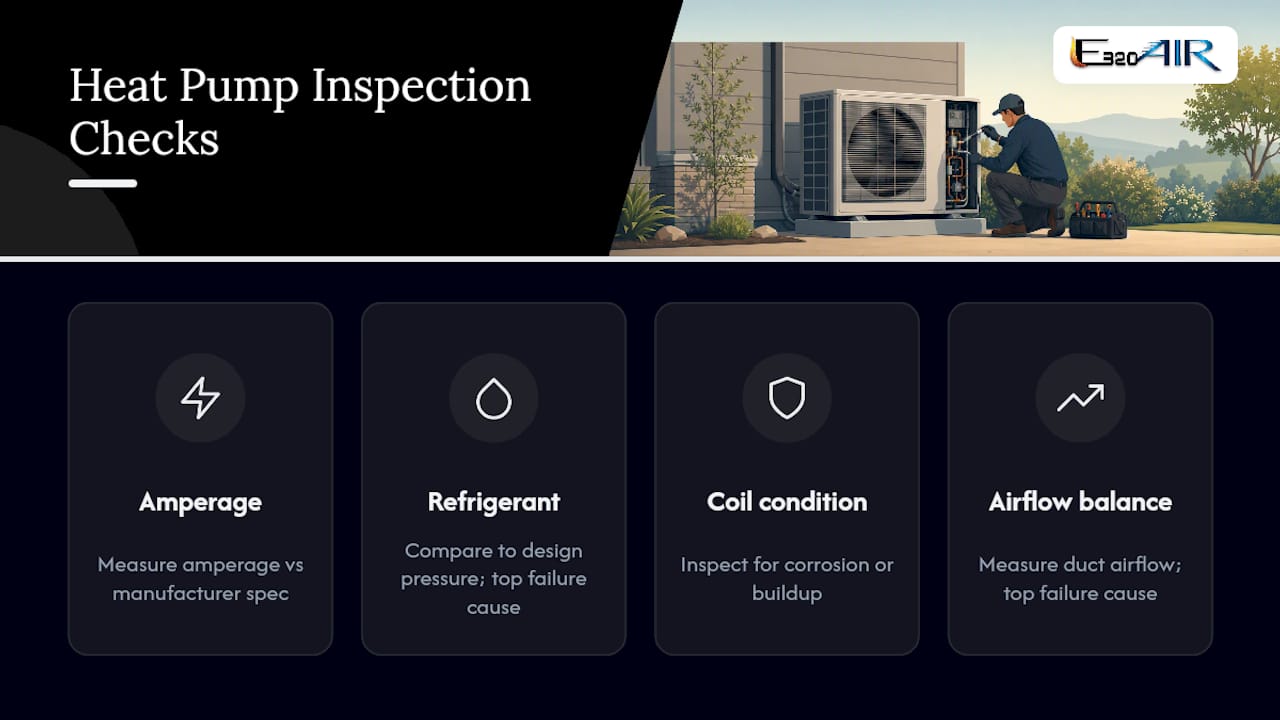
A service report isn't just a checkbox exercise. Technicians measure compressor amperage against the manufacturer's spec, verify refrigerant charge against the design pressure for outdoor temperature, inspect coil condition for corrosion or buildup, and check airflow balance across the ductwork. Improper refrigerant charge and poor airflow are consistently cited as the two leading causes of early compressor failure, which is exactly why those two checks come first on most visits.
The mistakes we see most often: skipped filters, landscaping planted too close to the outdoor unit restricting airflow, and small repairs put off until they cascade into bigger ones. A documented history of professional visits also lets a contractor give you a defensible estimate of remaining useful life, which matters if you're weighing an early-replacement rebate against squeezing a few more years out of your current system. For a deeper look at how technicians diagnose specific problems, see E320air's guide on what contractors check when a heat pump isn't heating.
Pro Tip: Ask your technician to note refrigerant pressure readings on every visit, not just when something's wrong. A pattern over two or three years tells you far more than a single snapshot.
Edward's Take: What Homeowners Should Do This Week
The data backs up what most contractors already believe: maintenance, not luck, decides whether your heat pump hits year 12 or year 22. Check your filter today, clear debris around the outdoor unit this weekend, and book a tune-up before the season shifts. E320air's maintenance checklist is a good next stop if you want the full walkthrough.
— Edward
Get a Professional Read on Your System's Remaining Life
A professional HVAC contractor can give you a straight answer on whether your heat pump needs a repair, a tune-up, or a replacement, instead of guessing based on age alone.

A trained technician can measure exactly where your system stands: refrigerant charge, compressor amperage, coil condition, airflow balance, the same checks covered earlier in this article, and tell you honestly whether another year or two makes sense. If you're weighing new construction or a home addition, pairing HVAC upgrades with other efficiency improvements, like the interior door upgrades covered by One Day Doors & Closets, can shrink your overall heating and cooling load before you even touch the equipment. Browse E320air's problem-solving gallery to see real diagnostic and repair examples, or if your system is already past its prime, check out HVAC installation services to see what a replacement timeline and cost actually look like. Schedule an inspection through E320air and get a clear answer instead of a guess.
Sources
- How Long Do Heat Pumps Last? | EnergySage
- CPUC Group A 2023 Residential HVAC and DHW EUL Study | CALMAC
- Heat pump maintenance checklist | ENERGY STAR
FAQ
Can a heat pump last 20 years?
Yes. Program studies on residential systems show many units still operating past 20 years when they receive regular professional maintenance, even though standard estimates often cite 10 to 15 years.
What is the 20-degree rule for heat pumps?
It's a rough field guideline suggesting a heat pump's output temperature runs about 20 degrees Fahrenheit above the outdoor air temperature; a wider or narrower gap than that can signal a refrigerant or airflow problem worth having checked.
What is the major disadvantage of a heat pump?
Heat pumps lose heating capacity as outdoor temperatures drop, so in extreme cold, some systems need a backup heat source or run less efficiently than in milder weather.
Is it okay for a heat pump to run all night in winter?
Yes, continuous or near-continuous running on the coldest nights is normal, since heat pumps produce heat more gradually than a furnace. Short-cycling on and off frequently, rather than steady operation, is the pattern actually worth flagging.