
TL;DR:
- Yucaipa homeowners should have their HVAC systems cleaned every 2 to 3 years due to intense desert dust, wildfire smoke, and prolonged cooling seasons. The process involves inspection, negative pressure cleaning, coil treatment, and sanitization to improve air quality and system efficiency. Using professional equipment and techniques specific to local conditions is crucial to avoid damage and ensure thorough cleaning.
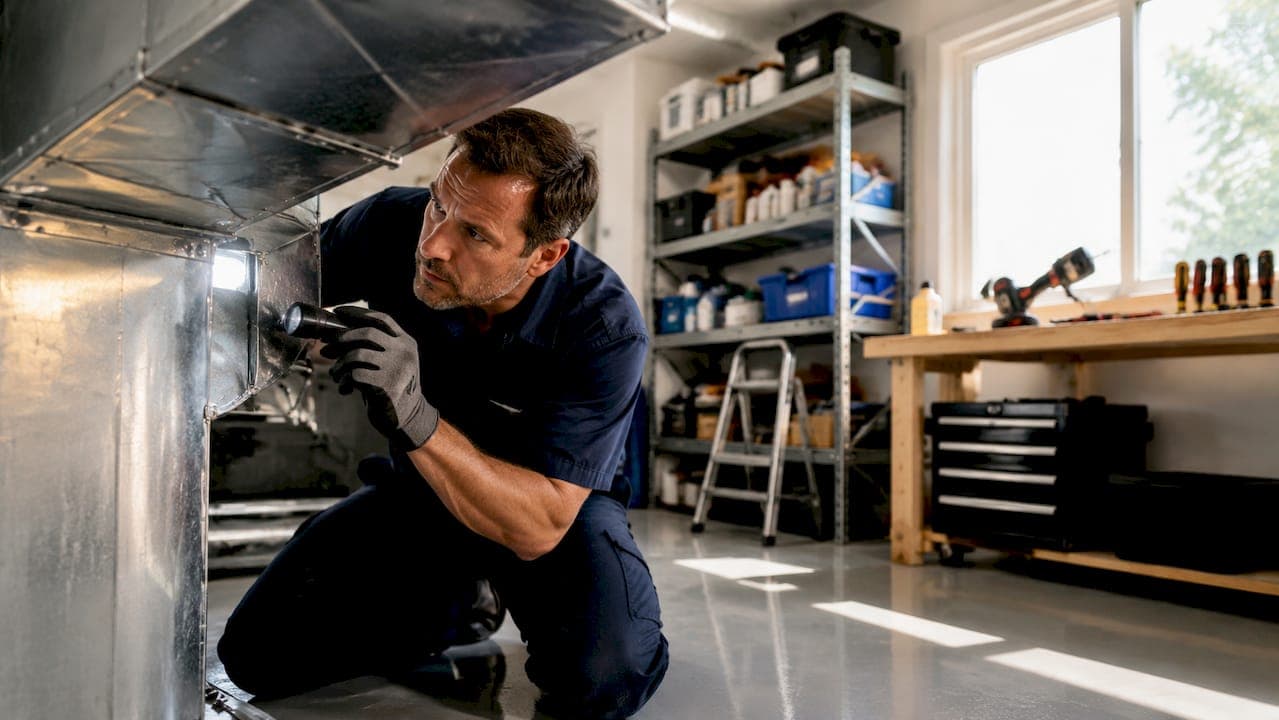
The HVAC cleaning process in Yucaipa removes accumulated dust, allergens, wildfire smoke particles, and biological contaminants from your heating and cooling system to restore air quality and recover lost efficiency. This is not a generic maintenance task. Yucaipa's inland desert climate, with temperatures that regularly exceed 105°F and AC systems running nearly year-round, creates contamination conditions that are measurably worse than coastal California homes. This guide walks you through why local conditions matter, what tools professionals use, and exactly what happens during a proper cleaning from start to finish.
Why does the HVAC cleaning process matter for yucaipa homeowners?
Yucaipa homeowners face a contamination rate that outpaces most of California. Inland Empire temperatures spike above 105°F, with air conditioning running up to 8 months per year. That continuous operation pulls dust, pollen, and desert particulates through your ductwork at a rate that simply does not apply to homes in San Diego or the Bay Area.
The numbers make the case clearly. Average duct cleaning in the Inland Empire removes approximately 40 pounds of dust and debris per service. That figure reflects the combined effect of desert dust, seasonal wildfire smoke, and the sheer volume of air your system processes during long cooling seasons.
Efficiency loss is the other major cost. Dirty coils alone can reduce system efficiency by 30% or more. A 30% efficiency drop means your system works significantly harder to deliver the same comfort, which shows up directly on your electricity bill.
Yucaipa's newer housing developments add a specific structural concern. New construction often uses flex ducts that are prone to sagging, disconnecting, or tearing when handled aggressively. This makes the cleaning method matter as much as the cleaning frequency.
Pro Tip: If your energy bills have crept up 15–20% without a rate change, or if allergy symptoms worsen indoors, those are reliable signs your ducts need professional attention before the next cooling season.
The National Air Duct Cleaners Association, known as NADCA, recommends cleaning every 3–5 years nationally. For Yucaipa and the broader Inland Empire, local conditions push that recommendation to every 2–3 years. Waiting for the national benchmark in this climate means accepting years of degraded air quality and rising energy costs.
What tools and prep steps come before cleaning?
A professional HVAC cleaning job does not start with a vacuum. It starts with a thorough inspection and a deliberate setup phase. Skipping preparation is the single most common reason cleaning jobs cause more problems than they solve.
Professional tools used in yucaipa HVAC cleaning
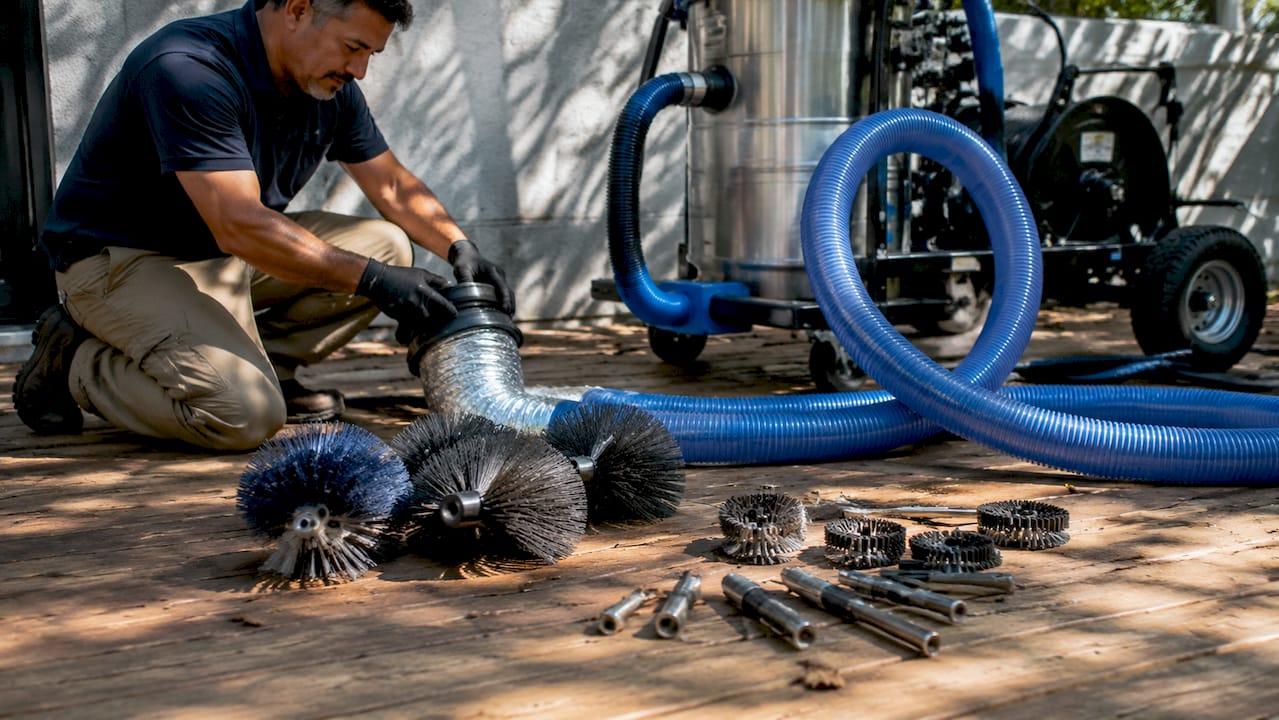
The right equipment separates a professional service from a DIY attempt. Here is what a qualified technician brings to a Yucaipa home:
| Tool | Function | Why It Matters in Yucaipa |
|---|---|---|
| Truck-mounted HEPA vacuum | Continuous negative pressure extraction | Prevents contaminants from recirculating indoors |
| Rotary brush system | Loosens debris from rigid metal duct walls | Effective on hard duct surfaces in older homes |
| Soft-bristle flex duct brush | Gentle agitation for flexible ductwork | Prevents tearing or disconnection of flex ducts |
| Inspection camera | Visual assessment of duct interior | Identifies blockages, mold, or structural damage |
| Coil cleaning solution | Chemical treatment for evaporator and condenser coils | Restores heat transfer efficiency |
| Antifungal/sanitizing spray | Post-clean treatment for duct surfaces | Reduces mold and bacteria growth in humid sections |
Flexible ductwork requires gentle cleaning tools like soft brushes to prevent damage. Using the same rotary scrapers designed for rigid metal ducts on flex duct material is a fast way to create tears, disconnections, and airflow problems that cost more to fix than the cleaning saved.
Preparation steps before the job starts
Before any equipment runs, a technician should complete these steps:
- Turn off the HVAC system at the thermostat and the breaker
- Cover furniture and flooring near supply and return vents
- Locate all supply registers, return air grilles, and the air handler unit
- Identify the duct material type (rigid metal, fiberglass-lined, or flex duct)
- Note any areas with visible mold, moisture staining, or pest activity
A free on-site duct inspection provides a full assessment and a written estimate before work begins. This step protects you from surprise charges and confirms the technician understands your specific system layout.
Pro Tip: Ask your technician to photograph the duct interior before and after cleaning. This gives you a clear record of what was removed and confirms the job was completed properly.
Step-by-step: the HVAC cleaning process in yucaipa homes
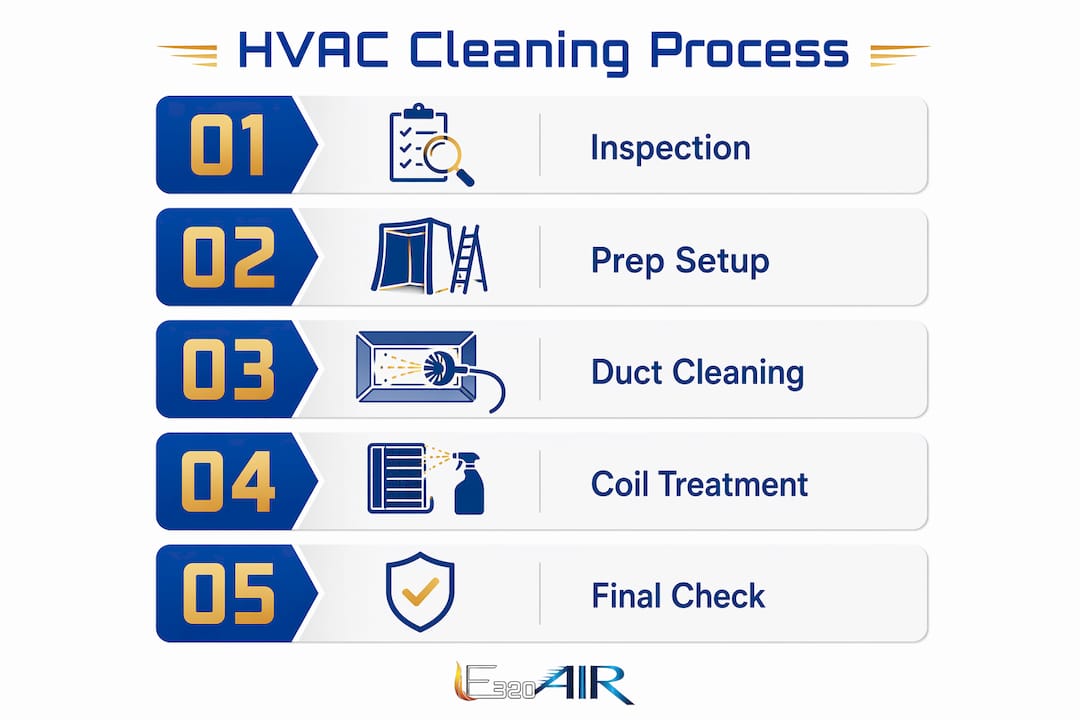
A complete residential HVAC cleaning follows a defined sequence. Each phase builds on the last, and skipping any step reduces the effectiveness of the whole job.
-
On-site inspection and contamination assessment. The technician uses an inspection camera to evaluate dust buildup, mold presence, pest debris, and duct condition. This determines which tools and treatments are appropriate for your specific system.
-
System isolation and negative pressure setup. The truck-mounted HEPA vacuum connects to the main trunk line or air handler. The entire HVAC system is placed under continuous negative pressure to prevent loosened contaminants from spreading into your living space during cleaning. This step is non-negotiable for a safe, effective job.
-
Agitation and debris loosening. Working from the farthest supply registers back toward the air handler, the technician uses rotary brushes on rigid ducts and soft-bristle tools on flex duct sections. This loosens compacted dust, debris, and biological matter from duct walls.
-
Extraction under negative pressure. As debris is loosened, the HEPA vacuum system pulls it out continuously. Nothing recirculates. The vacuum captures particles down to 0.3 microns, which includes most allergens, mold spores, and fine desert dust.
-
Evaporator and condenser coil cleaning. Coils are treated with a foaming coil cleaner that breaks down grease, dust, and biological buildup. Clean coils restore heat transfer efficiency directly. This step is what recovers the 30% efficiency loss that dirty coils cause.
-
Dryer vent cleaning. Full lint extraction in dryer vents improves safety and system performance. Clogged dryer vents are a leading cause of residential fires, and they are often overlooked during standard HVAC service calls.
-
Sanitizing treatment. After extraction, the technician applies an EPA-registered antifungal and antibacterial spray to duct surfaces. This is especially relevant in Yucaipa homes where monsoon humidity can create brief but significant moisture events inside ductwork.
-
Post-cleaning verification. The technician restores all vent covers, reconnects the system, and runs it to confirm proper airflow at every register. A final camera pass on accessible sections confirms cleanliness.
A full residential cleaning in a typical Yucaipa home takes 3–5 hours. Larger homes or systems with significant contamination may run longer. You can learn more about how this process connects to HVAC air quality improvements that go beyond duct cleaning alone.
What mistakes do homeowners make during HVAC cleaning?
Most HVAC cleaning mistakes fall into two categories: doing too little or doing the wrong thing. Both cost money.
Common errors to avoid
- Using a shop vac instead of a HEPA system. A standard shop vac lacks the suction power and filtration to capture fine particles. It redistributes contaminants rather than removing them.
- Skipping coil cleaning. Cleaning ducts without addressing the coils leaves the biggest efficiency problem untouched. Dirty coils are where most of the 30% efficiency loss originates.
- Using rigid brushes on flex ducts. This tears the duct lining, creates air leaks, and can disconnect duct sections entirely. The repair cost exceeds the cleaning cost.
- Neglecting the return air side. Many homeowners focus on supply registers and ignore return grilles. Return ducts carry the same contamination load and need equal attention.
- Cleaning without inspecting first. Aggressive cleaning on a duct with existing damage spreads debris and worsens structural problems.
Pro Tip: Change your air filter immediately after a professional cleaning. A fresh filter captures any residual fine particles the cleaning process dislodged, and it gives you an accurate baseline for your next filter change interval.
For homeowners considering a partial DIY approach, the realistic scope is limited to wiping down accessible vent covers, replacing filters, and keeping the area around the air handler clear. Anything inside the ductwork or involving the coils requires professional equipment. Reviewing common HVAC maintenance myths can help you separate what you can handle from what needs a licensed technician.
Persistent odors after cleaning often indicate mold or biological growth that was not fully treated. Uneven airflow after cleaning typically points to a disconnected flex duct section. Both require a follow-up inspection, not a second DIY attempt.
Key takeaways
A professional HVAC cleaning process in Yucaipa is the most direct way to recover lost efficiency, reduce allergens, and protect your system from the accelerated wear that the local climate causes.
| Point | Details |
|---|---|
| Local conditions demand more frequent cleaning | Yucaipa's desert heat and wildfire smoke require cleaning every 2–3 years, not the national 3–5 year standard. |
| Dirty coils are the biggest efficiency drain | Coil buildup alone can cut system efficiency by 30%, which shows up directly in your energy bills. |
| Flex duct requires specialized tools | Soft-bristle brushes prevent tearing and disconnection in the flex ductwork common in newer Yucaipa homes. |
| Negative pressure vacuuming is non-negotiable | HEPA truck-mount systems prevent contaminants from recirculating into your living space during cleaning. |
| Dryer vent cleaning belongs in every service | Lint-clogged dryer vents create fire risk and reduce airflow, making them a required part of full HVAC care. |
What i've learned after years of yucaipa HVAC work
Most homeowners I talk to assume their HVAC system is fine until it stops working. That assumption is expensive in Yucaipa. The combination of desert dust, prolonged cooling seasons, and wildfire smoke creates contamination levels I rarely see in coastal markets. By the time a system shows obvious symptoms like reduced airflow or rising bills, the buildup has usually been accumulating for two or three years.
The flex duct issue is the one that surprises people most. Newer homes in Yucaipa and the surrounding Inland Empire were built with flexible ductwork because it is faster and cheaper to install than rigid metal. That is fine when it is installed and maintained correctly. The problem is that many cleaning companies bring the same aggressive rotary brush equipment they use on commercial metal duct systems. I have seen flex duct sections torn apart by brushes that had no business being inside a residential system. The repair bill for reconnecting and resealing damaged flex duct runs several hundred dollars per section.
My honest recommendation is to schedule a cleaning before the summer cooling season, not after. By the time August arrives in Yucaipa, your system has already been running hard for months. Starting that season with clean coils and clear ducts means your system runs at full efficiency when the demand is highest. Waiting until fall means you paid full price in electricity for a degraded system all summer.
When you are selecting a service provider, ask specifically whether they use HEPA-rated vacuum equipment and whether their technicians have experience with flex duct systems. Those two questions will tell you more about the quality of the service than any online review.
— Edward
How E320air handles HVAC cleaning for yucaipa homes
E320air provides professional HVAC cleaning built around the specific demands of Yucaipa homes, including truck-mounted HEPA vacuum extraction, flex duct-safe brushing techniques, and full coil treatment. Every service includes a pre-cleaning inspection with a written assessment so you know exactly what is being addressed before work begins.
The team at E320air understands the local climate conditions that accelerate contamination in Inland Empire homes, from summer heat loads to monsoon humidity spikes. Whether you need a full system cleaning, a ductwork inspection, or a complete maintenance plan, E320air delivers work backed by real experience in this market. Visit E320air to schedule your inspection and get a clear picture of what your system needs before the next cooling season starts.
FAQ
How often should yucaipa homeowners clean their HVAC system?
Yucaipa homeowners should clean their HVAC system every 2–3 years. The Inland Empire's desert dust, wildfire smoke, and extended cooling seasons accelerate contamination faster than the national NADCA standard of every 3–5 years.
What does the HVAC cleaning process include beyond duct cleaning?
A complete service includes duct cleaning, evaporator and condenser coil treatment, dryer vent lint extraction, and a post-clean sanitizing treatment. Skipping coil cleaning leaves the primary source of efficiency loss unaddressed.
Can i clean my HVAC ducts myself?
Homeowners can clean accessible vent covers and replace filters, but interior duct cleaning and coil treatment require truck-mounted HEPA equipment and professional tools. DIY attempts with shop vacs typically redistribute contaminants rather than removing them. You can review signs your ducts need cleaning to assess whether your system needs professional attention.
Why does yucaipa's climate make HVAC cleaning more urgent?
Temperatures above 105°F force air conditioning to run up to 8 months per year, pulling significantly more dust and particulates through the system than in cooler climates. This volume of air movement compresses contamination timelines considerably.
How long does a professional HVAC cleaning take in a typical home?
A standard residential cleaning in Yucaipa takes 3–5 hours, depending on system size, duct material, and contamination level. Homes with significant mold presence or damaged flex duct sections may require additional time for repairs and treatment.