
TL;DR:
- Forced-air heating uses a blower and duct system to warm air at a furnace or heat pump, providing fast, integrated comfort. Its efficiency relies heavily on proper duct sealing, filter maintenance, and correct sizing, making professional assessments essential. Homeowners should prioritize duct inspections, Manual J load calculations, and regular tune-ups for optimal performance and safety.
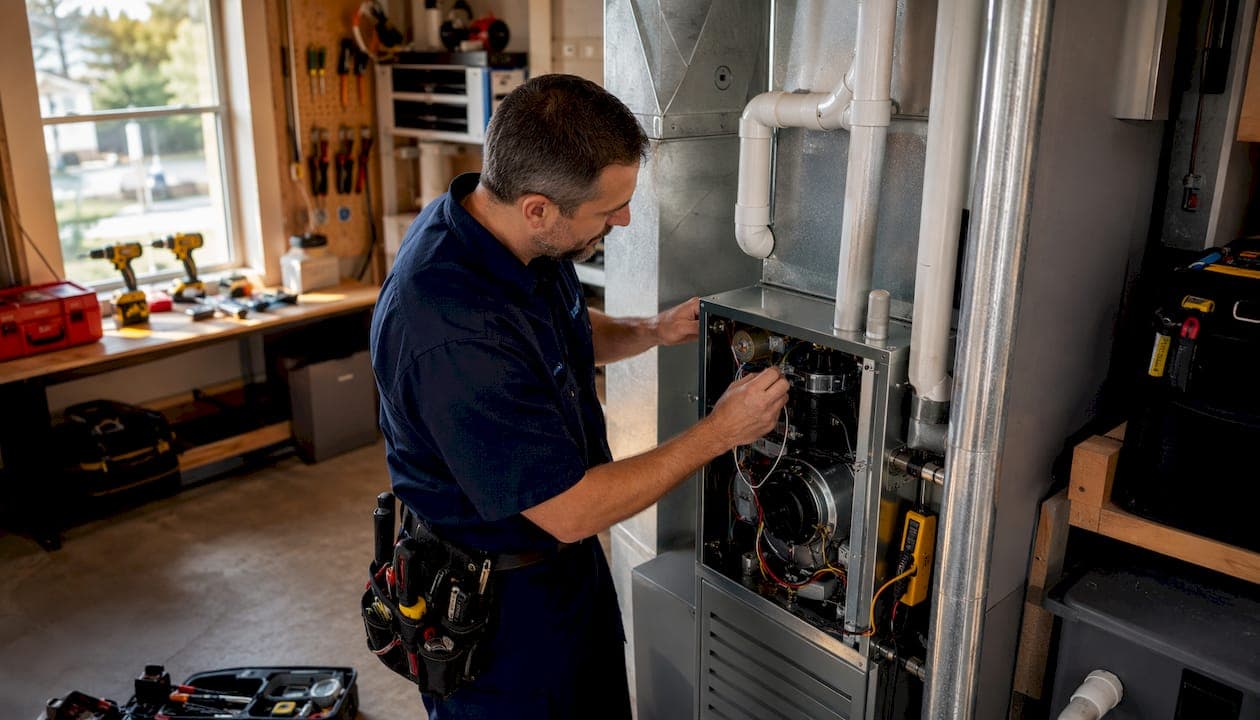
Forced-air heating is a central heating method that warms air at a furnace or heat pump, then pushes that air through a network of ducts and registers using a blower fan. It is the most common residential heating system in North America, and for good reason: the same blower and ductwork that heat your home in winter can run your central air conditioner in summer.
Quick snapshot:
- Pros: Fast warm-up, integrates with central AC, supports whole-home filtration
- Cons: Duct leaks waste energy, blower noise, uneven heat in poorly designed systems
- Bottom line: Before replacing or installing any forced-air system, have a qualified HVAC contractor perform a Manual J load calculation and a duct inspection.
Table of Contents
- How does a forced-air heating system work?
- What are the main components of a forced-air system?
- What types of forced-air heating systems are there?
- What are the advantages and disadvantages of forced-air heating?
- How efficient is forced-air heating, and what does it cost?
- What maintenance does a forced-air system need?
- Forced-air heating vs. radiant heat and other systems
- Questions to ask your HVAC contractor before signing anything
- Key Takeaways
- The part most homeowners find out too late
- E320air can handle your forced-air heating system
- Useful sources and further reading
How does a forced-air heating system work?
The sequence is straightforward, and once you understand it, you can diagnose most common complaints yourself.
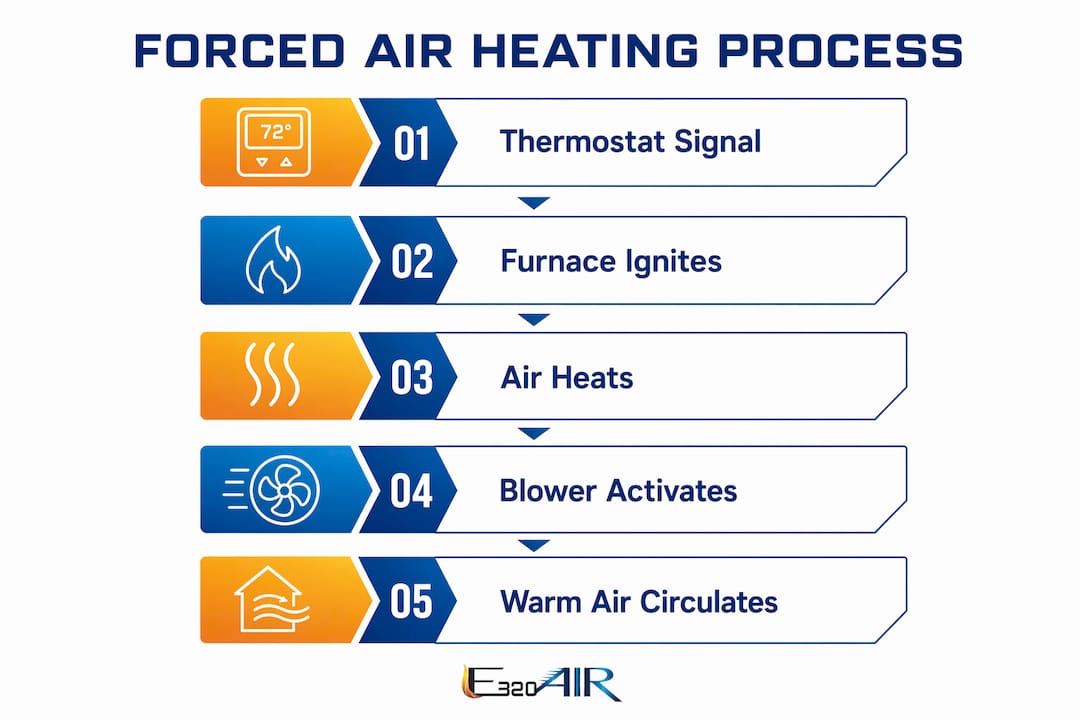
- Thermostat calls for heat. When your home drops below the set temperature, the thermostat sends a signal to the control board.
- Heat source activates. In a gas furnace, burners ignite and heat the heat exchanger. In a heat pump, the refrigerant cycle reverses to pull heat from outdoor air and move it indoors.
- Blower fan starts. After the heat exchanger or coil reaches operating temperature, the blower motor kicks on and draws cool air from the house through return grilles.
- Air moves through supply ducts. Warm air travels from the air handler through supply ducts to registers in each room.
- Rooms heat up; air returns. Cooler room air flows back through return ducts to be reheated, completing the loop.
The key difference between a furnace and a heat pump: A combustion furnace generates heat by burning fuel. A heat pump transfers heat that already exists in outdoor air (or the ground) into your home. Both use the same blower-and-duct distribution system, but a heat pump uses electricity and no combustion, which matters for safety and operating costs.
The loop runs continuously until the thermostat is satisfied, then the blower shuts down. Modern variable-speed systems slow the blower rather than stopping it abruptly, which keeps temperatures steadier and reduces the "blast of hot air" feeling older single-stage systems are known for.
What are the main components of a forced-air system?
Walk into most U.S. basements, utility closets, or attics and you will find the same core parts:
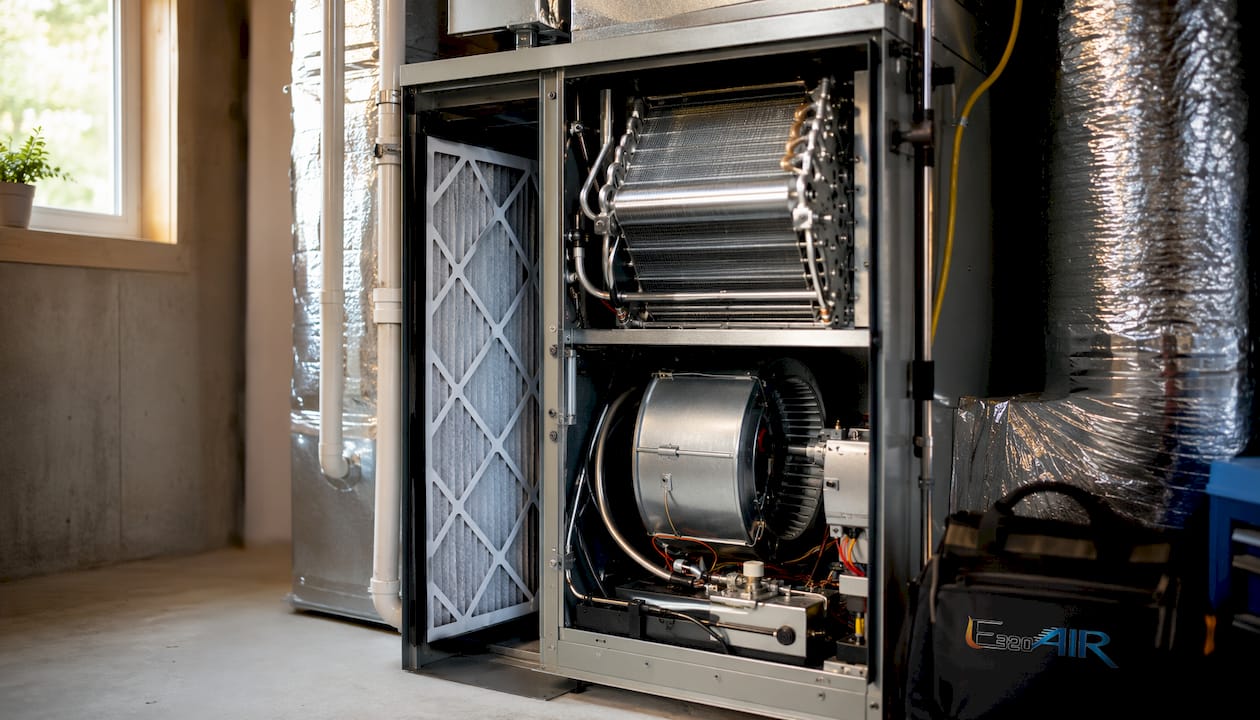
- Furnace or heat source: The box that generates or transfers heat. Gas furnaces are most common; heat pumps and electric furnaces are alternatives. Usually located in a basement, closet, or attic.
- Air handler/blower: Houses the blower motor that moves air through the system. In a heat pump setup, the air handler replaces the furnace cabinet.
- Heat exchanger (combustion systems only): A metal chamber that separates combustion gases from the air you breathe. A cracked heat exchanger is a serious safety hazard.
- Supply ducts: Sheet metal or flexible tubing that carries warm air from the air handler to each room.
- Supply registers: The grilles you see on floors, walls, or ceilings. They direct airflow and can be partially adjusted.
- Return grilles: Larger, unobstructed vents that pull room air back to the air handler. Blocking them with furniture is one of the most common homeowner mistakes.
- Air filter: Sits at the return air intake. Catches dust, pollen, and debris before they reach the blower and heat exchanger.
- Thermostat: The control interface that tells the system when to run and at what temperature.
Each part has a job in both comfort and safety. The filter protects the blower motor and keeps the heat exchanger clean; the heat exchanger protects you from combustion gases. Neither works well when neglected.
What types of forced-air heating systems are there?
"Forced air" describes how heat is distributed, not where it comes from. The ducts and blower are the same regardless of the heat source. That distinction matters when you are shopping for equipment or comparing quotes.
| Heat source | Best for | Fuel/efficiency signal | Typical use case |
|---|---|---|---|
| Gas furnace | Most U.S. climates; homes with gas lines | AFUE 80%+ | Dominant choice in cold-winter regions |
| Propane furnace | Rural homes without natural gas | AFUE 80%+; higher fuel cost | Areas without gas utility service |
| Oil furnace | Older Northeast homes | AFUE 80%; highest fuel cost | Regions with established oil delivery |
| Electric furnace | Mild climates; no gas available | AFUE effectively 100%; high operating cost | Backup or low-use scenarios |
| Heat pump (ducted) | Mild-to-moderate climates; all-electric homes | HSPF 8–13+; very efficient at moderate temps | Growing option in southern and mid-Atlantic U.S. |
| Hydronic coil in air handler | Homes with a boiler and existing ducts | Depends on boiler efficiency | Retrofit situations |

Heat pumps transfer heat rather than generate it, which makes them significantly more efficient than electric resistance heating in most conditions. Their limitation is performance in very cold weather, though cold-climate heat pumps have improved substantially and are now viable in many northern U.S. markets.
What are the advantages and disadvantages of forced-air heating?
Pros
- Fast response time. Forced-air systems heat a room noticeably faster than radiant systems because moving air transfers heat quickly.
- Shared infrastructure with central AC. The same blower and ductwork handle both heating and cooling, which makes adding or replacing central air conditioning straightforward and less expensive than installing a separate system.
- Whole-home filtration. Every cubic foot of air in the house cycles through the filter regularly. Upgrade to a MERV 11–13 filter or add a media cabinet and you get meaningful allergen reduction. You can also add UV air purifiers inline.
- One system, year-round climate control. A single thermostat manages heating, cooling, and ventilation.
Cons
- Duct leaks waste energy. Poorly sealed or uninsulated ducts in attics or crawlspaces can lose a significant portion of conditioned air before it reaches living spaces, even with a high-efficiency furnace.
- Noise. The blower, ductwork expansion, and register airflow create noise that radiant systems do not. Older single-stage systems are the loudest.
- Uneven temperatures. A system that was improperly sized or has a poorly designed duct layout will leave some rooms cold and others overheated.
- Air circulation spreads allergens if filters are neglected. Neglected filters allow dust and allergens to recirculate, which is the opposite of the air-quality benefit the system is capable of delivering.
Older vs. modern systems: A 1990s single-stage gas furnace runs at 100% capacity or off, which causes temperature swings and frequent cycling. A modern two-stage or modulating furnace runs at lower capacity most of the time, maintaining steadier temperatures and using less fuel per hour. The difference in comfort is noticeable within the first heating season.
How efficient is forced-air heating, and what does it cost?
AFUE (Annual Fuel Utilization Efficiency) measures how much of a furnace's fuel becomes usable heat. An 80 AFUE furnace converts 80 cents of every dollar of gas into heat; a 96 AFUE unit converts 96 cents. Federal minimum standards currently require 80 AFUE for most U.S. gas furnaces, though northern states have higher minimums.
HSPF (Heating Seasonal Performance Factor) is the equivalent metric for heat pumps. Higher HSPF means more heat delivered per unit of electricity consumed.
Here is the part most equipment brochures skip: AFUE is measured at the equipment, not at the register. Duct leakage and poor insulation can erase the efficiency advantage of a high-AFUE furnace entirely. A high-AFUE furnace pushing air through leaky or uninsulated ducts can deliver less warmth to your living space than a lower-AFUE furnace with tight, well-insulated ducts.
Practical cost reality: Installation costs for a gas furnace replacement in the U.S. can vary widely depending on equipment capacity, labor rates, and whether ductwork repairs are needed. Heat pump systems generally cost more upfront but can qualify for federal tax credits under the Inflation Reduction Act. Always get at least three quotes, and ask each contractor for a Manual J load calculation — not just a "same size as the old one" replacement.
Building air sealing is one of the most cost-effective ways to reduce the runtime and operating cost of any forced-air system, often delivering more savings than upgrading equipment alone.
What maintenance does a forced-air system need?
Forced-air systems are reliable when maintained and expensive to repair when ignored. Here is a realistic schedule:
- Replace the air filter every 1–3 months. Thicker media filters (4–5 inch) can last longer, but check them monthly during heavy-use seasons. A clogged filter is the single most common cause of reduced airflow, frozen coils, and blower motor failure.
- Schedule an annual professional tune-up before the heating season. A technician checks the heat exchanger, tests combustion, measures airflow, lubricates moving parts, and verifies safety controls. Annual tune-ups extend blower motor life and catch problems before they become breakdowns.
- Inspect and clean supply registers and return grilles at least once a year. Make sure furniture, rugs, and drapes are not blocking return grilles.
- Test carbon monoxide detectors monthly and replace batteries annually. Install at least one CO detector on each floor.
- Have ducts inspected every 3–5 years, especially if you notice uneven heating, higher bills, or visible gaps at duct connections. A preventive maintenance process that includes duct checks pays for itself in avoided repairs.
- Check the condensate drain line (if your furnace has one) annually to prevent clogs and water damage.
Safety note — cracked heat exchangers: A cracked heat exchanger on a gas or propane furnace can allow carbon monoxide to enter your living space. Warning signs include a yellow or flickering burner flame, soot around the furnace, or a CO alarm triggering. If you suspect a cracked heat exchanger, shut the system off and call a licensed HVAC technician immediately. Do not run the furnace until it has been inspected.
Forced-air heating vs. radiant heat and other systems
| System | Best for | Efficiency/operating cost | Installation complexity | Comfort feel | Air quality/ventilation |
|---|---|---|---|---|---|
| Forced air (gas/heat pump) | Homes with existing ducts; heating + cooling | Moderate to high (AFUE 80–98%; HSPF 8–13+) | Moderate; requires ductwork | Fast warm-up; some air movement and noise | Centralized filtration possible; filter maintenance critical |
| Radiant hydronic (in-floor) | New construction; remodels; allergy sufferers | High efficiency at low water temps | High; requires tubing in floors or walls | Very even, quiet, no drafts | No air circulation; no built-in filtration |
| Baseboard electric | Small spaces; supplemental heat; mild climates | Effectively 100% AFUE but high operating cost | Low; no ductwork needed | Slow, even; no air movement | No filtration; no ventilation |
| Ductless mini-split | Additions; older homes without ducts; zoning | Very high (HSPF above 8) | Moderate; no ducts but requires refrigerant lines | Quiet; zoned control | No central filtration; individual unit filters only |
When to keep forced air: If your home already has ducts in reasonable condition, replacing a failing furnace with a new high-efficiency unit is almost always the most cost-effective path. Ripping out a functioning duct system to install radiant rarely pencils out financially.
When to consider alternatives: Radiant heat makes sense in new construction or a major remodel where floors are already open. Ductless mini-splits are the practical answer for additions, older homes without ducts, or rooms that are consistently too hot or too cold. For a broader look at HVAC system types, the tradeoffs go deeper than heating alone.
Questions to ask your HVAC contractor before signing anything
This is where most homeowners leave money on the table. A good contractor welcomes these questions; a bad one gets evasive.
Questions to ask on every estimate:
- Will you perform a Manual J load calculation, or are you sizing based on the existing equipment?
- Can you test duct leakage before and after any duct work?
- What AFUE or HSPF rating are you quoting, and is it the federal minimum or a higher-efficiency option?
- Is the equipment single-stage, two-stage, or modulating? What variable-speed options are available?
- What permits are required, and will you pull them?
- What does the equipment warranty cover, and is there a labor warranty?
Red flags:
- No Manual J — sizing "by rule of thumb" leads to oversized equipment that short-cycles and wears out faster
- Skipping permits (a code violation that can affect your homeowner's insurance and resale)
- Visible duct damage or disconnected sections that the contractor does not address
- Pressure to decide the same day
Upgrades worth the investment:
- Duct sealing and insulation, especially in attics and crawlspaces
- Multi-stage or modulating furnace over a single-stage unit
- Variable-speed air handler
- Upgraded filtration (MERV 11–13 media cabinet) or UV air purification
- Smart thermostat with scheduling and remote access
Avoiding common HVAC installation mistakes starts with asking the right questions before the work begins, not after.
Key Takeaways
Forced-air heating is the most practical choice for most U.S. homes with existing ductwork, but its real-world performance depends on duct condition, filter maintenance, and proper equipment sizing.
| Point | Details |
|---|---|
| Definition | Forced air uses a blower to move heated air through ducts and registers to warm your home. |
| Duct condition matters most | Leaky or uninsulated ducts can erase the efficiency gains of even a high-AFUE furnace. |
| Maintenance is non-negotiable | Replace filters every 1–3 months and schedule an annual professional tune-up to protect the blower and heat exchanger. |
| Ask for Manual J | Any contractor who skips a load calculation is guessing at equipment size — a red flag worth walking away from. |
| E320air | E320air provides Manual J calculations, duct inspections, and full forced-air system installations and tune-ups in the Inland Empire. |
The part most homeowners find out too late
Most articles on forced-air heating focus on the equipment. The furnace brand, the AFUE rating, the staging options. That is all worth knowing. But the single biggest factor in whether your forced-air system actually performs well is something far less glamorous: your ducts.
A 96 AFUE furnace in a house with leaky attic ducts is not a high-efficiency system. It is an expensive furnace doing expensive work that partially disappears into the attic. The homeowner pays for a premium unit and wonders why their bills did not drop. The contractor who sold them the furnace without testing the ducts first did them a disservice, even if the installation was technically correct.
The other thing worth saying plainly: carbon monoxide is not a theoretical risk. A cracked heat exchanger on a gas furnace is a real failure mode, and it does not always announce itself loudly. If your CO detector goes off, or if a technician flags a cracked exchanger during a tune-up, that is not an upsell. That is the system working as intended. Shut it down, get it inspected, and do not run it until you have a clear answer.
Forced-air heating is a good system. It heats fast, it integrates with cooling, and it can meaningfully improve indoor air quality when the filter is maintained. The homeowners who get the most out of it are the ones who treat the ducts and the annual tune-up as part of the system, not as optional extras.
E320air can handle your forced-air heating system
When your furnace is short-cycling, your heating bills are climbing, or you are planning a full system replacement, the difference between a good outcome and a frustrating one usually comes down to who does the work.
E320air handles the full range of forced-air heating services in the Inland Empire: annual tune-ups, diagnostic calls, duct sealing and inspection, new system installations with proper Manual J sizing, and equipment upgrades. Every installation includes permit coordination and manufacturer warranty support. If you are not sure whether your system needs a repair or a replacement, a diagnostic visit gives you a clear, honest answer before you commit to anything.
Ready to get your system assessed? Request a service appointment or visit E320air to learn more about what is covered.
Useful sources and further reading
These resources are reliable starting points for verifying facts and finding regional incentives:
- Wikipedia — Forced-air heating: A solid technical overview of how forced-air distribution works, including duct and plenum terminology.
- This Old House — What Is Forced-Air Heating?: Practical homeowner-focused explanation with maintenance context.
- Forbes Home — What Is Forced Air Heating?: Good overview of system types and cost considerations.
- Carrier — Forced Air Furnaces: Manufacturer perspective on efficiency ratings and AC integration.
- Energy.gov — Heating and Cooling: Federal guidance on efficiency standards, rebates, and the Inflation Reduction Act tax credits.
- Your local utility company: Most U.S. utilities offer rebates for high-efficiency furnaces, heat pumps, and duct sealing. Check your utility's website or call their energy efficiency line before purchasing equipment.