
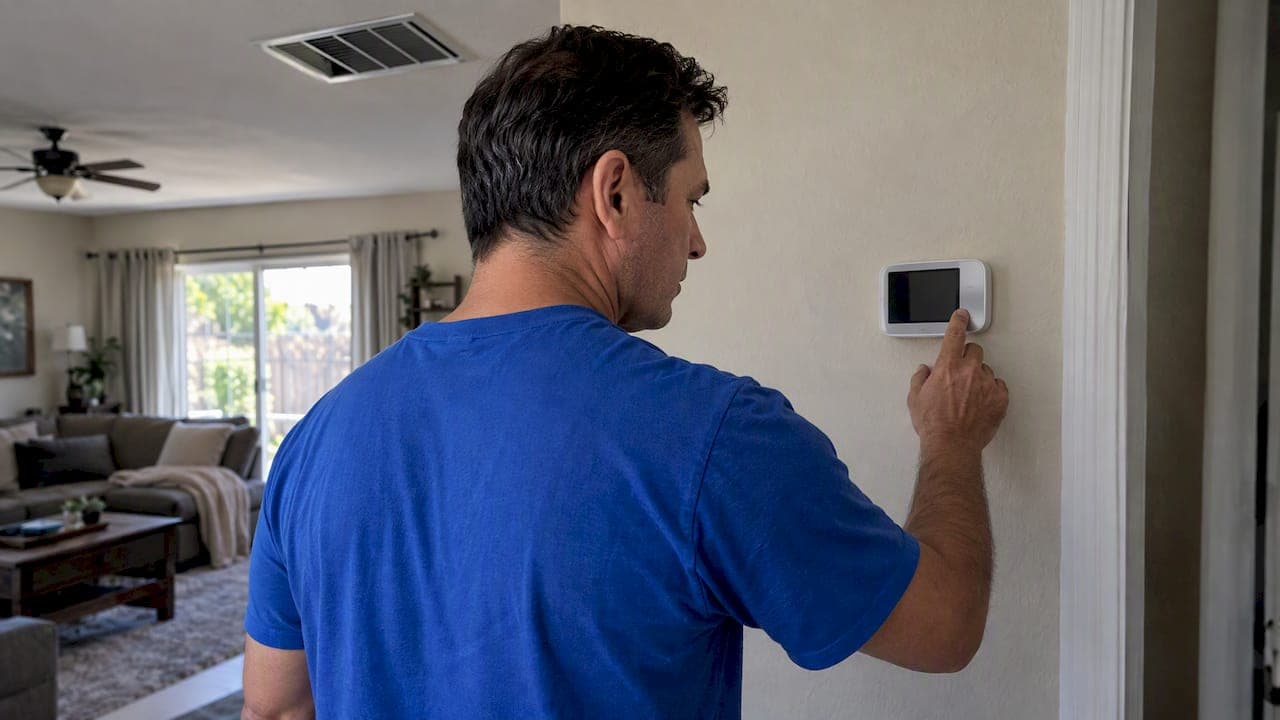
Check your thermostat mode and setpoint, reset a tripped breaker one time only, and swap a clogged filter. If you smell burning, hear grinding, or see water pouring from the unit, shut the system off and call a licensed technician right away. Never handle refrigerant or attempt electrical repairs yourself. Those jobs belong to certified professionals.
TL;DR:
- A breaker that trips again, recurring ice, short cycling, grinding, or warm air with a silent outdoor unit requires a technician, not another reset.
- Only EPA Section 608 certified technicians may handle refrigerant, including charging equipment or disconnecting refrigerant lines; never top off a system yourself.
- During outages, fans do not cool rooms; use hydration and cooling centers in heat, and keep generators outdoors, 20 feet from windows and doors.
- Tell dispatch when the failure began, recent power events, system age, unusual sounds or leaks, and checks already tried; photograph error codes.
Table of Contents
- How to tell an HVAC emergency from a minor problem
- Safe troubleshooting steps to try right now
- How to stay safe in extreme heat or cold while you wait
- When you should stop and call an emergency technician
- What to tell dispatch and what to expect when we arrive
- Simple habits that prevent the next emergency
- A field perspective on emergency HVAC calls
- How we help when your system goes down
- FAQ
- Sources
How to tell an HVAC emergency from a minor problem
Not every breakdown needs a midnight phone call. Some symptoms point to a simple fix, while others signal a hazard that needs a professional. A practical troubleshooting framework from HVAC Base maps symptoms like not cooling, strange noises, leaks, and short-cycling to likely causes, and separates safe homeowner checks from jobs that require a technician. We use the same logic in the field.
Treat these as emergencies:
- Burning smell or visible smoke: Shut the system off at the thermostat and the breaker. This usually means an electrical or motor fault.
- Loud grinding or metal-on-metal noise: This may indicate a serious problem. Shut the system off and contact a technician.
- Water pouring from the unit or ceiling: A blocked condensate line or a frozen coil melting. Water near electrical parts is a safety issue.
- Breaker that trips: Stop resetting it and contact a qualified technician.
- Oily residue or a hissing sound near refrigerant lines: This suggests a refrigerant leak, which only certified technicians may handle.
- Warm air during cooling season with the outdoor unit silent: This may indicate a problem that needs a technician.
These are usually minor and safe to check yourself: a blank thermostat screen, weak airflow from a dirty filter, a unit that is simply set to the wrong mode, or an outdoor unit buried in leaves.
The rule of thumb: if the cause might be airflow, power at the panel, or settings, you can investigate. If it involves refrigerant, wiring, or moving parts that sound damaged, stop and call.
Safe troubleshooting steps to try right now
These checks may help identify a problem, but avoid any step that feels unsafe.
- Check the thermostat. Confirm it is set to cool or heat (not "off" or "fan only"), and that the setpoint is at least a few degrees away from the current room temperature. Replace the batteries if the display is blank or dim.
- Breaker trips: Do not keep resetting it. Leave it off and contact a qualified technician.
- Check the outdoor disconnect. The small box near the outdoor unit has a switch or pull-out block. Make sure it is in the "on" position. Do not open the panel or touch wiring.
- Replace or inspect the air filter. A clogged filter chokes airflow, which can freeze the evaporator coil in cooling mode or trip the high-limit switch in heating mode. If the filter looks gray and matted, swap it.
- Open the vents and clear the area. Make sure supply and return vents are open and unblocked by furniture or rugs. Outside, clear leaves, grass clippings, and debris around the condenser.
- Look at the condensate drain. Find the drain line near the indoor unit. Standing water in the drain pan, water stains on the ceiling, or a unit that shuts itself off can signal a clog. If you can see the opening of the line, you can clear a surface blockage with a wet/dry vacuum on the outside end of the line. Do not poke wires or tools into the unit.
- Before restarting: Follow the manufacturer’s instructions. If the system repeatedly switches on and off or you are unsure what to do, contact a technician.
Pro Tip: Take a quick photo of the thermostat display, the breaker panel, and any error codes on the indoor unit before you touch anything. It helps the dispatcher narrow the problem down over the phone.
For more detail on specific symptoms, our air conditioner troubleshooting guide walks through common fixes, and our emergency shutoff procedure shows how to power the system down safely.
What not to do
Do not add or "top off" refrigerant, open electrical panels, bypass safety switches, or chip ice off the coils with tools. Ice means something is wrong with airflow or charge. Turn the system off, let it thaw, and call us if it freezes again. If your power surged before the failure, our post-surge safety checks explain what to look at before you power anything back up.

How to stay safe in extreme heat or cold while you wait
While you wait for repairs, your health matters more than the thermostat. Ready notes that electric fans only move air; they do not cool or heat a room. During a heat outage, lean on hydration, cool baths, and cooling centers, and avoid using the stove or oven for heating in cold weather.
- Heat: Drink water steadily, wear light clothing, close blinds on sun-facing windows, and move to the lowest, coolest floor. Head to a cooling center if indoor temperatures keep climbing.
- Heat illness: Recognize signs of heat-related illness and seek help. For suspected heat stroke, call 9-1-1. Never leave people or pets in a closed car.
- Cold: Dress in layers, close off unused rooms, and seal door gaps with towels. Use a community warming center if you cannot heat the home safely. FEMA's winter toolkit lists the warning signs of frostbite and hypothermia, including numbness, shivering, and slurred speech.
- Generators: Run them only outdoors and keep them at least 20 feet from windows and doors, as FEMA guidance advises. Carbon monoxide has no smell and builds up fast indoors.
- Surge protection: Ready recommends disconnecting appliances during outages so a returning surge does not damage them. Leave one light on so you know when power returns.
- Food and medicine: Keep the refrigerator closed, and plan ahead for any power-dependent medical devices.
The key safety fact: FEMA advises keeping generators at least 20 feet from windows and doors.
When you should stop and call an emergency technician
Some problems are not worth a second attempt. Call a licensed technician right away if any of these apply:
- Refrigerant is involved. Under the EPA's Section 608 rules, any work reasonably expected to release refrigerant requires a certified technician. It is illegal and unsafe for anyone else to handle, release, or vent it. That includes charging the system and removing or disconnecting refrigerant lines. The agency's technician fact sheet adds that only certified technicians may service equipment in ways that can release refrigerant.
- Electrical symptoms appear. Breakers that keep tripping, buzzing, arcing, or a burning smell call for help from a qualified technician. Do not handle electrical equipment.
- The compressor or fan sounds damaged. Grinding and metal-on-metal screeching mean parts are failing.
- The coil keeps freezing. If ice returns after a full thaw, airflow is not the only problem.
- The system short-cycles. Starting and stopping every few minutes wears out components quickly.
- You cannot keep the home safe. Infants, older adults, and anyone with a medical condition should not wait out extreme temperatures.
Expect after-hours and holiday calls to be prioritized by risk. Reports of gas smells, burning odors, water near electrical parts, and vulnerable occupants usually go first. If your furnace is the issue, our guide to fixing a heater that blows no heat can help you decide how urgent it is.
What to tell dispatch and what to expect when we arrive
A clear description saves time on the phone and on site. When you call, be ready to share:
- The symptom timeline: when it stopped, whether it failed suddenly or got worse over days.
- Recent power events: outages, flickering lights, or storms that might have caused a surge.
- System details: approximate age, brand, and model if you can read the label on the outdoor unit.
- Sensory clues: burning or musty smells, unusual sounds, visible leaks, or ice.
- What you already tried: whether you reset a breaker, changed the filter, or cleared the drain.
On arrival, a technician will usually confirm the complaint, shut off power at the disconnect, and check safety controls, capacitors, contactors, airflow, and the drain. If the diagnosis points to refrigerant, the technician will check for leaks before adding anything. Federal rules also require recordkeeping on certain refrigerant-containing appliances, which is why a certified technician may ask about prior service history or past repairs. Our homeowner's guide to HVAC repair services covers the full process in more detail.
Simple habits that prevent the next emergency
Most emergency calls trace back to neglect that took only minutes to prevent. Start here:
- Check the filter. Replace or clean it as needed, following the manufacturer’s instructions.
- Book an annual tune-up. A technician can test capacitors, tighten electrical connections, inspect the coil, and flush the drain before they fail on the hottest or coldest night of the year.
- Keep the outdoor unit clear. Trim shrubs, rake leaves, and keep stored items away from it.
- Check the condensate drain regularly. A quick look for standing water or stains can head off a ceiling leak.
- Seal the house envelope. Gaps around exterior doors make your system work harder, and One Day Doors & Closets offers practical tips on how to winterize your doors.
- Know when to replace. For a system with repeated breakdowns, compare the cost of repairs with replacement and ask a technician for advice. A maintenance agreement also gets you scheduled attention before the busy season.
A field perspective on emergency HVAC calls
Have your system details and photos handy when you call, clear a path to the indoor and outdoor units, and keep pets in another room. You can browse more examples in our [Problem Solving Gallery](https://www.e320air.com/problem-solving-gallery).
How we help when your system goes down
When the heat or cooling quits, we send licensed, insured technicians for emergency repairs, heater repair, routine maintenance, and full HVAC installation, with transparent estimates and a safety-first approach. We cover all major brands and offer flexible payment options. Contact us to schedule service and tell us what you are seeing.
FAQ
What do you call someone who fixes AC units?
An HVAC technician. Anyone who handles refrigerant must hold EPA Section 608 certification, so ask to see credentials before work begins.
How can I tell my HVAC is not working?
Common signs are weak or warm airflow, a silent outdoor unit, a thermostat that does not respond, odd noises, and water around the equipment. Check the thermostat, breaker, and filter first. If those are fine, call a technician.
What is an AC emergency?
An AC emergency is any failure that threatens safety or health, such as a burning smell, water near electrical parts, grinding noises, or no cooling when someone in the home is vulnerable to heat. In those cases, shut the system off and call for urgent service.
Can I add refrigerant to my AC myself?
No. Adding, removing, or venting refrigerant requires a certified technician, and the EPA's Q&A guidance says work like attaching hoses or adding refrigerant calls for Section 608 certification.
Sources
- Epa
- Ready
- FEMA Fact Sheet Co-Brand Template
- What Technicians Need to Know
- AC Troubleshooting Guide: Fix 6 Common Problems (2026) | HVAC Base