
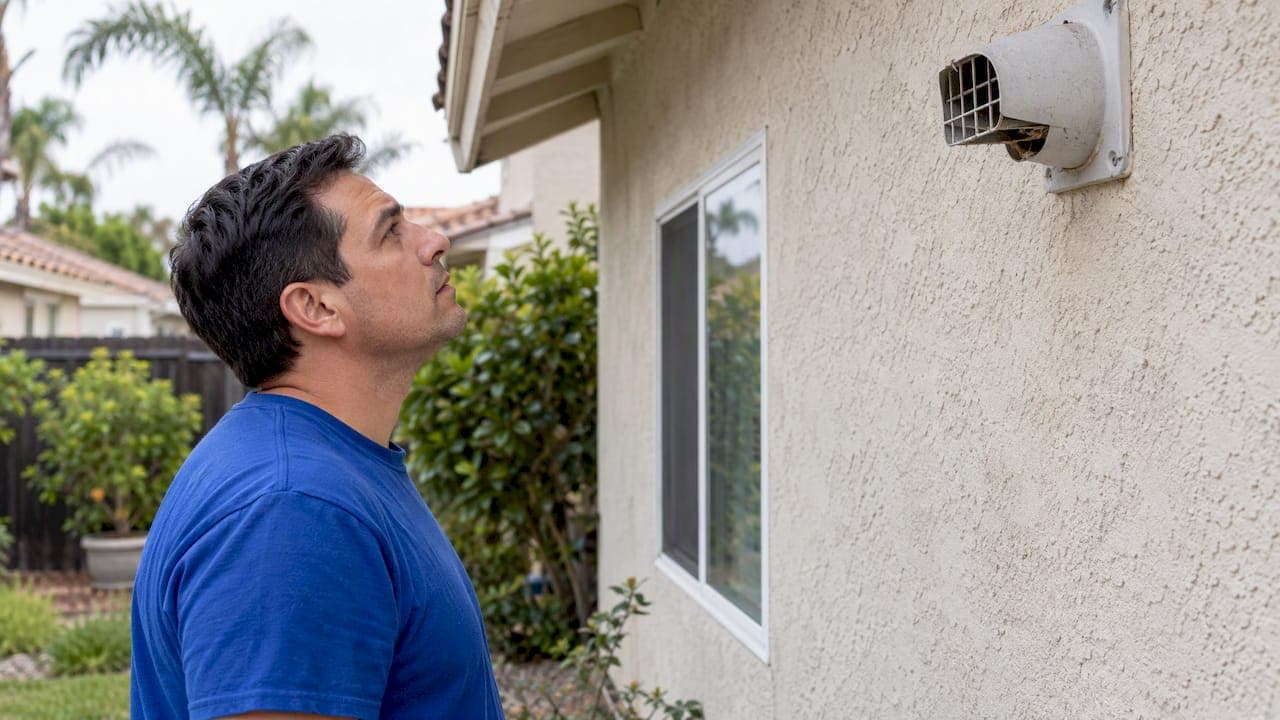
A furnace pressure switch error means the safety switch didn't detect the airflow it needs to confirm safe venting, so the control board won't let the burners light. Write down any flashing error code, power-cycle the furnace once, and if you're comfortable, do a quick visual check of the vents and tubing. If you smell gas, see soot, or the inducer motor never runs, shut off power at the switch and call a licensed technician.
TL;DR:
- Most lockouts come from airflow faults, especially blocked intake or exhaust vents, wet or clogged condensate lines, and cracked vacuum tubing, not failed switches.
- After recording the blink code, cut power for 30 seconds, then inspect vents, visible tubing, and an accessible condensate drain; stop if the fault returns.
- Technicians compare inducer vacuum with the furnace specification and test the isolated switch; replacements must match the original pressure rating and terminal style.
- A stuck closed switch can allow ignition without adequate draft, so treat this less common fault as urgent and call a licensed technician.
Table of Contents
- What the Furnace Pressure Switch Does and How It Works
- Common Symptoms and Error Codes to Watch For
- Most Common Causes Behind Pressure Switch Errors
- Safe Troubleshooting Steps You Can Try at Home
- How Technicians Test Pressure Switches, Inducers, and Wiring
- Repair Costs and What Drives the Price
- Preventive Maintenance to Avoid Repeat Pressure Switch Errors
- Edward and E320 Air: What the Field Actually Shows
- Safe DIY vs. Calling a Licensed Technician
- Get Your Furnace Pressure Switch Diagnosed the Right Way
- FAQ
- Sources
What the Furnace Pressure Switch Does and How It Works
The pressure switch is a small safety component that confirms your furnace's inducer motor is pulling enough draft before the burners are allowed to light. It connects to the inducer housing through a thin rubber or silicone hose, and it reads the vacuum created when the inducer fan spins. When that vacuum reaches a specific threshold, measured in inches of water column (W.C.), the switch closes a electrical contact and tells the control board it's safe to proceed with ignition.
Picture four parts working together: the inducer motor, the tubing that runs from the inducer housing to the switch, the switch itself, and the vent pipe that carries exhaust outside. Air has to move freely through all four for the switch to close. If venting is blocked, the tubing is cracked, or the inducer isn't spinning fast enough, the switch never sees the vacuum it's looking for and stays open. No closure, no ignition. That's the entire point of the design: a furnace that can't verify safe draft shouldn't be allowed to burn gas.

The terms "stuck open" and "stuck closed" describe different failure modes. A switch stuck open refuses to close even when draft is normal, which is by far the more common complaint and usually points to a mechanical or electrical cause outside the switch itself, according to a guide on pressure switch failures. A switch stuck closed is less frequent and can let the furnace attempt ignition even when draft isn't adequate, which is the scenario the safety design exists to prevent in the first place.
Understanding this relationship matters because most "pressure switch problems" aren't actually switch problems. They're airflow problems that the switch is correctly reporting. For more on how the ignition sequence ties together, our guide to how furnaces work walks through the full safety chain from thermostat call to burner light.
Common Symptoms and Error Codes to Watch For
A pressure switch problem usually announces itself in a recognizable pattern rather than a single dramatic failure. The inducer motor kicks on, runs for a few seconds or longer, and then the furnace shuts down and locks out before the burners ever ignite. That cycle often repeats two or three times before the control board gives up and flashes an error code on the furnace's diagnostic LED.
Watch and listen for these signs:
- The inducer motor runs but the furnace never ignites, followed by a lockout after a few attempts.
- A status LED blinks a specific pattern tied to pressure or draft faults, which you can check against the legend printed inside the furnace's access panel.
- The inducer sounds weak, labored, or humming instead of running at full speed, or it doesn't start at all.
- Visible moisture, rust, or soot around the switch body or its connecting tubing.
- The furnace works fine on mild days but fails during high wind or heavy snow, which points to a venting issue rather than a switch defect.
The distinction between stuck-open and stuck-closed symptoms matters for diagnosis. Stuck-open behavior, by far the more common version, means no ignition at all and a predictable lockout pattern. Stuck-closed behavior is rarer and can look like a furnace that attempts to fire under conditions it shouldn't, which is a more urgent safety flag than a simple no-start. If you're also noticing cold air from the vents alongside these symptoms, our piece on furnace blowing cold air covers a few related thermostat and airflow checks worth ruling out first.
Most Common Causes Behind Pressure Switch Errors
Technicians see the same handful of causes repeatedly, and they tend to show up in a rough order of frequency. Knowing that order helps you understand why a tech checks the simple stuff before touching the switch itself.
- Blocked intake or exhaust termination: debris, leaves, insect nests, snow drifts, or ice buildup at the outside vent cap restrict airflow enough to prevent the switch from closing.
- Clogged condensate drain or trap: a backed-up drain lets water collect and can wick into the pressure switch tubing, according to ACCA's condensate guidance, causing false readings or a wet, blocked line.
- Cracked, split, or disconnected vacuum tubing: the thin hose between the inducer and the switch degrades with heat cycling over the years and is one of the most frequent single points of failure.
- A failing inducer motor or weak start capacitor: if the motor can't spin at full speed, it can't generate the vacuum the switch needs, even when venting is completely clear.
- A defective switch or a mismatched replacement part: switches do fail internally, and a previous replacement with the wrong pressure rating can cause nuisance lockouts that look identical to a real fault.
- Obstructions inside the flue or heat exchanger: less common, but a restricted flue path or exchanger blockage can choke draft even when the outside termination and tubing look fine.
Moisture deserves special attention here. Corrosion-resistant condensate components and proper drain routing reduce the chance that water migrates into tubing or control wiring, according to building science guidance on HVAC condensate management. A furnace installed with a poorly sloped or undersized condensate line is more prone to repeat pressure-switch faults, not because the switch is weak, but because it keeps getting fed bad information by a wet or blocked system around it.
The field pattern worth remembering: small, external problems like a cracked hose or a blocked vent cap cause the vast majority of these lockouts. The switch itself is usually innocent.
Safe Troubleshooting Steps You Can Try at Home
Before touching anything, run through a short safety check. Note the exact error code or blink pattern if your furnace displays one. If you smell gas, see scorch marks, or notice anything that looks like damage beyond a loose hose, shut off power at the furnace switch and skip straight to calling a technician. Never open the combustion chamber, remove the burner assembly, or probe furnace wiring with the power on. Those tasks require training and the right test equipment, and they're where DIY attempts go wrong.
If none of those red flags apply, this sequence covers the checks most homeowners can do safely:
- Power-cycle the furnace. Turn off power at the switch or breaker, wait 30 seconds, turn it back on, and let the furnace attempt one full heat call so you can watch how far it gets before locking out.
- Inspect the outside vent terminations. Walk outside to both the intake and exhaust pipes and clear away leaves, snow, ice, or any nesting material blocking the openings.
- Check the visible vacuum hose. Look at the small rubber or silicone tube connecting the inducer housing to the pressure switch for cracks, splits, pinholes, or pooled moisture, and replace it if it looks compromised.
- Check the condensate drain and trap. If your furnace has a visible condensate line, look for standing water or a clogged trap and clear it if you can reach it without disassembling anything.
- Tighten loose hose fittings only. If a connection looks loose but otherwise intact, a snug refit is reasonable. Do not go further into the cabinet, and never open the gas valve area or inducer wiring.
Pro Tip: Keep a simple log: the error code you saw, what you checked, and what you changed. That five-minute note saves a technician diagnostic time and often shortens the service call.
For a broader walkthrough of what's safe to attempt yourself, our guide to safe step-by-step DIY furnace repair covers related tasks and where the line sits for calling a professional. If the furnace still won't ignite after these checks, our quick safe checks for ignition failure is a useful next stop before booking a service visit.
How Technicians Test Pressure Switches, Inducers, and Wiring
Once you've ruled out the obvious, a licensed technician has tools that go well beyond a visual inspection. The two main instruments are a handheld vacuum pump and a digital manometer, backed up by a multimeter for electrical checks.
- Vacuum pump test: a tech disconnects the switch from the furnace circuit and applies vacuum directly with a hand pump to see whether the switch closes at its rated pressure, isolating the component from the rest of the system so a bad reading can be traced to the switch itself rather than something upstream.
- Manometer test: with the inducer running, a digital manometer measures the actual dynamic vacuum in the tubing and compares it against the furnace manufacturer's specified W.C. value, which shows whether the inducer is generating enough draft in real operating conditions.
- Multimeter checks: continuity and voltage tests on the switch terminals and the inducer motor circuit confirm whether power is reaching the motor correctly and whether the switch itself is passing or blocking signal as expected.
These readings point to different repair paths. A manometer reading well below spec with a healthy switch usually means the inducer motor is weak and needs replacement. A switch that fails to close even at correct vacuum, confirmed by the isolated vacuum pump test, means the switch itself is the problem. Clear readings with no faults on either component usually trace back to venting or condensate issues outside the furnace cabinet entirely.
Logged readings matter beyond the single visit. Documenting the manometer numbers during a service call gives you and the technician something to compare against if the fault returns weeks or months later, which is especially useful for intermittent faults that don't show up on demand. Part matching is the other half of getting this right: a replacement switch has to match the original's pressure rating and terminal style exactly, because a mismatched rating can cause nuisance lockouts that mimic a completely different problem.
Repair Costs and What Drives the Price
Not every pressure-switch error ends in the same repair, and the cost difference between fixes is significant. The lowest-effort repairs, clearing a blocked vent termination, swapping a cracked vacuum hose, or clearing a condensate clog, are inexpensive and sometimes resolve the problem without replacing any electrical component.
- Hose replacement, vent clearing, or condensate clearing: generally the least expensive fixes, often resolving the issue without any parts beyond a length of tubing.
- Pressure switch replacement: a moderate repair, but only when the correct pressure rating and terminal style are matched to the original; the wrong rating risks repeat lockouts.
- Inducer motor or capacitor replacement: a bigger job in both parts and labor, and generally a professional-only repair given the electrical work and motor access involved.
- Flue or heat exchanger work: needed less often, but when draft issues trace back to an obstruction inside the flue or exchanger, combustion testing and more extensive labor are typically required.
A few factors shift the cost up or down regardless of which repair is needed: the furnace's age and whether parts are still readily available, how accessible the inducer and switch are in your specific cabinet layout, and how much diagnostic time it takes to isolate the fault versus a straightforward visual catch. An older furnace with a discontinued inducer motor costs more to fix than a newer unit with common parts on the shelf, and a cramped installation adds labor time that a more open cabinet wouldn't. Because every furnace model and access situation differs, a firm number only comes after a technician has eyes on your specific system.
Preventive Maintenance to Avoid Repeat Pressure Switch Errors
Most pressure-switch errors are preventable with a short list of recurring checks rather than a reaction to a cold house.
- Schedule an annual technician visit that includes a vent and condensate inspection, an inducer motor check, and a visual look at the control board for corrosion or loose connections.
- Clear outside vent terminations every season, especially before winter storms and after heavy leaf drop, keeping the area around both intake and exhaust free of debris.
- Check visible tubing condition periodically for cracking, stiffness, or moisture, since this hose degrades with age even without an obvious failure event.
- Keep furnace model and part numbers on hand, along with past service records, so any future technician visit starts with information instead of guesswork.
- Consider a service agreement that catches inducer wear, condensate buildup, and control-board issues before they escalate into a mid-winter lockout.
A furnace with clean venting, a clear condensate path, and a healthy inducer motor rarely throws a pressure-switch error in the first place. Prevention here is mostly about keeping airflow and drainage doing what they're supposed to do, since the switch itself is just reporting what it sees.
Edward and E320 Air: What the Field Actually Shows
In the field, the pattern holds up consistently: most pressure-switch lockouts trace back to tubing or vent blockages rather than the switch itself failing. A cracked hose or a vent cap packed with leaves causes the same lockout behavior as a genuinely bad switch, which is exactly why isolating the component with a vacuum pump test matters before anyone reaches for a replacement part.
When diagnosing heater repairs, the process often starts with a visual check of venting and tubing, a manometer reading with the inducer running, and multimeter checks on the switch and motor circuit when the first two don't explain the fault. Replacement switches should match the furnace manufacturer's exact pressure rating and terminal style to avoid new problems. Technicians often provide a written summary of their findings and actions for customer records.
Past repair work, including pressure-switch and inducer cases, is documented in our problem-solving gallery for homeowners who want to see how these diagnostics play out on real furnaces.
Safe DIY vs. Calling a Licensed Technician
The honest line sits closer to "visual check" than most people expect. Clearing a vent cap, swapping a cracked hose, and checking a condensate trap are all reasonable DIY tasks that resolve a real share of pressure-switch errors without a service call.
Everything past that belongs to a licensed technician. Gas smell, combustion-chamber access, inducer motor wiring, and intermittent faults that only show up occasionally all require tools and diagnostic logging that a homeowner visit can't safely replicate. A documented manometer reading does something a guess can't: it gives you a number to compare against spec and against next season, which is how a recurring fault actually gets solved instead of patched. For more on where that line sits, see our take on why combustion and gas work needs a licensed pro instead of a weekend fix.
— Edward
Get Your Furnace Pressure Switch Diagnosed the Right Way
A pressure-switch error is frustrating because it looks like one small part failed, when the real cause is often hiding in a vent cap, a condensate line, or a tired inducer motor. We run the same diagnostic sequence on every heater repair call: a visual inspection of venting and tubing, manometer testing with the inducer running, and multimeter checks on the switch and motor circuit, all before we recommend a repair.
When a switch does need replacing, we match the exact pressure rating and terminal style to your furnace's specification, since a mismatched part just creates a new round of nuisance lockouts. For issues such as a failing inducer motor, a blocked flue, or more complex repairs beyond simple fixes, service providers handle the labor and provide a written estimate before any work starts, often with flexible payment options including financing. Experienced technicians are licensed and insured, and are available around the clock, including weekends and holidays, for urgent furnace problems.
If your furnace is locking out on a pressure-switch code right now, our heater repair page is the fastest way to get a technician scheduled.
FAQ
How can I tell if my furnace pressure switch is faulty?
A faulty switch typically shows up as the inducer running followed by a lockout before ignition, sometimes with a specific blink code on the furnace's diagnostic LED. The only reliable way to confirm the switch itself is at fault, rather than a blocked vent or cracked hose, is a vacuum pump test that isolates the component from the rest of the system.
How much does it cost to replace a furnace pressure switch?
Cost depends on your furnace's age, parts availability, and how accessible the switch is in your specific cabinet, so a firm price only comes after a technician inspects your system. Simple fixes like a hose or vent clearing tend to cost less than a full switch or inducer motor replacement.
Can a furnace run without a pressure switch?
No. The pressure switch is a safety component that confirms adequate draft before the control board allows ignition, and a furnace isn't designed to bypass that check safely. Attempting to run a furnace without a functioning pressure switch removes a safeguard against unsafe venting conditions.
How do I reset the error code on my furnace pressure switch?
Turning off power at the furnace switch or breaker for about 30 seconds, then restoring it, clears most error codes and lets the furnace attempt a fresh heat call. If the same code returns after one reset, that points to an underlying airflow, tubing, or motor issue rather than a display glitch, and further checks or a technician visit are the next step.
Sources
- Furnace pressure switch stuck open: Causes, diagnosis, and repair - Pick Comfort
- The ultimate guide to HVAC condensate - ACCA HVAC blog
- BASC: HVAC has corrosion-resistant condensate drain pan - PNNL BASC