
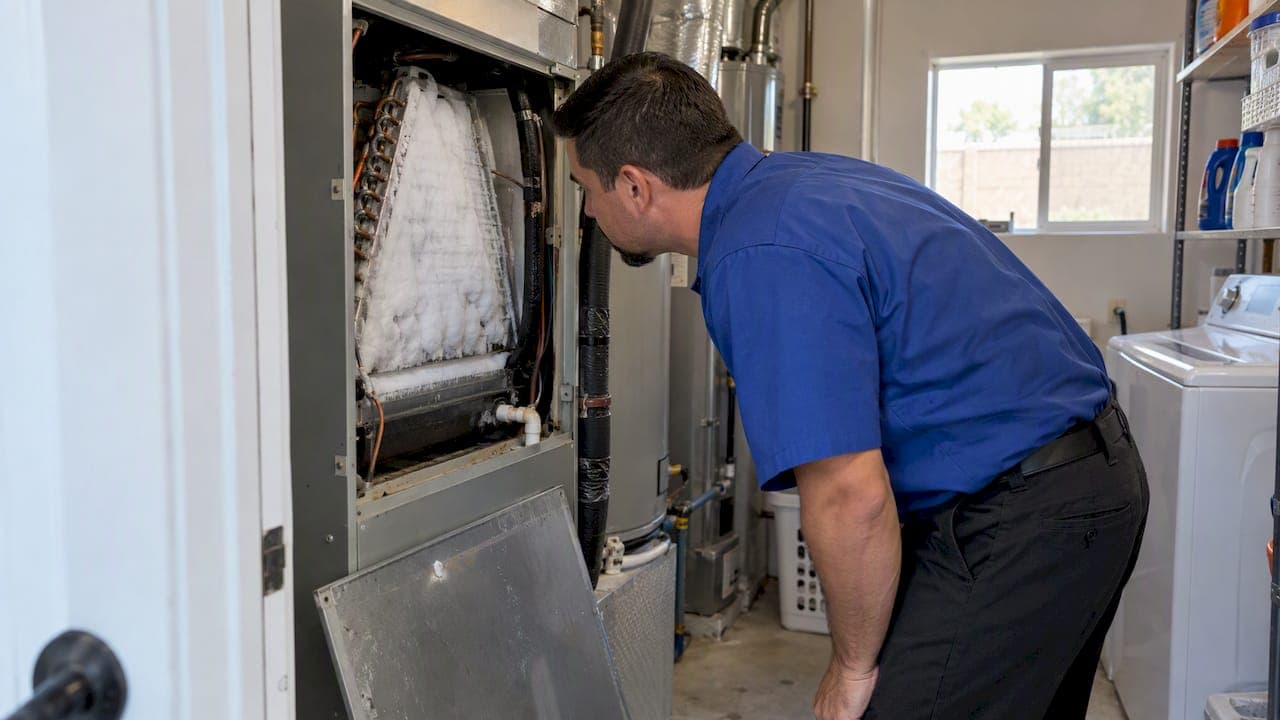
If your heat pump isn't cooling, the likeliest culprits are a dirty filter, wrong thermostat settings, a tripped breaker, a blocked outdoor unit, or lost refrigerant. Check the thermostat and filter, then look for a tripped breaker, outdoor obstructions, or drain problems. Leave electrical repairs to a technician. Refrigerant and major electrical work belong to a licensed technician.
TL;DR:
- Replace a filter when you cannot see light through it, and note its printed size and thickness to avoid fitting the wrong replacement.
- If ice appears, turn cooling off and let the coil thaw; if it freezes again, stop testing and call a qualified technician.
- Refrigerant leaks need repair before recharging; only a technician holding EPA Section 608 certification should handle refrigerant, since topping it off alone delays recurrence.
- Ask for annual maintenance that measures airflow and system pressure, verifies refrigerant, tests electrical parts, inspects coils, and clears the condensate drain.
Table of Contents
- What can you check in 15 minutes when your heat pump isn't cooling?
- Which problems cause a heat pump to stop cooling?
- How do you prevent heat pump cooling problems?
- When should you stop DIY and call a licensed technician?
- What happens during a professional heat pump diagnostic?
- What do homeowners get wrong about heat pump cooling?
- How can we fix your heat pump's cooling problem?
- FAQ
- Sources
What can you check in 15 minutes when your heat pump isn't cooling?
Start with the free, safe stuff. Most no-cooling calls trace back to something on this list.
- Thermostat: Confirm it is set to cool, the target is below the room temperature, and the batteries are fresh.
- Air filter: Pull it out. If you can't see light through it, replace it. Note the size and thickness printed on the frame so the next one fits.
- Breaker: If you suspect a breaker has tripped, don't reset it. Contact a qualified technician, especially if the breaker trips repeatedly.
- Outdoor unit: Clear leaves, grass and debris from around it. Never poke anything through the fan guard.
- Ice or water: Look for ice on the outdoor coil or water pooling near the indoor unit. If you see ice, switch cooling off and let it thaw before you test again.
Pro Tip: Take photos of the thermostat display, the filter and any ice before you change anything. They make a service call much faster.
If cooling still hasn't returned, write down when the problem started and what you noticed. That is your service-call kit.
Which problems cause a heat pump to stop cooling?
Match what you see to the likely cause below. Some checks are safe for you, and some are not.
Airflow restrictions. Weak airflow or lukewarm air often means a clogged filter, closed or blocked vents, or a dirty indoor coil. Replace the filter, open and clear the vents, and see if airflow improves. A dirty coil is harder to reach, which is why technicians measure actual airflow instead of guessing. The Department of Energy notes that dirt and neglect are the top causes of HVAC failure.
Low refrigerant. Long run times and weak cooling can point to a leak. Refrigerant circulates in a sealed loop, so low levels mean it escaped somewhere. Topping it off without finding the leak only buys a short reprieve. A certified technician has to locate and fix the leak first.
Frozen coil. Ice usually comes from restricted airflow, a refrigerant problem or a defrost cycle that isn't working. Shut cooling off, run the fan if your thermostat allows, and wait for the ice to melt. If it freezes again, call us.
Electrical and control faults. Tripped breakers, blown fuses, a worn contactor or a weak capacitor can leave the outdoor unit silent or humming without starting. Don't reset a tripped breaker or open the panels. Contact a qualified technician.
Compressor or fan motor trouble. Grinding, buzzing, a fan that won't spin or a unit that cycles on and off all point to a failing part. These are sealed-system or motor repairs that need professional diagnosis.
Duct and house leakage. Some rooms cool and others don't? Leaky or uninsulated ducts waste cooled air before it reaches you. Sealing and insulating ducts helps, as does cutting the heat load on your home. A roof and attic treatment can also reduce cooling demand. For more on diagnosis, see our guide on what's actually wrong when an AC isn't cooling.
- Warm airflow plus ice: think airflow or refrigerant.
- Silent outdoor unit: think breaker, contactor or capacitor.
- Uneven rooms: think ducts or sizing.
How do you prevent heat pump cooling problems?
Most repeat problems come from skipped maintenance. A steady routine heads off the common failures.
- Filters: Check monthly and replace when dirty. Homes with pets, dust or construction nearby need changes more often. ENERGY STAR also recommends spring maintenance before cooling season.
- Coils and clearance: Rinse the outdoor coil gently and keep plants trimmed back before summer.
- Annual professional visit: It should cover airflow measurement, total external static pressure, refrigerant verification, an electrical inspection and condensate drain cleaning. A clogged drain can cause water damage and automatic shut-offs.
- Ducts: Seal and insulate them so the air you pay to cool actually arrives.
Proper sizing matters too, and why correct HVAC sizing improves comfort and savings is worth a read. Our heat pump maintenance checklist lays out the monthly and yearly steps.
When should you stop DIY and call a licensed technician?
Call a qualified technician if you suspect a refrigerant leak, hear grinding or see a dead fan or compressor, smell burning, find a breaker that keeps tripping, or still have no cooling after the checks.
- Refrigerant leaks and any recharging.
- Compressor, fan motor, capacitor or contactor failures.
- Burning smells or repeat breaker trips.
- No cooling after the initial checks.
Refrigerant is regulated. The EPA requires technicians who handle it to hold Section 608 certification, which exists to limit environmental and safety risks. Older refrigerants like R-22 are being phased out, and the EPA warns that unapproved or flammable substitutes are hazardous, so don't charge a system yourself. Have refrigerant work done by an EPA-certified technician.
EPA rule in plain terms: refrigerant work must be done by a certified technician.
Before the visit, gather your photos, thermostat settings and a short timeline of symptoms.
What happens during a professional heat pump diagnostic?
A good visit follows a repeatable routine. The technician verifies controls, measures airflow and total external static pressure, reads refrigerant pressures, inspects both coils, and tests electrical parts such as capacitors and contactors. For sealed-system work, technicians must follow EPA evacuation and recovery practices.
Installation quality matters as much as repair. Building America guidance says improper installation is a major cause of poor performance, and commissioning tests such as airflow measurement, TESP and duct leakage checks catch those faults. ENERGY STAR suggests asking about Manual J sizing and documentation. Our guide to HVAC commissioning for homeowners explains what the paperwork should show. Root-cause fixes last longer than quick patches.

What do homeowners get wrong about heat pump cooling?
The biggest mistake is waiting. A system that struggles in May becomes a no-cooling emergency in July, when service calendars fill up. Most calls are solved by simple upkeep, but the other mistake is reaching into sealed-system or electrical repairs yourself. Take photos, write down symptoms, and schedule service before peak season. After any repair, ask whether the technician is EPA-certified and whether tests were documented.
— Edward
How can we fix your heat pump's cooling problem?
We handle repairs to restore cooling, with qualified technicians and documented testing.
- Diagnostics and refrigerant leak repair
- Compressor and fan replacement
- Annual tune-ups and duct sealing
- Replacement or upsizing when your system needs it
Ready for answers? Schedule a diagnostic with us or browse the problem solving gallery to see similar repairs.
FAQ
What are the most common problems with heat pumps?
Dirty filters, low refrigerant, frozen coils, electrical faults and failing motors cause most trouble. Poor maintenance and installation problems make each of these more likely. Simple upkeep prevents many of them.
Is a heat pump good for cooling too?
Yes. A heat pump works as an air conditioner in summer by moving heat out of your home. If it runs but doesn't cool, the problem is usually airflow, refrigerant or electrical.
What size heat pump do I need?
Size depends on your home's heat load, which a technician calculates with a Manual J assessment. ENERGY STAR advises asking contractors about Manual J sizing before you buy.
Why is my heat pump blowing out cold air?
If it blows cool but not cold, check the filter, thermostat setting and outdoor clearance first. Ice, a clogged drain or low refrigerant can also be the cause. If the checks don't help, call a qualified technician.
Sources
- Epa
- Heat Pump Quality Installation and Commissioning | Building America Solution Center
- Heating & Air Conditioning Installation Bid Comparison Checklist
- Tips for Lowering Your Cooling Costs