
TL;DR:
- DIY repairs include changing filters, resetting thermostats, and clearing drain lines safely.
- Major repairs like refrigerant recharge or compressor replacement require licensed professionals.
- Preventative maintenance and timely professional service extend HVAC system lifespan in Beaumont's extreme climate.
It's 105°F in Beaumont and your AC just quit. No cold air, no relief, just a system that picked the worst possible moment to fail. Whether it's a buzzing outdoor unit, a furnace that won't fire up in January, or airflow that's gone from strong to barely a whisper, HVAC problems in this part of Southern California hit harder because of the extreme seasonal swings. This guide walks you through what repairs you can safely handle yourself, what they'll realistically cost, which tools you'll need, and the clear signals that tell you it's time to stop and call a licensed professional instead.
Table of Contents
- What to know before starting HVAC repairs
- Step-by-step: Simple HVAC repairs for homeowners
- When to call a professional: Red flags and repair limits
- How to prevent future HVAC problems
- The real secret to stress-free HVAC repairs in Beaumont
- Get reliable HVAC repairs from local Beaumont experts
- Frequently asked questions
Key Takeaways
| Point | Details |
|---|---|
| Know the basics | Understanding your HVAC system and costs helps you make informed repair decisions. |
| DIY only simple fixes | Replace filters and reset breakers yourself, but leave complex repairs to professionals. |
| Watch for warning signs | Burning smells, noises, and poor airflow signal it’s time for a certified technician. |
| Commit to maintenance | Routine checks and seasonal upkeep minimize emergency breakdowns and expenses. |
| Expert help is local | Beaumont offers reliable technicians ready to restore your comfort quickly. |
What to know before starting HVAC repairs
Before you touch anything, safety comes first. Always shut off power to your HVAC system at both the thermostat and the breaker panel before opening any panels or touching internal components. Wear insulated gloves, especially near capacitors, which can hold a lethal electrical charge even after the unit is powered off. If you notice an oily residue around your refrigerant lines or a hissing sound, stop immediately. Refrigerant leaks are not a DIY situation and require a licensed technician with proper certifications to handle legally in California.
Most Beaumont homes run split-system central air setups paired with gas or electric furnaces, though heat pumps are increasingly common in newer builds. Knowing what you have helps you buy the right parts and ask the right questions.
Essential tools for basic HVAC repairs:
- Digital multimeter (for testing voltage and capacitor health)
- Insulated screwdriver set (Phillips and flathead)
- Replacement capacitors (matched to your unit's specs)
- HVAC fin comb (for straightening bent condenser fins)
- Replacement air filters (correct size for your system)
- Voltage tester (non-contact style for extra safety)
Before you start any repair, have a realistic picture of what you might spend. California HVAC repair costs vary widely depending on the component: a capacitor runs $150 to $450, refrigerant recharges land between $200 and $600, a blower motor replacement costs $400 to $1,500, and a compressor replacement can reach $1,000 to $3,000. Knowing these numbers helps you decide when a repair makes financial sense versus exploring HVAC replacement costs for an older system.
| Repair type | Typical CA cost | DIY possible? |
|---|---|---|
| Capacitor replacement | $150 to $450 | Yes, with caution |
| Refrigerant recharge | $200 to $600 | No, license required |
| Blower motor replacement | $400 to $1,500 | Advanced DIY only |
| Compressor replacement | $1,000 to $3,000 | No, call a pro |
Pro Tip: Always photograph wiring and component positions before disconnecting anything. Your phone's camera is your best insurance against a reassembly mistake.
Step-by-step: Simple HVAC repairs for homeowners
With preparations and costs in mind, let's move on to what you can safely do yourself. These are the repairs that most Beaumont homeowners can reasonably attempt with basic tools and careful attention.
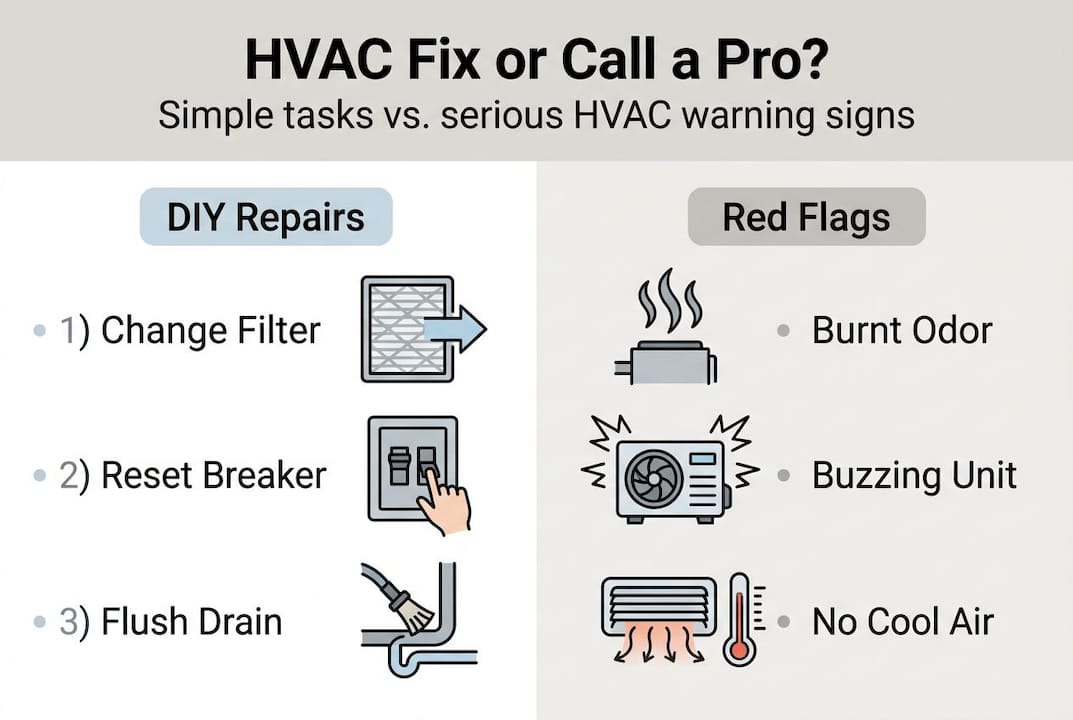
1. Change your air filter This is the single most impactful thing you can do. A clogged filter restricts airflow, strains your blower motor, and drops efficiency fast. Check yours monthly and replace it every 1 to 3 months depending on dust levels and pets in the home.
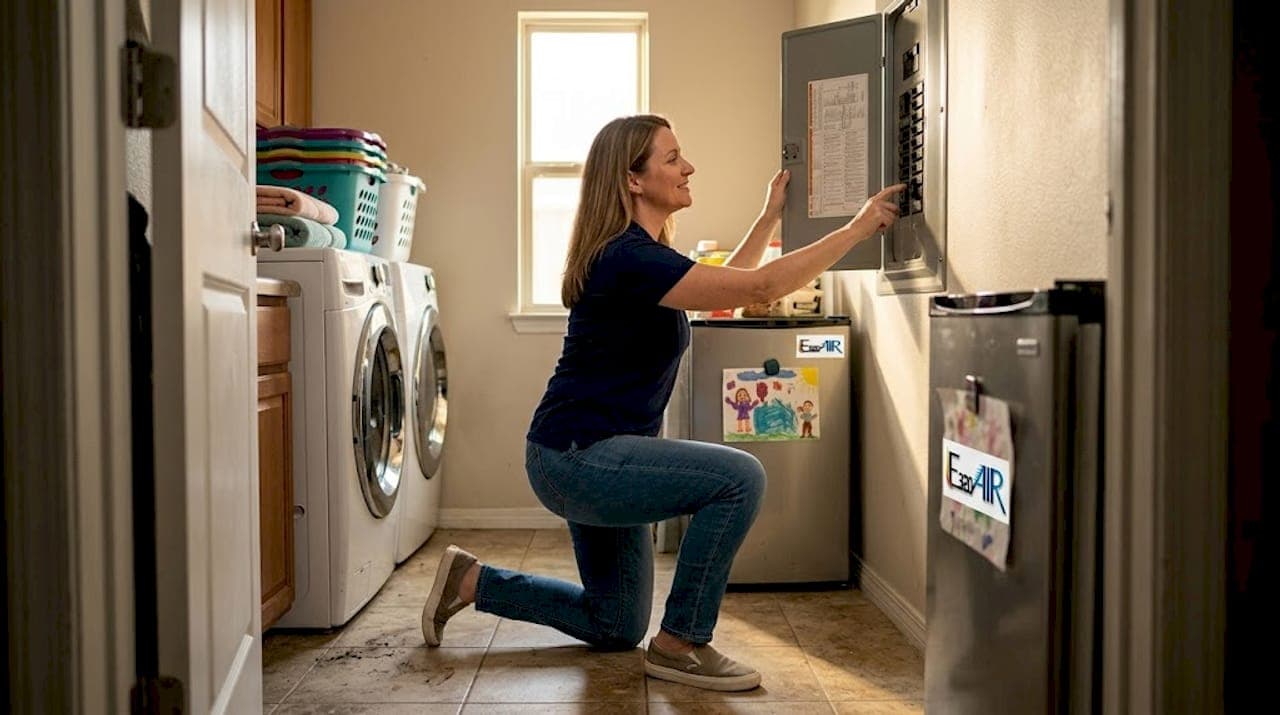
2. Reset your circuit breaker If your system won't turn on, check the breaker first. Flip it fully off, then back on. A tripping breaker that repeats is a warning sign, not a simple fix. Do not keep resetting it without finding the root cause.
3. Check and reset your thermostat Switch it to a mode you know should activate (full cool or full heat), replace the batteries if needed, and confirm the settings. Thermostat issues account for more service calls than most homeowners expect.
4. Replace a blown capacitor A capacitor is a cylindrical component inside your outdoor unit's access panel. It stores electrical charge to start your compressor and fan motors. If your unit hums but won't fully start, a bad capacitor is a likely culprit. Discharge it safely with an insulated screwdriver before touching it, then swap the matched replacement. For a detailed walkthrough on this kind of task, DIY AC troubleshooting guides can walk you through the specifics step by step.
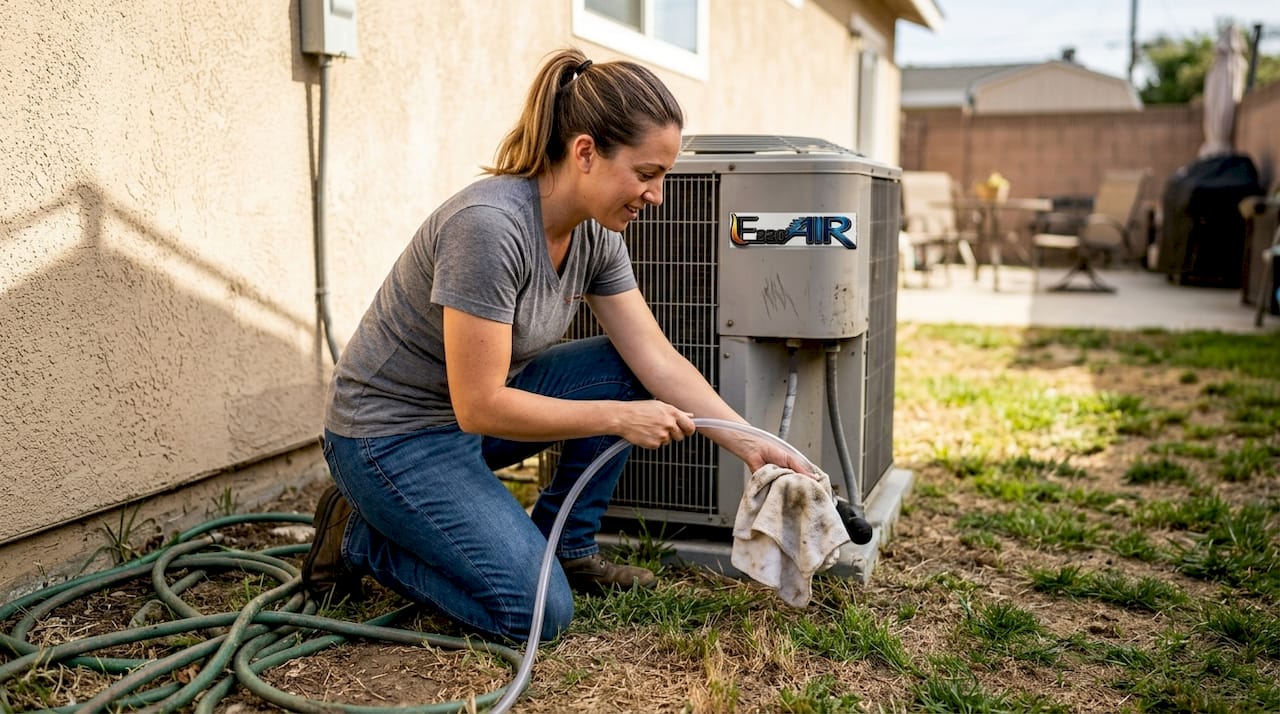
5. Clear the condensate drain line A clogged drain line causes water to back up and can trigger a safety shutoff. Use a wet/dry vacuum at the outdoor drain end or flush it with a diluted vinegar solution.
| Task | Difficulty | Tools needed | Call a pro if... |
|---|---|---|---|
| Filter change | Easy | None | N/A |
| Thermostat reset | Easy | Screwdriver | Settings won't hold |
| Capacitor swap | Moderate | Multimeter, screwdriver | Motor still won't start |
| Drain line flush | Easy | Vacuum or vinegar | Water damage is visible |
| Refrigerant check | Not DIY | Requires certification | Always call a pro |
Understanding the full scope of what HVAC contractor roles cover helps you recognize where the DIY line ends.
Pro Tip: Capacitor repair costs of $150 to $450 make this one of the most cost-effective DIY repairs if you're comfortable with basic electrical safety. Buy an exact-match capacitor using the microfarad (µF) and voltage ratings printed on the old one.
When to call a professional: Red flags and repair limits
Not every repair should be a DIY project; some issues require a licensed pro. Knowing where to draw that line protects your safety, your equipment warranty, and your wallet.
Red flags that mean stop and call a pro:
- A burning smell or visible scorch marks near electrical components
- Ice forming on the refrigerant lines or coils
- The system short cycles (turns on and off repeatedly in short bursts)
- Weak airflow from all vents even after a fresh filter
- Unusual grinding, banging, or screeching noises
- Water pooling around the indoor air handler
Refrigerant handling is federally regulated. You cannot legally purchase or handle refrigerant in California without an EPA 608 certification. Any refrigerant-related issue, low charge, leak detection, or line repair, requires a licensed technician. Attempting it yourself risks fines, equipment damage, and serious health hazards.
Compressor failures are also firmly in professional territory. Average professional costs for compressor work run $1,000 to $3,000, but misdiagnosed DIY attempts can cause additional damage that pushes costs even higher. Electrical burns around capacitors or wiring often signal deeper circuit problems that a multimeter alone won't catch.
"A system that smells like burning plastic or wiring is not a filter problem. It's a fire risk. Shut it off and call a technician the same day."
Knowing the heater malfunction warning signs specific to your system type can help you communicate clearly with your technician and avoid unnecessary diagnostic charges. Poor indoor air quality is another issue worth taking seriously. Indoor air quality risks linked to a failing HVAC system can affect your family's health over time, not just your comfort.
During a professional service call, expect a technician to run electrical checks, inspect refrigerant levels, test the capacitor and contactor, clean coils, and give you a written diagnosis before any work begins. A transparent contractor will always quote you before proceeding.
How to prevent future HVAC problems
Once your immediate repairs are complete, maintenance is your key to reliability. Beaumont's climate is relentless on HVAC equipment. Triple-digit summers and cold desert winters mean your system runs hard for months at a time. Proactive care is how you avoid the emergency call.
Monthly and seasonal maintenance habits:
- Check your air filter every 30 days, replace it every 1 to 3 months
- Keep the area around your outdoor condenser unit clear of weeds, debris, and shrubs by at least 2 feet
- Wipe down accessible indoor vents and return air grilles to prevent dust buildup
- Check your thermostat batteries every 6 months
- Inspect visible refrigerant lines for signs of oily residue or frost
- Make sure all supply and return vents in your home are open and unblocked
Before summer checklist:
- Schedule a professional coil cleaning and refrigerant level check
- Test the system on a mild day before peak heat hits
- Clear debris from around the condenser from the previous season
Before winter checklist:
- Test your furnace or heat pump before the first cold night
- Replace the filter and inspect the heat exchanger if accessible
- Check that gas lines and pilot lights are functioning correctly
Following a consistent seasonal HVAC maintenance routine can cut emergency repair frequency dramatically. Proactive maintenance plans cost far less annually than a single major component failure.
Pro Tip: Signing up for a scheduled maintenance agreement with a local HVAC company locks in priority service during the busy summer months when appointments fill up fast. It's one of the smartest investments Beaumont homeowners can make.
The real secret to stress-free HVAC repairs in Beaumont
Here's something most repair guides won't tell you: the homeowners who stress least about HVAC problems are not the ones who know how to fix everything. They're the ones who know what to expect and who to call before things get critical.
Beaumont's specific climate puts unusual wear on systems. Units here often run 10 to 12 hours a day during July and August. That accelerated runtime ages components faster than in milder parts of California. A 10-year-old unit in Beaumont has worked harder than a 15-year-old unit in coastal San Diego. System age matters more here than the calendar says.
Transparent pricing also matters more than most homeowners realize. A contractor who quotes you clearly before starting work, instead of after opening your system, is worth paying a little more for. Surprise charges on top of a stressful repair situation are avoidable. Reviewing real-world solutions that local technicians have handled gives you a realistic sense of what good HVAC service looks like in practice.
Patience and prevention beat panic and repair every time. That's not a cliché. It's what years of working in this climate consistently confirm.
Get reliable HVAC repairs from local Beaumont experts
If today's guide helped you understand your system better, the next step is making sure you have a trusted local team ready when the repair is beyond DIY. E320 Air serves Beaumont homeowners with fast diagnostics, honest pricing, and repairs that hold up through Southern California's demanding seasons.

Whether you need urgent cooling repair in July or a furnace check before winter, E320 Air's technicians show up prepared. Browse HVAC installation services if your system is aging and replacement makes more sense than another repair cycle. You can also see exactly the kind of problems we solve every day in our local repair results gallery. Call or book online to schedule your service or maintenance check today.
Frequently asked questions
What is the average cost of HVAC repairs in Beaumont, CA?
Most repairs range from $150 for a simple capacitor fix to $3,000 for a full compressor replacement, with common repair costs like refrigerant recharges falling between $200 and $600 and blower motors between $400 and $1,500.
Can I safely repair my HVAC system myself?
You can handle minor tasks like filter changes, thermostat resets, and drain line flushes, but electrical or refrigerant work should always be handled by a licensed professional to avoid safety risks and code violations.
How often should I have my HVAC system serviced?
Professionals recommend a full service at least once a year, ideally in spring before peak cooling season or in fall before heating demands begin.
What are signs that I need a professional HVAC repair?
Burning smells, persistent grinding or banging noises, frequent short cycling, or weak airflow that doesn't improve after a filter change are all signals to call a technician right away rather than troubleshoot further on your own.