
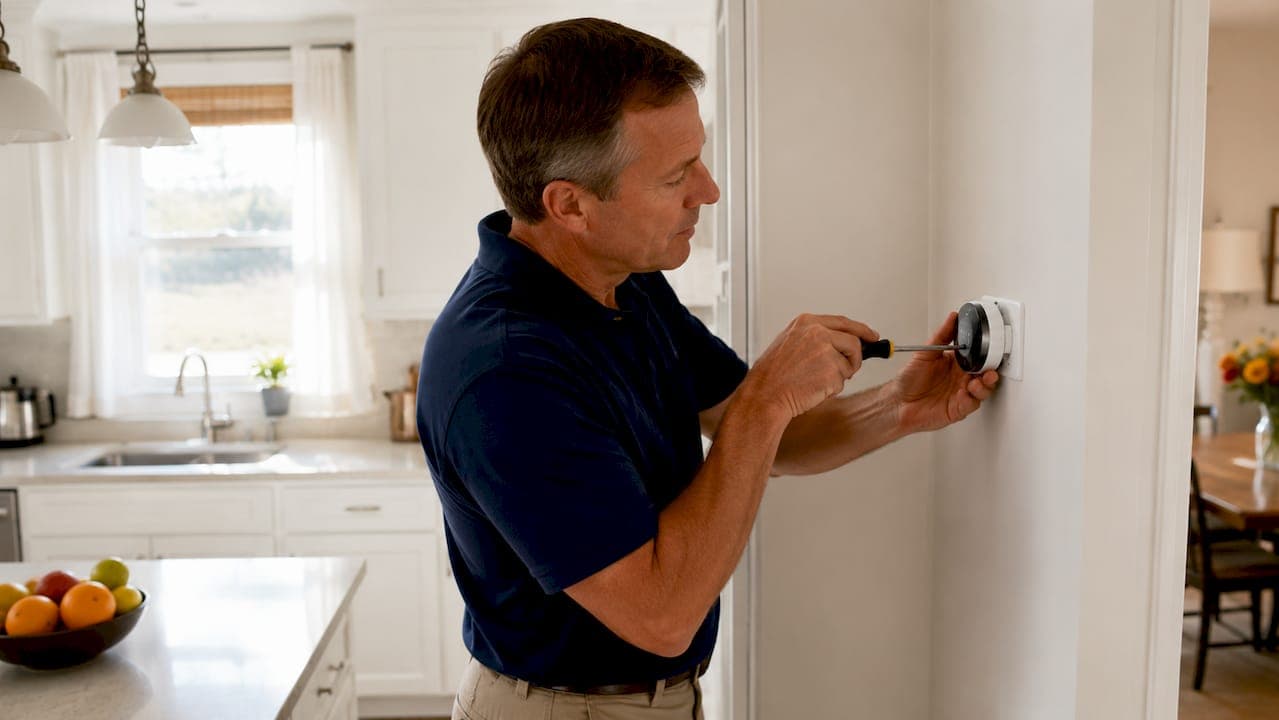
TL;DR:
- A smart HVAC control uses sensors and automation to manage heating and cooling based on real-time data. It offers energy savings, enhanced comfort, and longer equipment lifespan through proper setup and configuration. Properly integrated and configured systems can reduce energy costs by up to 23 percent and improve indoor air quality.
A smart HVAC control is an intelligent automation system that manages your home's heating, cooling, and ventilation using real-time data, sensors, and remote access. Unlike a basic thermostat, it reads occupancy, humidity, outdoor weather, and air quality to make continuous adjustments without you touching a dial. Heating and cooling account for 52% of the average American household's total energy usage, which makes smarter control of those systems one of the highest-impact upgrades a homeowner or property manager can make. Brands like Trane and American Standard have built entire product lines around this technology, and the results speak for themselves.
What is a smart HVAC control and how does it work?
Smart HVAC controls are dynamic, data-driven systems that optimize building comfort and energy use based on real-time inputs like occupancy and air quality. The core idea is simple: instead of following a fixed schedule, the system reads what is actually happening in your home and responds accordingly. That shift from manual operation to intelligent automation is what separates smart climate control from everything that came before it.
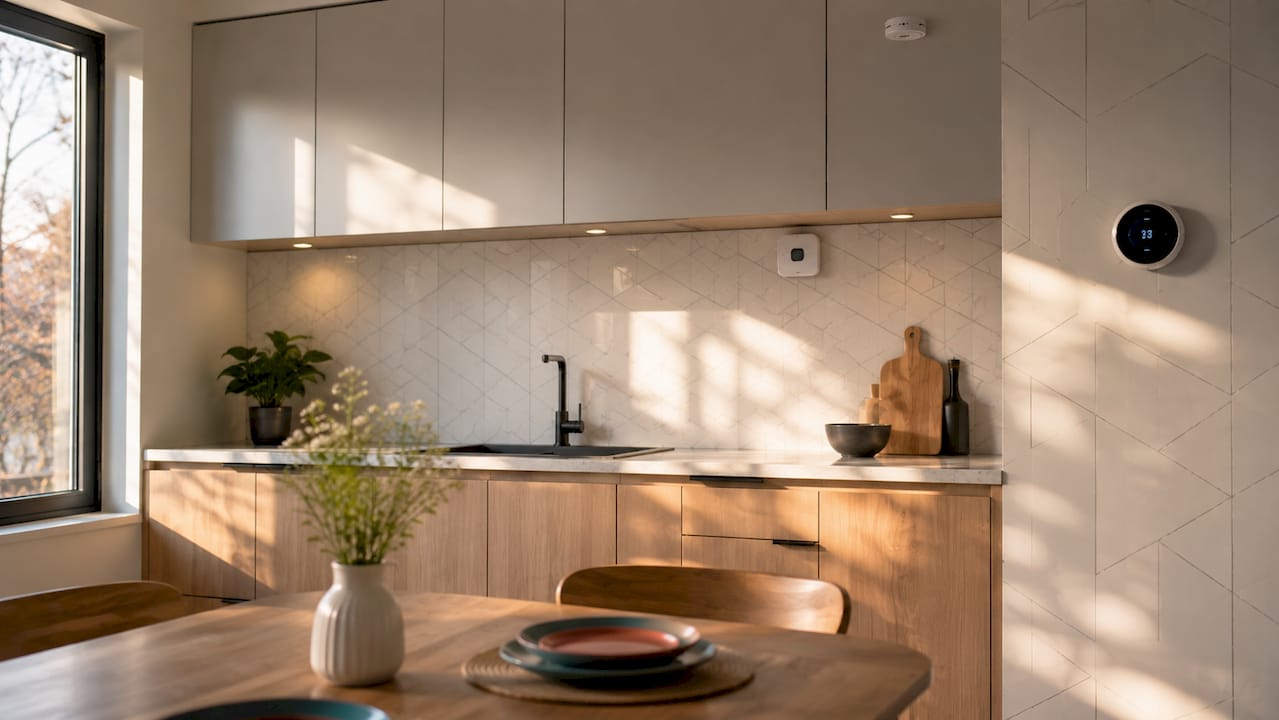
The system collects data from multiple sources at once. Temperature sensors track conditions room by room. Humidity sensors prevent the air from getting too dry or too damp. Occupancy detectors notice when a room is empty and reduce output to that zone. CO2 monitors flag when ventilation needs to increase. All of that information feeds into a central control logic layer that decides what the equipment should do next.
Remote connectivity ties everything together. Most smart HVAC systems connect to your home Wi-Fi and pair with a smartphone app, letting you adjust settings from anywhere. Many also integrate with voice assistants like Amazon Alexa and Google Home. The result is a system that works for you around the clock, whether you are home or not.
How does smart HVAC work: technology layers explained
Smart HVAC automation technology operates across several distinct layers, each handling a different job.
Equipment-level control manages the physical hardware: the furnace, air handler, compressor, and fans. This layer handles basic on/off switching and speed adjustments.
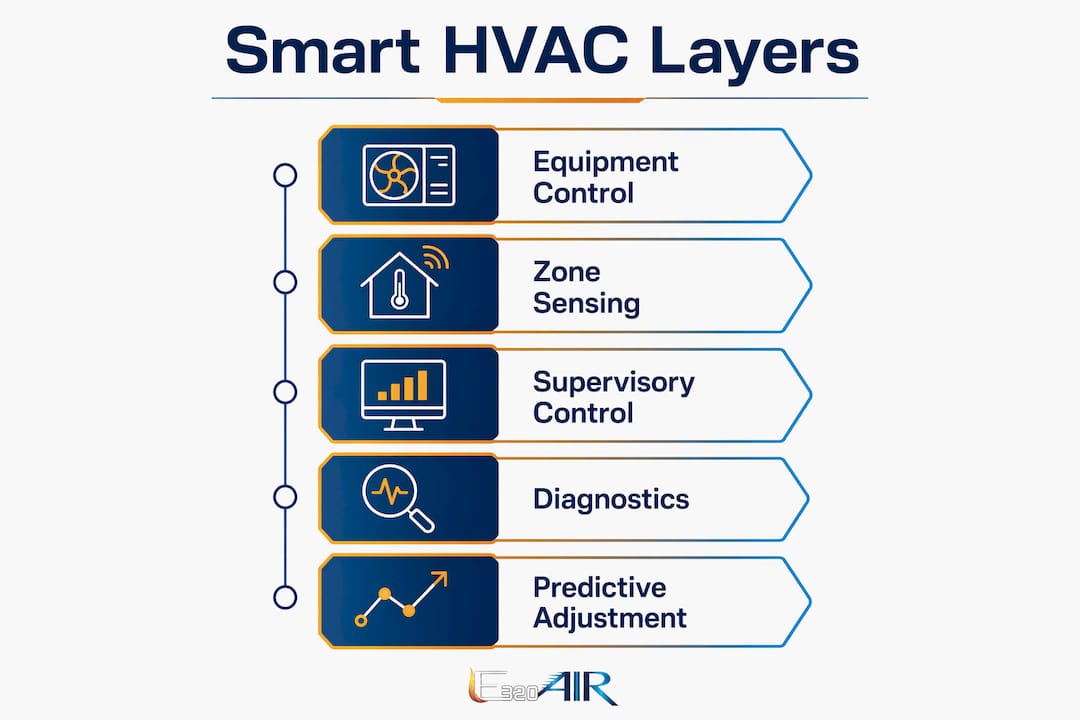
Zone sensing divides your home into areas and tracks conditions in each one independently. A bedroom at the back of the house may need different treatment than a sun-facing living room at noon.
Supervisory control sits above zone sensing and coordinates the whole system. It balances competing demands, prioritizes comfort, and applies efficiency rules across all zones simultaneously.
Diagnostics and optimization monitor performance over time. This layer flags unusual patterns, like a compressor running longer than expected, and alerts you before a small issue becomes a breakdown.
Predictive adjustment uses historical data and weather forecasts to get ahead of demand. If a cold front is arriving tonight, the system starts warming the house earlier to avoid a hard recovery cycle.
ASHRAE Guideline 36 outlines high-performance control sequences that enhance energy efficiency and system stability. Following those sequences is what separates a well-configured smart system from one that is simply connected to the internet.
Pro Tip: Ask your installer whether the system is programmed to ASHRAE Guideline 36 sequences. A smart thermostat installed without proper control sequences will not deliver the full energy savings the technology is capable of.
Properly configured control sequences, not just smart thermostats, are critical to achieving energy efficiency and reducing mechanical wear. The hardware is only as good as the logic running it.
What are the benefits of smart HVAC for homeowners?
The benefits of smart HVAC go well beyond convenience. They show up in your energy bill, your comfort level, and the lifespan of your equipment.
Energy and cost savings are the most measurable benefit. Smart thermostats can reduce HVAC energy consumption by 10–23%, saving homeowners $130–$145 annually on average. Scheduling temperature setbacks of 7–10°F for 8 hours daily can save up to 10% annually on heating and cooling bills. For property managers running multiple units, those savings multiply quickly.
Comfort through precision is the second major gain. Smart climate control maintains tighter temperature and humidity ranges than a manual system can. You stop noticing the temperature because it stays where you want it.
Here is a summary of the core benefits:
- Lower energy bills: Automated setbacks and occupancy-based control cut waste without sacrificing comfort.
- Better indoor air quality: Smart HVAC systems integrate IAQ devices such as humidifiers and air cleaners to create a full comfort ecosystem. Learn more about how HVAC improves indoor air quality in your home.
- Remote access: Adjust your system from your phone while traveling or between properties.
- Proactive maintenance alerts: Smart HVAC controls detect subtle anomalies indicating equipment issues before failure occurs. Catching a problem early costs far less than an emergency repair.
- Longer equipment life: Systems that run efficiently and avoid hard cycling last longer. Read about proven ways to extend HVAC lifespan for more detail.
- Voice and app control: Integration with Amazon Alexa, Google Home, and dedicated apps puts full control in your hands.
The maintenance benefit deserves extra attention. Proactive maintenance using smart system diagnostics can prevent costly equipment failures by identifying subtle performance anomalies early. A system that warns you about a failing capacitor in june saves you from a no-cool emergency in july.
Smart HVAC controls vs. traditional thermostats
The difference between smart controls and a traditional thermostat is not just about features. It is about how the system makes decisions.
| Feature | Traditional thermostat | Smart HVAC control |
|---|---|---|
| Temperature control | Fixed schedule or manual | Dynamic, real-time adjustment |
| Occupancy awareness | None | Sensors detect presence and absence |
| Energy optimization | Basic setback only | Multi-variable, continuous optimization |
| Maintenance alerts | None | Fault detection and diagnostics |
| Remote access | None | Full app and voice control |
| Multi-zone capability | Single zone only | Whole-home zoning supported |
| Weather integration | None | Outdoor forecast data used |
| IAQ device integration | None | Humidifiers, air cleaners, ventilation |
A traditional thermostat follows whatever schedule you programmed into it, whether or not anyone is home. A smart system notices the house is empty and pulls back automatically. It also notices when the outdoor temperature drops 15 degrees and pre-conditions the home before you feel the change.
Multi-zone capability is a major dividing line. A single traditional thermostat controls the whole house as one unit. Smart controls, combined with HVAC zoning, let you treat each room or floor independently. A finished basement used as a home office gets different treatment than a bedroom that sits empty until 10 p.m.
Compatibility is worth checking before you commit. Smart controls deliver full value only when the underlying equipment supports them. Older systems may need hardware upgrades to take advantage of every feature.
Practical considerations before installing smart HVAC controls
Installing a smart HVAC system is not a plug-and-play project for most homes. Getting it right requires planning before the first device goes on the wall.
Check equipment compatibility first. Compatibility issues arise when smart controls connect to legacy hardware without support for protocols like BACnet or Modbus. If your furnace or air handler is more than 15 years old, ask your contractor whether it can communicate with modern control hardware before purchasing anything.
Assess your layout for zoning. A single-story, open-plan home has different zoning needs than a three-story property with a finished basement. Map out which areas have different occupancy patterns or sun exposure before deciding how many zones to create.
Plan sensor placement carefully. Occupancy sensors placed near windows or vents give false readings. Temperature sensors need to be away from heat sources and direct sunlight. Poor placement undermines the data quality the whole system depends on.
Factor in integration with IAQ devices. If you have a whole-home humidifier, air cleaner, or energy recovery ventilator, confirm that the smart control platform you choose can manage those devices too. A thermostat that ignores your humidifier is leaving comfort and efficiency on the table.
Budget for professional installation and configuration. The hardware cost is only part of the investment. Proper configuration of control sequences takes expertise. A system that is installed but not configured correctly will not perform as advertised.
Pro Tip: Do not assume a "smart" label means the device is ready to work with your existing system. Always verify communication protocol compatibility and ask your installer to walk you through the control sequence setup before they leave the job.
Choosing the right app and voice assistant matters too. Confirm that the platform you select receives regular software updates and has a track record of long-term support. A smart thermostat whose app is discontinued in three years is not a good investment.
Key takeaways
Smart HVAC controls deliver measurable energy savings, better comfort, and longer equipment life when properly installed and configured.
| Point | Details |
|---|---|
| Core definition | A smart HVAC control uses sensors, automation, and remote access to manage heating and cooling in real time. |
| Energy savings | Smart thermostats reduce HVAC energy use by 10–23%, saving homeowners $130–$145 per year on average. |
| Control sequences matter | Proper configuration per ASHRAE Guideline 36 is required to achieve full efficiency gains. |
| Compatibility check | Verify BACnet or Modbus support before connecting smart controls to older HVAC equipment. |
| Proactive maintenance | Fault detection alerts catch equipment problems early, preventing expensive emergency repairs. |
What I have learned after years of smart HVAC installations
After working on hundreds of HVAC systems across residential and commercial properties, the pattern I see most often is this: homeowners buy a smart thermostat, install it themselves, and then wonder why their bills barely changed. The device is smart. The setup is not.
The technology works. I have seen properties cut their heating and cooling costs significantly after a proper smart control installation, not because the hardware is magic, but because the control sequences were configured to match how the building actually operates. That is the part most people skip.
Fault detection is the benefit I push hardest when talking to property managers. One client avoided a full compressor replacement because the system flagged an unusual run-time pattern in early spring. A technician caught a refrigerant leak before the summer cooling season hit. That one alert paid for the entire smart control upgrade.
My honest advice: do not evaluate smart HVAC controls by the thermostat on the wall. Evaluate them by the logic running behind it. A well-configured system on modest hardware outperforms a premium device with a default setup every time. Invest in the installation and configuration as much as the hardware itself.
— Edward
E320air's smart HVAC services for your home or property
E320air installs, configures, and maintains smart HVAC control systems for homeowners and property managers across the area. The team handles everything from compatibility assessment and sensor placement to full control sequence configuration and ongoing maintenance.
Whether you are upgrading a single-family home or managing a multi-unit property, E320air matches the right system to your equipment and layout. Every installation includes proper setup of automation logic, not just hardware mounting. Visit E320air to learn about available services, or check the HVAC installation page for details on what a professional smart control upgrade includes.
FAQ
What is a smart HVAC control in simple terms?
A smart HVAC control is a system that uses sensors, automation, and internet connectivity to manage your heating and cooling based on real-time conditions rather than a fixed schedule.
How much can a smart HVAC system save on energy bills?
Smart thermostats reduce HVAC energy consumption by 10–23%, saving homeowners an average of $130–$145 per year according to EPA estimates.
Do smart HVAC controls work with older equipment?
Smart controls require compatible communication protocols like BACnet or Modbus. Older legacy systems may need hardware upgrades before they can fully integrate with smart control technology.
What is the difference between a smart thermostat and a full smart HVAC control?
A smart thermostat is one component of a smart HVAC system. A full smart HVAC control includes sensors, zoning hardware, IAQ device integration, diagnostics, and properly configured control sequences across the whole system.
Does smart HVAC help with indoor air quality?
Yes. Smart HVAC systems integrate devices like humidifiers, air cleaners, and ventilation controls to manage indoor air quality alongside temperature and humidity as part of a complete comfort system.