
TL;DR:
- An HVAC diagnostic check assesses heating and cooling systems to identify faults, inefficiencies, and risks before failures occur. It involves testing components like thermostats, electrical connections, refrigerant levels, and airflow, using specialized tools to produce measurable data. Scheduling diagnostics early and regularly can prevent costly repairs and extend equipment lifespan in California homes.
An HVAC diagnostic check is a systematic, professional evaluation of your heating and cooling system to identify faults, inefficiencies, and safety risks before they cause a breakdown. Certified technicians follow a structured process that covers electrical components, refrigerant levels, airflow, and mechanical parts. For California homeowners and property managers, this service is the difference between catching a $150 repair early and facing a $3,000 emergency replacement in the middle of a heat wave. Understanding what an HVAC diagnostic check involves helps you make better decisions about your system's care and budget.
What does an HVAC diagnostic check include?
An HVAC diagnostic check, also called a system evaluation or fault diagnosis, covers every major component of your heating and cooling equipment in a single visit. Technicians follow a defined sequence to collect objective data rather than relying on guesswork. The goal is to find what is wrong, why it is wrong, and what it will take to fix it.
A standard diagnostic visit covers these core areas:
- Thermostat assessment: The technician verifies that the thermostat reads accurately, communicates correctly with the system, and responds to temperature changes as expected.
- Electrical connections and controls: Loose wiring, corroded contacts, and failing capacitors are checked. Faulty electrical components cause most sudden system shutdowns.
- Refrigerant levels: Low refrigerant is one of the most common faults found during a diagnostic check, and it signals either a leak or an improper charge from a previous service.
- Motor and fan function: The technician measures amperage draw on blower and condenser fan motors to detect early wear before a motor fails completely.
- Airflow testing: Restricted airflow from clogged filters, blocked vents, or collapsed ductwork forces the system to work harder and shortens its life.
- Coil inspection: Dirty evaporator and condenser coils reduce heat transfer efficiency and can cause the system to freeze or overheat.
- Safety controls: Pressure switches, limit switches, and gas valve operation are verified to confirm the system shuts down safely under abnormal conditions.
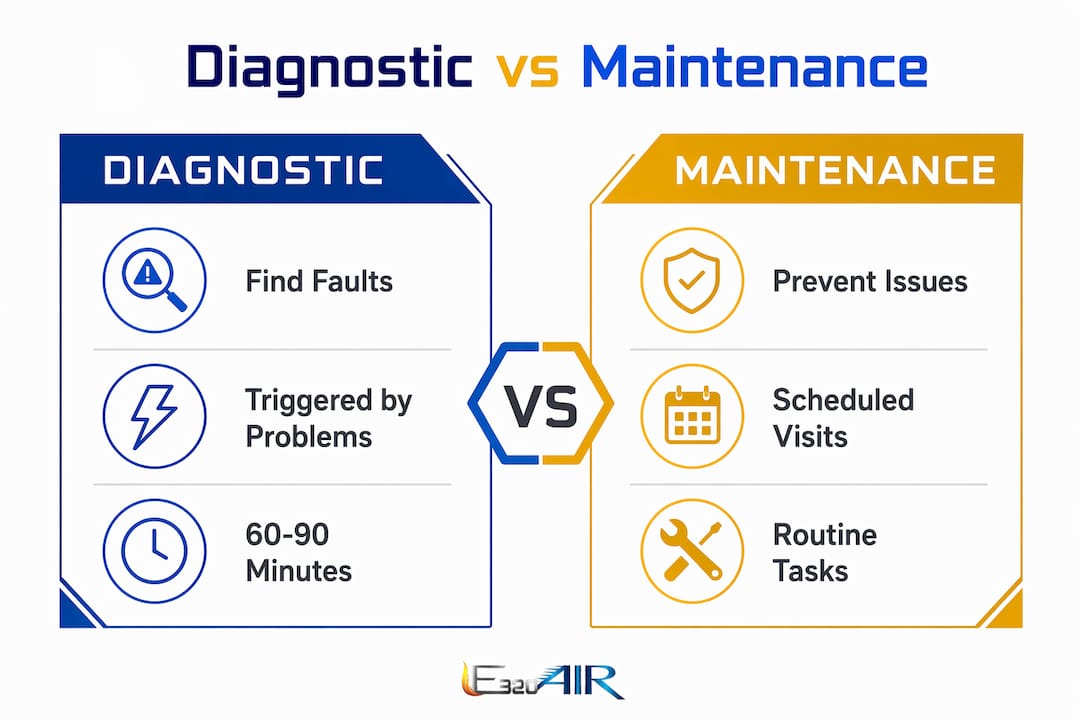
Technicians use specialized diagnostic tools including digital manometers, combustion analyzers, infrared thermometers, and borescope cameras. Each tool produces quantifiable data, which means the technician can show you exactly what the readings are rather than offering an opinion. A digital manometer, for example, measures static pressure in the duct system to pinpoint airflow restrictions that are invisible to the naked eye.
Pro Tip: Before the technician arrives, write down any symptoms you have noticed: unusual sounds, rooms that do not cool evenly, or recent spikes in your utility bill. That information helps the technician prioritize where to start and often shortens the visit.
How does a diagnostic check differ from preventive maintenance?
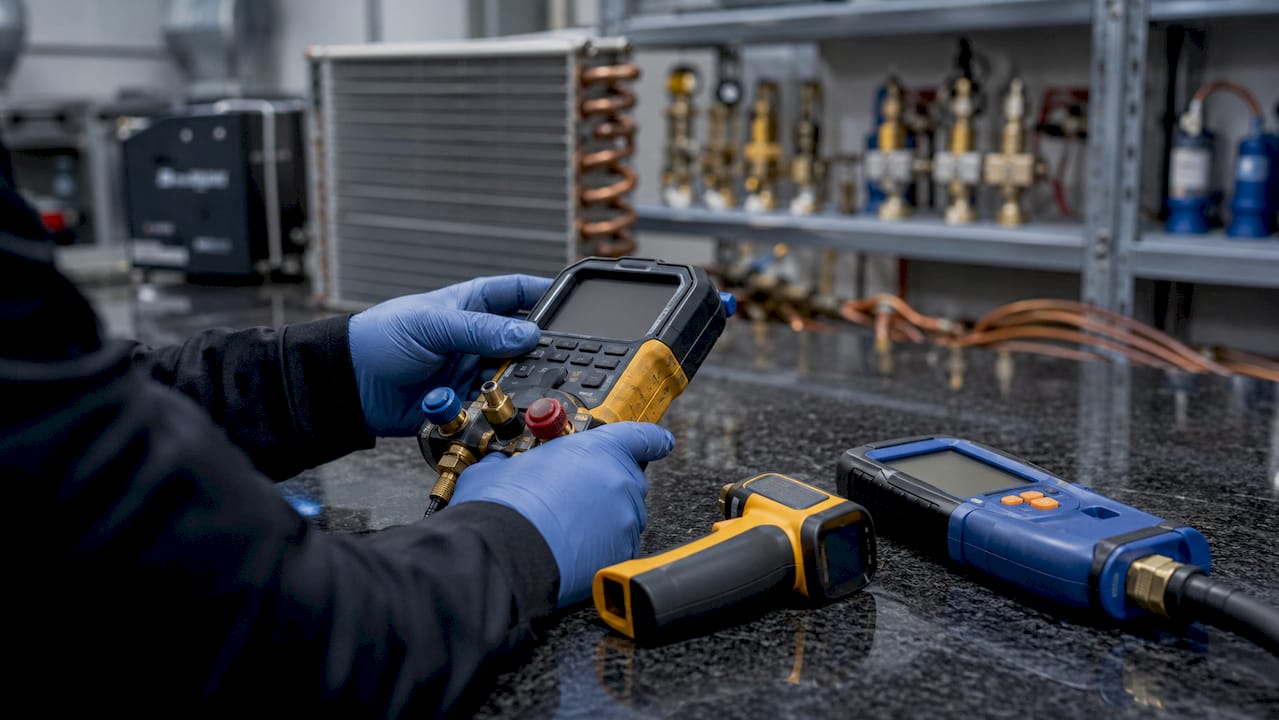
Homeowners frequently confuse these two services, and that confusion leads to frustration when the bill or the scope of work does not match expectations. Diagnostic visits are reactive and target troubleshooting a specific performance failure, while preventive maintenance is proactive and focuses on scheduled care to prevent failures from occurring.
The distinction matters because the two services have different goals, different durations, and different costs.
| Service | Goal | Trigger | Typical tasks |
|---|---|---|---|
| HVAC diagnostic check | Find and identify a specific fault | System malfunction or performance drop | Testing, measuring, fault isolation |
| Preventive maintenance | Prevent faults before they occur | Scheduled calendar date | Cleaning, lubricating, replacing wear items |
A preventive maintenance visit includes tasks like cleaning coils, replacing filters, lubricating moving parts, and flushing the condensate drain. These tasks are performed on a schedule regardless of whether anything seems wrong. A diagnostic visit, by contrast, is triggered by a symptom: the system is not cooling, it is making a grinding noise, or the energy bill jumped without explanation.
The practical takeaway is this: if your system is running but you want to keep it that way, schedule maintenance. If your system is not running correctly, schedule a diagnostic check. Many homeowners skip maintenance and then call for a diagnostic, which costs more and often reveals problems that routine care would have prevented.
Pro Tip: Scheduling a seasonal HVAC maintenance visit in spring and fall reduces the likelihood that you will need an emergency diagnostic call in July or January.
What does an HVAC diagnostic check cost in California?
Professional HVAC diagnostic visits typically cost between $80 and $250, depending on issue complexity and location. That range reflects a standard scheduled appointment during normal business hours. California's higher labor costs and regional demand mean pricing in metro areas like Los Angeles, San Jose, and San Diego often sits toward the upper end of that range.
Several factors push the cost higher:
- Emergency or after-hours calls: Emergency diagnostic visits cost more than scheduled appointments because they require technicians to respond outside normal hours or on short notice.
- System complexity: A multi-zone system, a heat pump, or a commercial rooftop unit takes longer to evaluate than a single-zone residential split system.
- Age of equipment: Older systems often require more time to diagnose because components are worn and faults are less straightforward.
- Travel distance: Rural or remote California properties may carry a trip charge on top of the base diagnostic fee.
The diagnostic fee is separate from any repair costs. If the technician finds a failing capacitor, a refrigerant leak, or a cracked heat exchanger, the repair is quoted after the diagnosis. For California homeowners, understanding HVAC service pricing before you call helps you avoid surprises and compare quotes accurately.
The cost-benefit case for diagnostics is straightforward. A $150 diagnostic visit that catches a refrigerant leak early prevents compressor failure, which can cost $1,500 or more to replace. Paying for a diagnosis is almost always cheaper than paying for the failure it prevents.
What problems do HVAC diagnostics commonly find?
Low refrigerant, dirty coils, electrical faults, and airflow blockages are the four most common problems technicians find during a diagnostic check. Each one degrades system performance and, if left unaddressed, leads to a more expensive failure.
Low refrigerant
Low refrigerant does not just reduce cooling capacity. It forces the compressor to work under abnormal pressure conditions, which shortens its life significantly. Ice on refrigerant lines is a visible sign of low refrigerant, poor airflow, or dirty coils. Running the system with ice on the lines risks permanent compressor damage.
Dirty coils and airflow restrictions
Dirty evaporator coils reduce the system's ability to absorb heat from indoor air. Dirty condenser coils prevent the system from releasing that heat outside. Both conditions force the compressor to run longer cycles, which increases energy consumption and wear. Airflow blockages from clogged filters or closed vents compound the problem.
Electrical component wear
Capacitors, contactors, and relays are consumable parts that wear out over time. A failing capacitor causes the compressor or fan motor to struggle on startup, drawing excess current and generating heat. Catching a worn capacitor during a diagnostic check costs around $150 to replace. Letting it fail completely can take out the motor it was protecting.
Thermostat misconfiguration
A thermostat set to the wrong mode, calibrated incorrectly, or failing to communicate with the control board causes the system to short-cycle, run continuously, or not respond at all. Technicians verify thermostat accuracy with a calibrated thermometer and check the wiring connections at the control board.
Preventive maintenance programs reduce emergency HVAC service calls by 65% and extend major equipment lifespan by 30–40%. That data reflects what happens when problems are caught early rather than allowed to compound. A diagnostic check is the tool that makes early detection possible.
When should you schedule an HVAC diagnostic check?
Schedule a diagnostic check any time your system shows a symptom you cannot explain. The most common warning signs are:
- Inconsistent temperatures: Some rooms are significantly warmer or cooler than others, suggesting airflow or zoning problems.
- Unusual sounds: Grinding, squealing, banging, or clicking noises indicate mechanical wear, loose components, or electrical faults.
- Higher energy bills: A sudden increase in your utility bill without a change in usage habits signals that the system is working harder than it should.
- Short cycling: The system turns on and off frequently without completing a full cooling or heating cycle, which stresses the compressor.
- Ice on the unit: Visible ice on refrigerant lines or the indoor coil requires immediate attention to avoid compressor damage.
- System will not start: Before calling a technician, check the thermostat, breakers, and disconnect switches first. Many no-heat and no-cool calls resolve with a tripped breaker reset.
The best time to schedule a diagnostic check in California is in early spring before cooling season begins, or in early fall before heating season starts. Booking during off-peak periods means faster scheduling and sometimes lower rates.
When choosing a technician, verify that they hold a valid California contractor's license and carry EPA Section 608 certification for refrigerant handling. NATE (North American Technician Excellence) certification is an additional credential that confirms advanced technical training. You can learn more about hiring certified HVAC technicians to verify what credentials to look for before you book.
After the visit, ask for a written diagnostic report. That document should list every test performed, the readings recorded, and the technician's findings. Use it to get a second quote on any major repair, and keep it on file for warranty or insurance purposes.
Pro Tip: DIY tasks like filter replacement, condensate drain flushing, and vent clearing improve system performance between professional visits, but they do not replace a licensed technician's ability to test refrigerant pressure, measure electrical draw, or inspect internal components.
Key Takeaways
An HVAC diagnostic check is the most cost-effective tool a California homeowner has to prevent expensive system failures and extend equipment life.
| Point | Details |
|---|---|
| Diagnostic vs. maintenance | Diagnostics are reactive and fault-focused; maintenance is proactive and scheduled. Know which one you need before you call. |
| Cost range | Professional diagnostic visits cost $80–$250 in California, with higher fees for emergency or after-hours calls. |
| Common findings | Low refrigerant, dirty coils, electrical wear, and airflow blockages are the four most frequent problems found during a check. |
| Tools matter | Technicians use digital manometers, combustion analyzers, and infrared thermometers to produce objective, measurable data. |
| Schedule timing | Book diagnostics in early spring or early fall to get faster appointments and catch problems before peak-season demand hits. |
Why I think most homeowners wait too long
After years of working with California homeowners on their HVAC systems, the pattern I see most often is this: the system gives clear warning signs for weeks, the homeowner waits, and by the time they call, a $200 repair has become a $1,800 repair. The warning signs are rarely subtle. A grinding noise, a room that will not cool, a bill that jumped $80 for no obvious reason. These are not ambiguous signals.
The bigger misunderstanding I encounter is that homeowners think a maintenance visit and a diagnostic check are the same thing. They are not. When a system is already malfunctioning, a maintenance visit will not find the fault. You need a diagnostic. Confusing the two costs time and money, and it leaves the underlying problem in place.
My honest advice for any California homeowner with a system older than eight years: schedule a diagnostic check once a year even if nothing seems wrong. Older systems develop faults gradually, and those faults rarely announce themselves clearly until they cause a shutdown. A thorough HVAC inspection gives you a current picture of your system's condition and lets you plan repairs on your schedule rather than the system's.
The homeowners who get the most value from their HVAC equipment are the ones who treat diagnostics as a regular part of ownership, not as an emergency response. That mindset shift is worth more than any single repair.
— Edward
E320air provides expert HVAC diagnostics for California homeowners
E320air's certified technicians perform thorough HVAC diagnostic checks for homeowners and property managers across California. Every visit produces a written report with objective measurements, clear findings, and repair recommendations you can act on immediately or plan for later.

Whether your system is showing symptoms or you want a current picture of its condition, E320air brings the tools, certifications, and local experience to give you accurate answers. The team handles everything from fault diagnosis to full HVAC repairs and installations, so you work with one contractor from diagnosis through resolution. Contact E320air to schedule your diagnostic check and get your system evaluated by a technician who knows California's climate demands.
FAQ
What is the difference between a diagnostic check and a tune-up?
A diagnostic check identifies a specific fault or performance problem in your system. A tune-up, or preventive maintenance visit, is a scheduled service that cleans, adjusts, and inspects components to prevent problems from developing.
How long does an HVAC diagnostic check take?
Most HVAC diagnostic visits take 60–90 minutes, depending on system size and the complexity of the fault being investigated.
Does the diagnostic fee apply toward the repair cost?
Many HVAC contractors apply the diagnostic fee toward the repair cost if you proceed with the repair on the same visit. Confirm this policy when you book the appointment.
How do I know if I need a diagnostic check or just a filter change?
If your system is running but performing poorly, start with a filter check and a thermostat reset. If the problem continues after those steps, schedule a professional diagnostic check to identify the underlying cause.
What credentials should my HVAC technician have in California?
Look for a valid California contractor's license, EPA Section 608 certification for refrigerant handling, and NATE certification as a sign of advanced technical training.