
TL;DR:
- An HVAC line set is a pair of insulated copper tubes that carry refrigerant between the outdoor condenser and indoor air handler. Proper installation, insulation, and maintenance are essential for system performance and longevity, especially in California's climate.
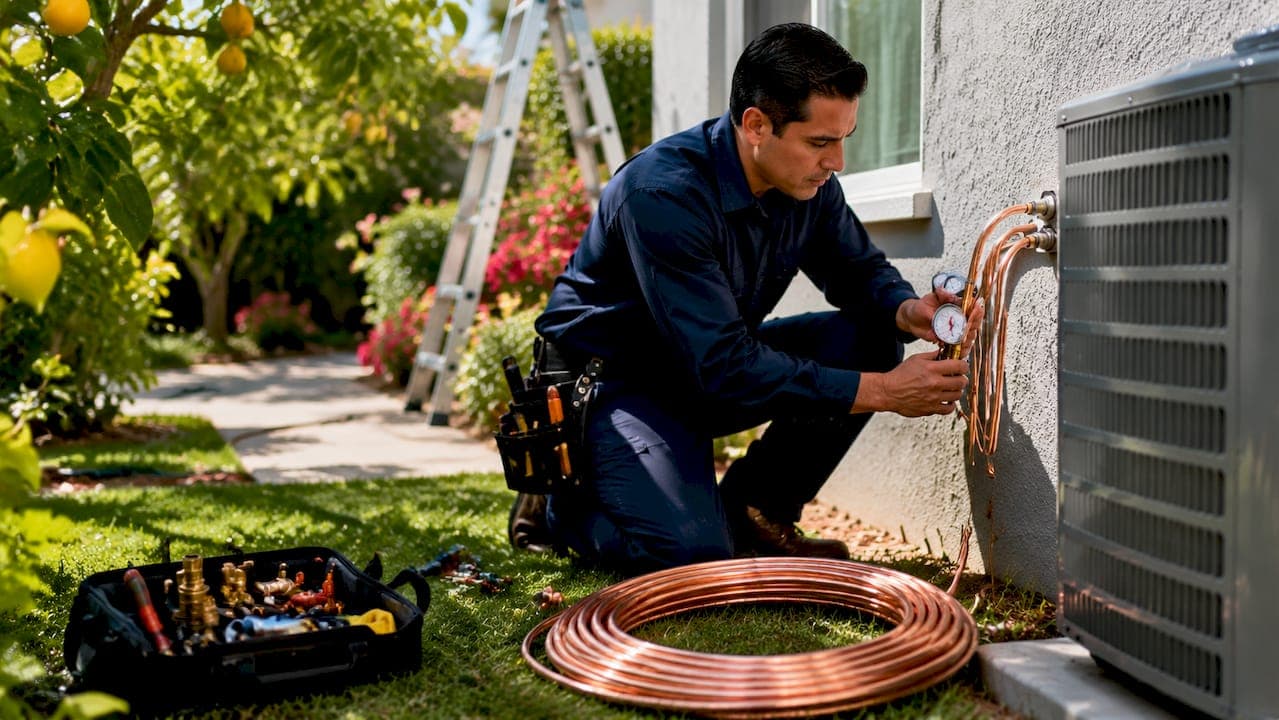
An HVAC line set is a pair of insulated copper tubes that carry refrigerant between your outdoor condenser and your indoor air handler. Without it, your air conditioner cannot move heat in or out of your home. Every split system, from a central AC to a ductless mini-split, depends on a refrigerant line set to function. Understanding what it is, how it works, and how to maintain it saves you money and prevents costly breakdowns.
What is an HVAC line set and what does it do?
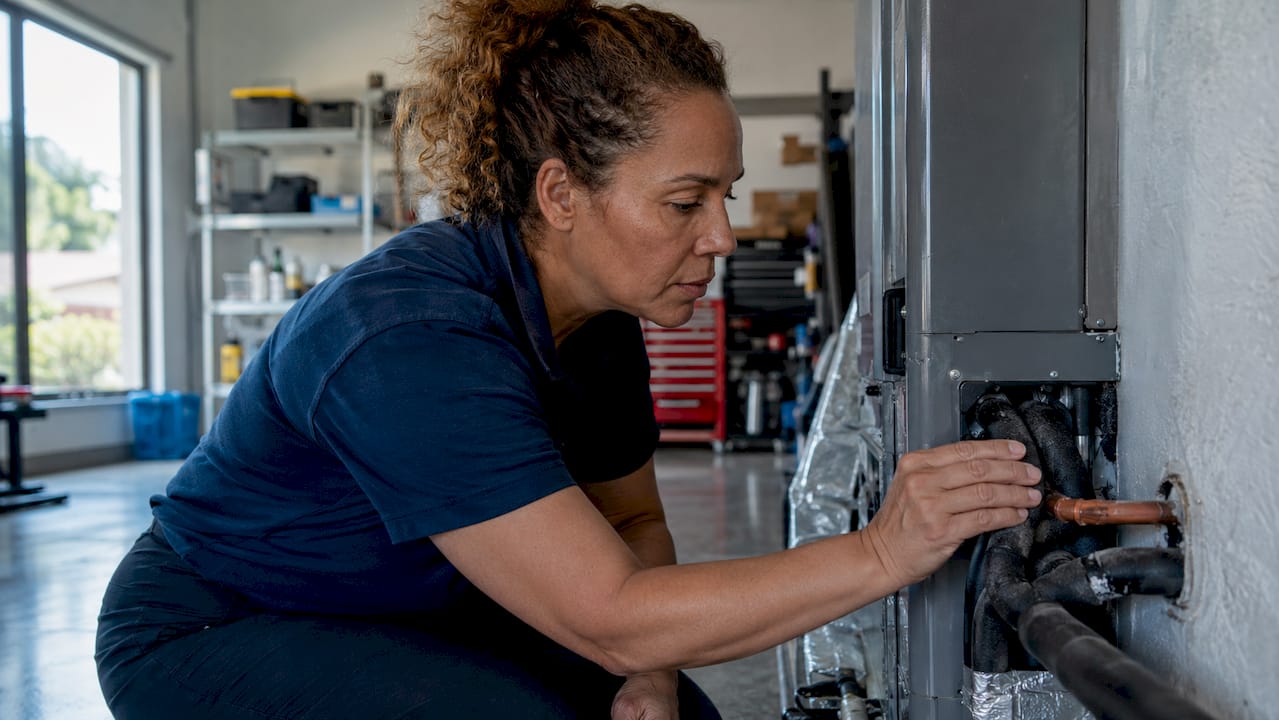
An HVAC line set consists of two copper pipes: a larger suction line and a smaller liquid line. The suction line, typically 3/4 to 1-1/8 inches in diameter, carries low-pressure refrigerant vapor from the indoor evaporator coil back to the outdoor compressor. The liquid line, usually 1/4 to 3/8 inches in diameter, delivers high-pressure liquid refrigerant from the condenser to the indoor evaporator. Together, they form the closed loop that makes heating and cooling possible.
The suction line is always wrapped in closed-cell foam insulation. That insulation prevents the cold vapor inside from sweating on the outside, which would drip water and waste energy. The liquid line typically runs bare or with minimal insulation because it carries warm, high-pressure liquid that does not condense moisture.
The industry term for this assembly is "refrigerant line set," though homeowners and contractors use both names interchangeably. Knowing both terms helps when you are shopping for parts or talking to a technician.
What are the components of an HVAC line set?
A refrigerant line set is more than just two copper tubes. Most pre-bundled line sets include several additional parts that run alongside the copper pipes.
- Suction line: The larger insulated tube carrying low-pressure vapor. Closed-cell foam insulation is standard, and UV-resistant foam is required for any outdoor exposure.
- Liquid line: The smaller copper tube carrying high-pressure liquid refrigerant. Minimal insulation is typical.
- Low-voltage control wiring: Signal wires that allow the thermostat and outdoor unit to communicate. Per wiring guidelines, these wires must stay at least 6 inches away from high-voltage power cables to avoid electromagnetic interference.
- Condensate drain line: A plastic tube that removes moisture collected by the indoor evaporator coil.
- Power cable: Some bundles include a line-voltage cable for the outdoor unit.
The copper tubing itself is soft-drawn, which means it bends without cracking. Fittings are brazed or flared to create airtight connections. UV-resistant clamps and line set covers protect the bundle where it runs along exterior walls.
Pro Tip: Buy a pre-bundled line set that includes the control wiring and drain line already wrapped together. Separate installation of each component takes significantly longer and increases the chance of wiring errors.
How is an HVAC line set installed in a California home?
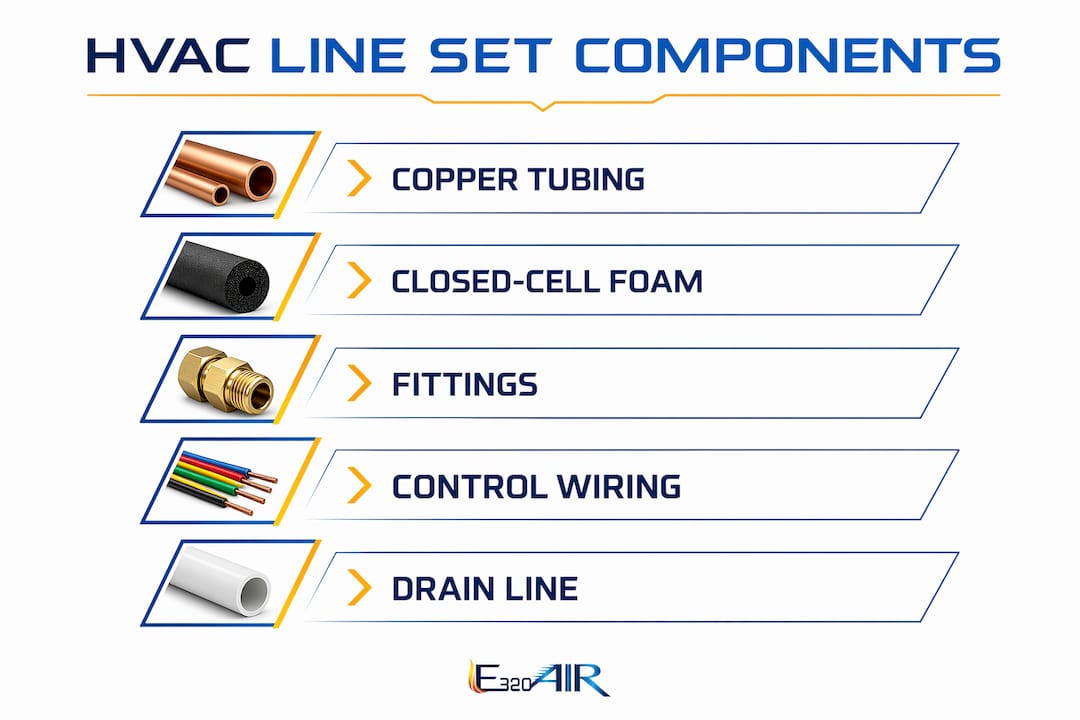
Correct line set installation is the single biggest factor in long-term system performance. Poor routing causes refrigerant leaks, condensation damage, and compressor wear. California's Title 24 energy code also requires proper insulation and sealing at all penetrations.
- Plan the route. Choose the shortest practical path from the indoor air handler to the outdoor condenser. Shorter runs mean less refrigerant, lower pressure drop, and better efficiency.
- Drill the wall penetration. Use a hole saw slightly larger than the line set bundle. Drill at a 3–5 degree downward pitch toward the outside so condensate drains away from the wall.
- Sleeve the pipes. Insert a protective sleeve through the wall opening before feeding the line set. The sleeve prevents abrasion where copper contacts concrete or wood.
- Secure every 3–4 feet. Fasten the line set to the wall or structure with UV-resistant clamps at regular intervals. Unsupported runs sag and vibrate, which fatigues the copper over time.
- Seal all penetrations. Fill the gap around the sleeve with fire-rated caulk or foam. This step is required by California mechanical codes and prevents conditioned air from escaping.
- Insulate exposed sections. Any suction line running through an attic, crawl space, or along an exterior wall needs closed-cell foam insulation and a vapor barrier. Unconditioned spaces accelerate insulation breakdown.
- Test before closing walls. Pressure-test the line set with nitrogen before connecting the refrigerant and buttoning up any drywall.
"Improper installation damage causes up to 5% loss in cooling power. Sealing and insulating the line set correctly is not optional. It is the difference between a system that performs at rated capacity and one that runs harder, costs more, and fails sooner."
Pro Tip: In California's hot inland valleys, UV degradation of foam insulation happens faster than in coastal areas. Use UV-rated foam or add a rigid line set cover on any section exposed to direct sunlight.
For a full breakdown of California HVAC installation steps, including local code requirements and permit costs, E320air covers the specifics for residential projects.
How does line set size and length affect system performance?
Line set size for HVAC systems is not one-size-fits-all. The diameter of each tube must match the equipment manufacturer's specifications. Using the wrong size creates pressure imbalances that force the compressor to work harder.
The minimum line set length is typically about 10 feet. Shorter runs do not give the refrigerant enough volume to stabilize pressure, which causes compressor short-cycling and premature wear. Most manufacturers also set a maximum length, often 50–75 feet for residential mini-splits, beyond which efficiency drops unless the refrigerant charge is adjusted.
| Line set length | Typical application | Key consideration |
|---|---|---|
| 10–16 feet | Condenser directly outside the room | Minimum length required; do not go shorter |
| 25–35 feet | Single-story home, condenser on side wall | Standard residential install; no charge adjustment needed |
| 50 feet | Two-story home or rooftop condenser | May require additional refrigerant per manufacturer spec |
| Over 50 feet | Long runs through attics or crawl spaces | Always verify with manufacturer; charge adjustment required |
Pre-charged line sets, such as MRCOOL Quick Connect options available in 16, 25, 35, and 50-foot lengths, eliminate the need for field charging. They arrive factory-sealed with the exact refrigerant quantity for that length. This is a practical choice for homeowners replacing a line set without a licensed refrigerant technician on site.
- Too short: compressor short-cycles, refrigerant pressure spikes, premature failure.
- Too long without charge adjustment: low suction pressure, reduced cooling capacity, higher electricity bills.
- Wrong diameter: restricted flow, oil return problems, compressor damage.
System efficiency and compressor longevity depend directly on matching line set length and refrigerant charge to manufacturer specifications. Deviating from those specs is one of the most common causes of early system failure.
What maintenance should homeowners do to protect their line sets?
Line set maintenance is one of the most cost-effective ways to preserve HVAC efficiency and avoid expensive repairs. Most homeowners never look at their line set after installation, which is a mistake.
- Inspect insulation twice a year. Check in spring before cooling season and in fall before heating season. Look for cracks, gaps, or sections where foam has pulled away from the copper.
- Replace degraded foam promptly. Sun exposure degrades insulation over time. Cracked or missing foam on the suction line causes condensation, water damage to walls, and measurable energy loss.
- Check clamps and supports. Loose clamps let the line set sag and vibrate. Retighten or replace any clamp that has cracked from UV exposure.
- Look for oil stains. A greasy residue near a fitting or joint indicates a refrigerant leak. Refrigerant oil travels with the refrigerant, so stains are a reliable early warning sign.
- Keep wiring separated. Confirm that control wires are not touching power cables anywhere along the run. Contact causes interference that triggers error codes on the indoor unit.
Pro Tip: Wrap any exposed outdoor suction line with fresh closed-cell foam tape and a UV-resistant line set cover every 5–7 years in California's sun-heavy climate. The material cost is under $30. A refrigerant recharge from condensation-related corrosion costs several hundred dollars.
For a deeper look at preventing leaks before they start, E320air's guide on preventing HVAC leaks walks through the warning signs and what to do about them.
Key Takeaways
A correctly sized, properly insulated, and well-maintained HVAC refrigerant line set is the foundation of reliable cooling performance in any California home.
| Point | Details |
|---|---|
| Two-pipe system | The line set has a large suction line and a small liquid line, each with a distinct function. |
| Insulation is non-negotiable | Closed-cell foam on the suction line prevents condensation, energy loss, and moisture damage. |
| Size and length must match specs | Minimum 10 feet; longer runs require refrigerant charge adjustment per manufacturer guidelines. |
| Bundled components need attention | Control wiring must stay 6 inches from power cables to prevent communication errors. |
| Inspect twice a year | Check insulation, clamps, and fittings each spring and fall to catch problems before they cost you. |
What I have learned after years of line set installs
The most common mistake I see on California homes is not a bad flare or a wrong-size tube. It is neglected insulation on a line set that has been baking in direct sun for a decade. Homeowners assume the copper is fine because the system still runs. What they do not see is the condensation soaking into the wall behind the drywall, or the compressor working 10–15% harder because the suction line is absorbing heat it should not.
The second thing that surprises people is how much is bundled into a line set. Most homeowners think it is just two pipes. When I pull back the wrap on an older install, there is often a drain line, a control wire, and sometimes a power cable all running together. Those wires matter. I have diagnosed more than a few "mystery" error codes that traced back to a control wire pinched against a 240-volt power cable at a wall clamp.
California's climate adds a layer most national guides ignore. Inland areas like the Inland Empire and Central Valley see UV index levels that destroy standard foam insulation in three to four years. Coastal installs last longer, but salt air corrodes copper fittings faster. Neither situation is forgiving of a set-it-and-forget-it approach.
My honest recommendation: treat the line set like a tire. You do not wait for a blowout. You check it on a schedule, replace what is worn, and call a professional when you see oil stains or hear the compressor cycling oddly. The cost of a line set inspection is a fraction of a compressor replacement.
— Edward
E320air's line set services for California homeowners
California homes have specific installation requirements, climate challenges, and code standards that generic HVAC advice does not cover. E320air specializes in residential HVAC installation and maintenance across California, with direct experience in line set sizing, routing, insulation, and refrigerant charging.
Whether you are replacing an aging line set, installing a new mini-split, or troubleshooting a system that is not cooling properly, E320air handles the full scope of work. The team follows California Title 24 requirements on every job and uses UV-rated materials suited to the local climate. Visit E320air's HVAC installation page to request a consultation or get a quote for your home.
FAQ
What is the difference between a line set and ductwork?
A line set carries refrigerant between the outdoor condenser and indoor air handler through copper tubes. Ductwork carries conditioned air through sheet metal or flex channels to the rooms in your home. They are separate systems with different materials and functions.
How long does an HVAC line set last?
A copper line set can last 20–30 years when properly installed and maintained. The foam insulation typically needs replacement every 5–10 years depending on sun exposure and climate conditions.
Can I install an HVAC line set myself?
Routing and securing the copper tubes is a DIY-possible task, but connecting refrigerant lines and charging the system requires an EPA Section 608 certification. In California, pulling permits for HVAC work also requires a licensed contractor in most jurisdictions.
What size line set do I need for my AC unit?
Line set diameter must match the equipment manufacturer's specifications, which vary by system capacity. Most residential systems use a 3/4-inch suction line and a 3/8-inch liquid line, but always confirm with the equipment documentation before purchasing.
How do I know if my line set is leaking refrigerant?
Look for oily residue near fittings or joints, a system that is not cooling as well as it used to, or ice forming on the suction line. Any of these signs warrants a professional inspection and pressure test.