
TL;DR:
- Duct cleaning is a targeted, full-system process involving removal of debris, mold, and contaminants under negative pressure. It is only necessary when specific issues like mold, pests, or excessive dust are present, not for routine maintenance. Proper service includes inspection, agitation, and documentation, ensuring effective removal and preventing re-contamination.
Most homeowners think duct cleaning is something you schedule every year or two, like a carpet cleaning. It isn't. What is duct cleaning, really? It's a precise technical process that involves cleaning your entire HVAC system under negative pressure using specialized equipment. The EPA recommends duct cleaning only under specific conditions, not as a routine maintenance item. Before you book a service or ignore a problem, you need to understand what proper duct cleaning actually looks like and when it genuinely matters.
Table of Contents
- Key takeaways
- What is duct cleaning, exactly
- When and why duct cleaning is important
- What happens during a professional service
- How to choose a trustworthy duct cleaning service
- My take on duct cleaning after years in the field
- Get honest duct cleaning from E320air
- FAQ
Key takeaways
| Point | Details |
|---|---|
| Not a routine service | The EPA recommends duct cleaning only when mold, pests, or excessive dust blowing are present. |
| Full system cleaning required | Cleaning only the ducts without coils, fans, and drip pans leads to rapid re-contamination. |
| Negative pressure is non-negotiable | A proper duct cleaning process uses HEPA vacuums and agitation tools to remove contaminants safely. |
| NADCA certification matters | Hiring NADCA-certified technicians protects your HVAC system and guarantees standards compliance. |
| Address root causes first | Fixing moisture leaks or poor filtration before cleaning prevents the same problems from returning quickly. |
What is duct cleaning, exactly
Duct cleaning is the process of removing accumulated dust, debris, mold, and biological contaminants from your HVAC system's air distribution network. That includes the supply and return air ducts, registers, grilles, diffusers, heat exchangers, cooling coils, drip pans, fan motors, and the air handling unit itself.
That last part is where most homeowners are surprised. The term "duct cleaning" suggests you're cleaning the ducts. But according to NADCA's ACR standard, a proper cleaning places the entire HVAC system under continuous negative pressure while technicians use mechanical agitation tools to dislodge and capture contaminants. This is called source removal cleaning, and it's the only method the industry considers effective.
Here's what the full scope of a proper duct cleaning service covers:
- Supply and return ducts throughout every room in the home
- Air handling unit components including the blower motor and fan assembly
- Evaporator coils and drip pans where moisture and mold commonly develop
- Registers and grilles removed and cleaned individually
- Heat exchangers inspected and cleaned where accessible
Pro Tip: Ask any duct cleaning company upfront whether they clean the air handling unit components or only the duct runs. If they only clean ducts, the job is incomplete by industry standards.
Why does the full-system approach matter so much? Because cleaning only the ducts without addressing the air handling equipment leads to rapid re-contamination. The blower motor circulates air past dirty coils, and within weeks, your freshly cleaned ducts are coated again. It's like mopping a floor while someone tracks mud in from the next room.
When and why duct cleaning is important
Here's the honest truth most companies won't tell you: routine duct cleaning is not recommended by the EPA unless specific conditions are present. That $99 coupon in your mailbox isn't grounded in science. It's marketing.
So when does duct cleaning actually matter? The EPA identifies three primary triggers:
- Visible mold growth inside ducts or on HVAC components, particularly on metal surfaces near the air handler or coils
- Vermin infestation confirmed by droppings, nests, or live activity inside the duct system
- Excessive dust or debris visibly blowing from registers into living spaces despite regular filter changes
Beyond these triggers, there are additional situations where proper duct cleaning delivers real benefits. Homes after major renovations often have construction dust embedded deep in duct runs. Homes where previous owners had pets may carry embedded dander. New homeowners who don't know the history of their HVAC system are often good candidates for a one-time inspection and cleaning.
The benefits are real when cleaning is done correctly. Proper source removal cleaning improves airflow by 10 to 16 percent and reduces blower energy consumption by 41 to 60 percent. For homeowners dealing with reduced airflow, high utility bills, or allergy symptoms tied to indoor air, those are meaningful numbers. Your ductwork's condition directly affects how hard your system has to work.
The risk of improper cleaning is just as real. Blow-and-go services that skip negative pressure containment can actually dislodge settled dust without removing it, spreading contaminants through your home. Bad cleaning is worse than no cleaning at all.
What happens during a professional service
If you've scheduled a legitimate duct cleaning service, here's exactly what should happen from start to finish. Understanding the process helps you verify you're getting what you're paying for.
Before the cleaning starts
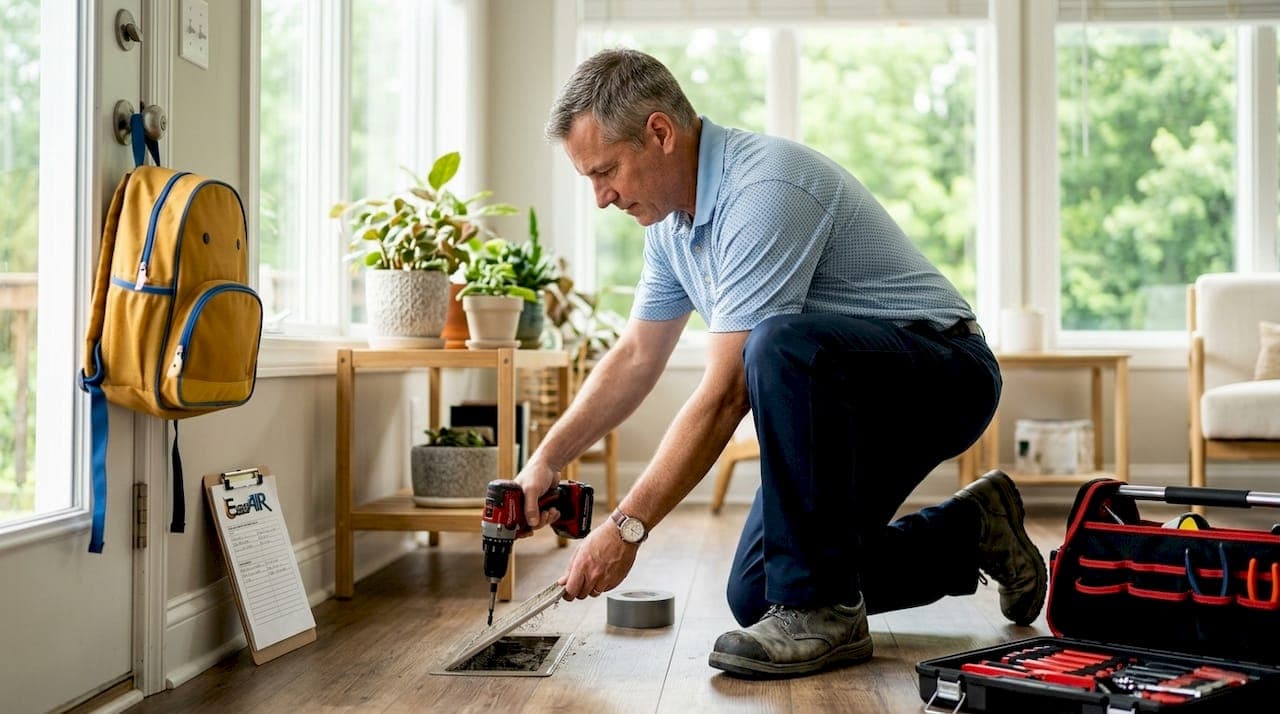
A qualified technician begins with a thorough inspection. Camera-based inspection of your duct system documents contamination levels before any work begins. You should see photos or video from inside your ducts. Technicians map the system, identify the number and location of supply and return vents, and check for any damaged sections that need repair before cleaning proceeds.
During the cleaning
The crew connects a large HEPA-filtered vacuum collection system to your duct network to establish continuous negative pressure. This is what separates professional cleaning from ineffective services. The entire system runs under negative pressure so any dislodged material gets captured rather than blown into your home.
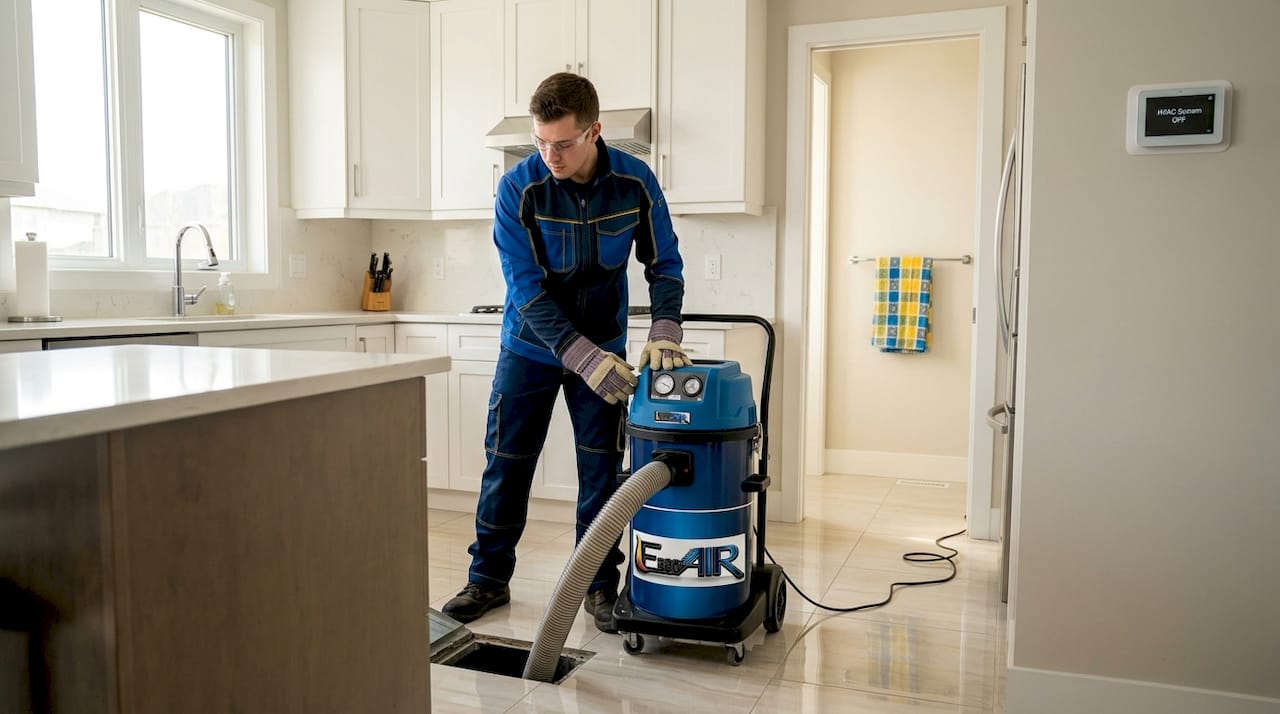
Mechanical agitation tools, including rotary brushes and air whips, then travel through the duct runs to scrub contaminants from surfaces. Agitation typically takes 1.5 to 2 hours on its own for a standard home, with total service time running several hours depending on system size and complexity. After the ducts, technicians clean the air handler components: the blower motor, coils, and drip pan. Dirty coils are one of the leading causes of HVAC airflow issues and reduced efficiency, so this step isn't optional.
Pro Tip: Some companies offer sanitizing treatments applied after cleaning. These aren't always necessary, but if mold was confirmed, an EPA-registered antimicrobial treatment is worth considering. Always ask for the product label before agreeing.
After the cleaning
| Step | What it involves | Why it matters |
|---|---|---|
| Post-cleaning camera inspection | Visual check of duct interiors after agitation | Confirms contaminants were fully removed |
| System reassembly | Registers re-installed, access panels sealed | Prevents air leaks that reduce efficiency |
| Documentation | Photos and written report provided to homeowner | Gives you proof of work and warranty support |
| Filter replacement | New filter installed before system restart | Captures any residual fine particles |
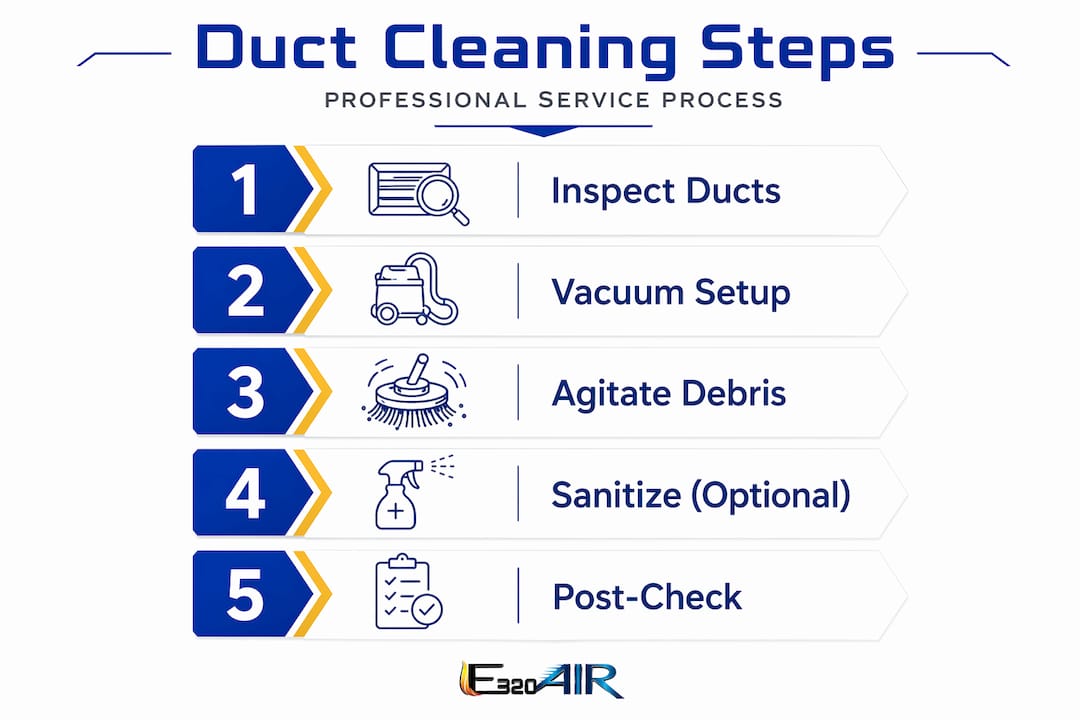
Post-cleaning verification is a NADCA requirement, not an optional extra. If a company won't show you before and after documentation, that's a problem.
How to choose a trustworthy duct cleaning service
The duct cleaning industry has a well-documented scam problem. Low prices and aggressive door-to-door marketing often signal companies that deliver poor results or make your air quality worse.
Here's what separates a quality service from a quick cash grab:
- NADCA certification: NADCA-certified technicians are trained on proper equipment use and system handling. Ask for their NADCA member number and verify it on the NADCA website.
- Transparent inspection process: A legitimate company will inspect before quoting. No reputable provider gives a flat-rate cleaning price over the phone without knowing your system's condition.
- Written scope of work: Get a detailed list of every component they will clean, not just "all ducts."
- Negative pressure equipment: Ask specifically whether they use truck-mounted or portable HEPA vacuum systems, and whether the system runs under continuous negative pressure during agitation.
- Post-cleaning documentation: Ask if they provide before and after photos from inside the ducts.
"Low-cost duct cleaning services that skip critical steps don't just waste your money. They can actively worsen your indoor air quality by disturbing settled contaminants without removing them." Source
Red flags to watch for include prices under $100 for a whole-house cleaning, technicians who don't open the air handler, services completed in under 90 minutes, and any company that adds surprise fees for "extra" components like coils or blower cleaning. Those aren't extras. They're required.
Also worth noting: if underlying contamination sources like moisture intrusion, refrigerant leaks, or poor filtration aren't fixed before or during cleaning, your ducts will return to a contaminated state much faster than they should. A trustworthy company talks about root causes, not just the cleaning itself. Learning how HVAC systems affect indoor air quality helps you ask the right questions when interviewing providers.
My take on duct cleaning after years in the field
I've walked through hundreds of homes where the homeowner assumed their ducts needed cleaning every couple of years because that's what a flyer told them. Most of the time, the ducts were fine. The real problems were a dirty evaporator coil, a clogged drain pan, or a filter that hadn't been changed in six months.
What I've learned is that duct cleaning is a targeted fix, not a wellness routine. When it's the right call, done fully and correctly, it genuinely helps. I've seen energy bills drop and allergy symptoms ease up after a proper source removal cleaning in a home that had visible mold growth near the air handler. Those results are real.
But I've also seen the aftermath of cut-rate cleanings. Homeowners who paid $79 and got a tech who ran a shop vac near a few registers for 45 minutes. Their dust levels were actually higher the following week.
My advice: spend your maintenance budget on regular filter changes, annual coil cleaning, and keeping humidity in check. Those three habits prevent most of what duct cleaning fixes. When you do need a full duct cleaning, spend the money to do it right and fix the source of the problem at the same time. The right HVAC service provider will tell you honestly whether cleaning is warranted and what it will actually cost.
— Edward
Get honest duct cleaning from E320air
At E320air, we don't sell duct cleaning as a routine service. We inspect first, then tell you honestly whether cleaning is warranted and what the full scope of work involves. When cleaning is needed, we follow NADCA source removal standards: your system runs under negative pressure, every component gets cleaned, and you receive before and after documentation before we leave.
Whether you're dealing with confirmed mold, a post-renovation dusty system, or you've just moved into a home with an unknown HVAC history, E320air gives you a straight answer and professional results. Visit E320air's service pages to request an inspection or get an estimate, or browse our problem-solving gallery to see real cases we've resolved for homeowners like you.
FAQ
What is duct cleaning in simple terms?
Duct cleaning is the process of removing dust, debris, mold, and contaminants from your home's HVAC ductwork and air handling components using specialized vacuum systems and agitation tools. A proper cleaning covers the full system, not just the duct runs.
How often should ducts be cleaned?
The EPA does not recommend routine duct cleaning on a set schedule. Cleaning is warranted when there is confirmed mold growth, a vermin infestation, or excessive dust blowing from vents into living spaces.
How long does a professional duct cleaning take?
A professional duct cleaning service typically takes several hours for a standard home. Mechanical agitation alone runs about 1.5 to 2 hours, with additional time for inspection, setup, component cleaning, and post-cleaning verification.
What are the signs you need duct cleaning?
Key signs include visible mold near registers or the air handler, musty odors when the HVAC runs, visible dust blowing from vents, confirmed pest activity in the duct system, or documented contamination following a major home renovation.
How do I know if a duct cleaning service is legitimate?
Look for NADCA certification, a pre-cleaning inspection with camera documentation, a written scope of work covering all HVAC components, and post-cleaning verification photos. Any service completed in under 90 minutes or priced under $100 is almost certainly cutting corners.