
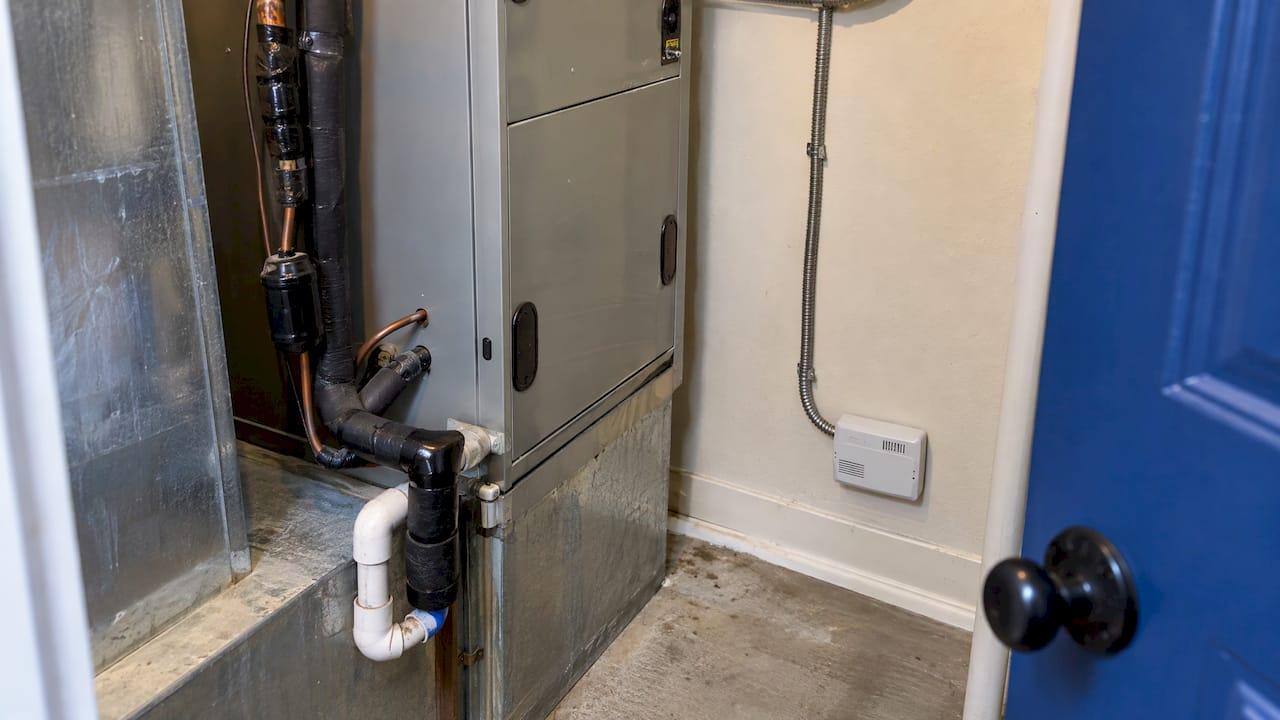
A2L refrigerants are low in toxicity and very hard to ignite, and safety codes now require the equipment around them to be built and installed to match. Your safety margin comes from the installation: charge size, leak detection, ventilation and a technician who knows the rules. That is why A2L systems in the Inland Empire belong with licensed, insured technicians. Our crews at E320air install, repair and maintain residential and commercial systems, and we are available around the clock, including weekends and holidays.
TL;DR
- A2L is a safety rating: "A" means lower toxicity, "2L" means the refrigerant is mildly flammable and burns very slowly.
- A leak would need to be large, in an enclosed space and near an ignition source before a fire becomes possible. Equipment design, codes and technician training are built around that risk.
- California's 2025 Mechanical Code, in effect since January 1, 2026, sets rules for A2L comfort systems, including labels, charge limits and leak-response behavior.
- Leaks must be repaired promptly, by a technician with the right certifications and license.
- Never mix refrigerants or add a new one to an older system. This is a job for a licensed contractor.
Table of Contents
- What the A2L label actually means
- A2 versus A2L: why the "L" matters
- What actually happens in a leak
- How a properly installed A2L system stays safe
- What California adds
- Leaks, repairs and who may do the work
- Questions to put to any installer
- Where E320air fits
- Perspective
- FAQ
- Sources
What the A2L label actually means
Every refrigerant gets a safety class under ANSI/ASHRAE Standard 34-2022. ASHRAE is the engineering society that writes the standard. The class has two parts:
- A letter for toxicity. A means lower toxicity, B means higher toxicity. Class A refrigerants have an occupational exposure limit of 400 ppm or higher.
- A number for flammability. Class 1 does not propagate a flame. Class 2 is lower flammability. Class 3 is highly flammable. The "L" in 2L marks class 2 refrigerants that burn very slowly.
Put together, A2L means low toxicity and a low burning velocity. Many of the newer, lower-global-warming-potential refrigerants fall here. Examples are R-32, R-454B and R-1234yf. If you have a home system bought in the last decade, it most likely uses R-410A, which has no flame propagation. Newer equipment shipped under the national refrigerant transition is moving to A2L blends. Our guide to refrigerants in Southern California homes covers how this change affects owners here.
A2 versus A2L: why the "L" matters
Older A2 refrigerants such as R-141B and R-406A are flammable and have lower toxicity. A2L refrigerants have lower flammability than A2, along with lower toxicity. They have a low flame-propagation speed, a high lower flammability limit and a higher minimum ignition energy than A3 refrigerants such as propane.
In plain terms:
- Lower flammability limit (LFL): the smallest concentration in air that can burn. For A2Ls it is often about eight times higher than for propane, so a much larger leak is needed before the air becomes flammable.
- Minimum ignition energy: how strong a spark or heat source has to be. A2Ls need significantly more than A3s, so ignition is harder.
- Heat of combustion: how much energy a fire releases. A2Ls release less.
The industry's own summary is that the flammability risk is handled in layers: equipment design, codes and standards (ASHRAE 34, ASHRAE 15 and UL 60335-2-40), and technician training. Residents do not manage that risk by themselves. It is built into the system and the way it is installed.
What actually happens in a leak
A fire from an A2L needs three things at once: a significant leak, an enclosed space where it reaches the lower flammability limit, and an ignition source nearby. That combination is uncommon, and codes are written to break it.
The hazards that apply to all refrigerants matter as well. Refrigerants are heavier than air and can displace oxygen, so they settle low in a closed room. In a large leak the area should be vacated and ventilated before anyone goes back in. Liquid refrigerant can cause serious burns or injury to the eyes. According to a widely used EPA Section 608 study guide, oxygen deprivation is the major cause in most refrigerant accidents where death occurs.
What that means for you:
- If you hear hissing, notice an unusual smell, or see oily residue near the indoor unit or lines, turn the system off at the thermostat, open windows and doors, and keep people and pets out of a closed utility closet or mechanical room.
- Keep flames, sparks and heat sources away from the area.
- Call a licensed HVAC contractor. Do not try to find or patch the leak yourself.
- If anyone feels dizzy, has trouble breathing or has skin or eye contact with liquid refrigerant, call 911.
Our leak prevention guide explains the warning signs and what regular maintenance does to keep lines and coils sound.
How a properly installed A2L system stays safe
The safety features live in the design and the installation. Here is what a code-compliant job includes.
Certified equipment installed by the book
HVAC appliances that contain A2L refrigerants must be certified to UL 60335-2-40 and installed per the manufacturer's instructions, with system design following ASHRAE 15-2022 as modified by the adopted mechanical code. The checklist published by UL, the safety certification organization, also calls for press-connect fittings certified for A2L refrigerants, pressure and vacuum testing of the piping, and pipe markings that read "WARNING – Risk of Fire. Flammable Refrigerant."
Charge limits and leak detection
How much refrigerant is in the system, and how big the room is, decide what protection is needed. Under the UL checklist, a refrigerant detection system (RDS) and minimum room sizes typically apply to equipment above roughly a 2-pound charge for nonfixed factory-sealed equipment, or roughly 4 pounds for other types. Because A2L refrigerants are heavier than air, sensors are typically placed low in the enclosure, below the evaporator coil.
Engineers can meet the requirement in several ways. The room can be sized so no detector is needed. A detector or continuous airflow can dilute a leak. Or a detector can be combined with other measures. Which one applies depends on occupancy, system type, charge size and whether the equipment is indoors or outdoors. Detector setpoints are set at the factory, so a technician cannot adjust them in the field.
What the system does when it senses refrigerant
Under the 2025 California Mechanical Code, when refrigerant exceeds the setpoint, the supply fan must run at the manufacturer's minimum airflow. The compressor and other electrical devices shut off, unless running the compressor reduces the leak. The fan keeps running for at least five minutes after the concentration falls below the reset value. This moves leaked refrigerant out of any pocket where it could build up.

The same code section prevents ignition sources from being placed where leaked refrigerant could travel. Open-flame devices may not be permanently installed in ductwork serving the space. Unclassified electrical devices are prohibited in the ductwork. Devices with hot surfaces above 1,290°F (700°C) are prohibited unless there is at least 200 feet per minute of airflow across them, with proof of airflow before they are energized. This matters on a replacement job, where an old duct-mounted heater or accessory could conflict with the new refrigerant.
Mitigation reaches beyond the unit
An engineering note on A2L design makes a point owners should hear: leak-response actions often happen outside the unit itself, in ducts, controls and other equipment. So the installer has to look at the whole project, not only the new condenser or furnace. That is the reason a bare equipment swap done on price alone can fall short of what the code expects.
What California adds
California moves on its own code cycle. The 2025 California Building Standards Code took effect statewide on January 1, 2026. Building permit applications received on or after that date must comply with the 2025 edition, while the 2022 code governs applications received through December 31, 2025.
Three points matter to owners:
- Labels and listing. Under the 2025 CMC section 1104.6, A2L comfort systems must be listed and installed per the listing, the manufacturer's instructions and any installation-restricting markings. The nameplate carries a flammable-refrigerant symbol, and labels sit next to service ports.
- Corrected safety values. In March 2026 the California Building Standards Commission issued errata that corrected refrigerant concentration limit values for several A2L blends, including R-454B. The earlier values contained errors that could create safety concerns. A contractor working from current code tables is working from the corrected figures.
- Existing inventory. The EPA removed the installation deadline for residential and light commercial air conditioning and heat pump equipment manufactured in or imported into the United States before January 1, 2025. That equipment can still be installed, so your installer can tell you which refrigerant your replacement unit uses and why.
The type of refrigerant is not interchangeable. R-32 or R-454B cannot be added to an R-410A system. It is not a drop-in replacement, and doing so violates the equipment's certifications. If your older system loses charge, the fix is a repair by a licensed technician, not a top-off with whatever is on hand.
Leaks, repairs and who may do the work
If you own a business or a rental property, leak rules apply to you. CARB's Refrigerant Management Program says covered businesses must fix leaks within 14 days of detection, check the system for leaks after repair, and use EPA-certified technicians. A failed repair can trigger a Retrofit and Retirement Plan.
In the South Coast region, AQMD Rule 1415.1 sets a 14-calendar-day repair window for systems with a leak, extended to 45 days if a certified technician or parts are unavailable. It requires a repair log and a leak-free verification before refrigerant is added. The rule also says leak repair requires a current EPA 608 certificate and a California C-38 contractor license, or a C-20 if the system also cools air.
In practice, that means the person who opens your system should hold both the federal certification and the state license, and should work with equipment made for A2L refrigerants. Under the EPA's technician guidance, only recovery equipment and cylinders marked for flammable refrigerants may be used, with maximum ventilation and protective gear. The system and recovery unit are grounded before recovery. No open flame is used on a cylinder, no lines are cut or welded with refrigerant inside, and no oxygen is used to purge or pressurize. Our article on what technician qualifications look like shows what credentials to look for.

Questions to put to any installer
Before you sign for a new system, these questions show whether the plan covers A2L safety:
- Which refrigerant does the equipment use, and what is its safety class?
- Is the equipment certified to UL 60335-2-40, and will it be installed to the 2025 California code?
- Does the room size or charge call for a leak detection system, and where will the sensor go?
- Are there duct heaters, accessories or other ignition sources in the existing ductwork that need to change?
- Will the permit be pulled, and who holds the EPA 608 certificate and the C-38 or C-20 license?
Sizing figures into the same plan, because charge and room volume tie directly to system size. Our guides on HVAC tonnage and common installation mistakes in California give you the background for that conversation.
Where E320air fits
If you are replacing a system in Riverside, Fontana, Corona, Hemet or anywhere else across the Inland Empire, our HVAC installation service covers equipment from all major brands, with tailored, energy-efficient solutions and minimal disruption to your home or business. Our technicians are licensed and insured, and flexible payment options, including financing, are available. For property managers and business owners, our commercial HVAC page covers routine maintenance and emergency repairs, around the clock, including weekends and holidays.
If you suspect a leak or your system has stopped cooling in the summer heat, contact us through our site and we will send a technician.
Perspective
A2L refrigerants are not something to fear. They are something to respect, and the way you respect them is by hiring people who work to the code every time.
When owners ask us about the change, we tell them the same thing: the safety is designed into the whole job. Equipment certified for the refrigerant, correct charge for the room, leak response that works, and ductwork free of ignition sources. A good installation treats all of those as one project, not a list of separate parts.
That is why we put licensed, insured technicians on every system, and why we explain what goes in before it goes in. Our aim is a system that cools your home or business through an Inland Empire summer, with a plan for the unlikely day something leaks. If you want a new system, a repair or a maintenance plan that fits the new rules, we are here day and night.
Edward
FAQ
Are A2L refrigerants safe in a home?
Yes, when the system is certified and installed to code. A2Ls are lower in toxicity and burn very slowly, and a much larger leak is needed to reach a flammable concentration than with highly flammable refrigerants. The equipment standards and California's 2025 Mechanical Code add leak detection, airflow and labeling requirements where they apply.
Can I switch my current system to an A2L refrigerant?
No. R-32 and R-454B are not drop-in replacements for R-410A, and adding them to an R-410A system violates the equipment's certifications. A different refrigerant means different equipment, installed to the current code. A licensed contractor can tell you whether replacement makes sense for your home.
What should I do if I think my system is leaking?
Turn the system off, ventilate the area, keep ignition sources and people away from a closed mechanical room, and call a licensed HVAC contractor. If anyone has trouble breathing or contact with liquid refrigerant, call 911. Refrigerants are heavier than air and can displace oxygen in closed spaces.
Who is allowed to repair an A2L system in California?
Under AQMD Rule 1415.1, leak repair requires a current EPA 608 certificate plus a California C-38 contractor license, or a C-20 if the system also cools air. A2L work also needs recovery equipment and leak detectors rated for these refrigerants.
Do the new rules apply to my business or rental property?
CARB's Refrigerant Management Program requires covered businesses to fix leaks within 14 days of detection, verify the repair and use EPA-certified technicians. New installations also fall under the 2025 California Mechanical Code. Your contractor can tell you which rules cover your equipment.
Sources
- UNEP/ASHRAE Refrigerant Factsheet, May 2025
- Understanding A2L Refrigerants, ACHR News
- Refrigerant safety training preview, ESCO Group
- EPA Section 608 study guide, COAD
- A2L HVAC System Installation Checklist, UL
- Section 1104.6, 2025 California Mechanical Code
- CBSC Information Bulletin 26-01
- Federal Register, EPA final rule, 2026
- CARB Refrigerant Management Program for businesses
- AQMD Rule 1415.1
- EPA HC/HFO Technician Certification manual