
TL;DR:
- HVAC short cycling occurs when the system repeatedly turns on and off in less than 3–4 minutes, risking damage and increased energy bills. Common causes include airflow restrictions, oversized units, low refrigerant, thermostat placement, and electrical faults, which require proper diagnosis to fix. Regular maintenance and early detection can prevent expensive repairs and extend system life.
HVAC short cycling is defined as a system that turns on and off more frequently than designed, completing runs of less than 3–4 minutes instead of the healthy standard of 3–5 full cycles per hour. That repeated start-and-stop pattern is one of the most damaging behaviors an air conditioner or furnace can develop. For homeowners in southern California, where systems run hard through long, hot summers, understanding why your HVAC system short cycles is the first step toward protecting your equipment and your energy bill.
Why does an HVAC system short cycle?
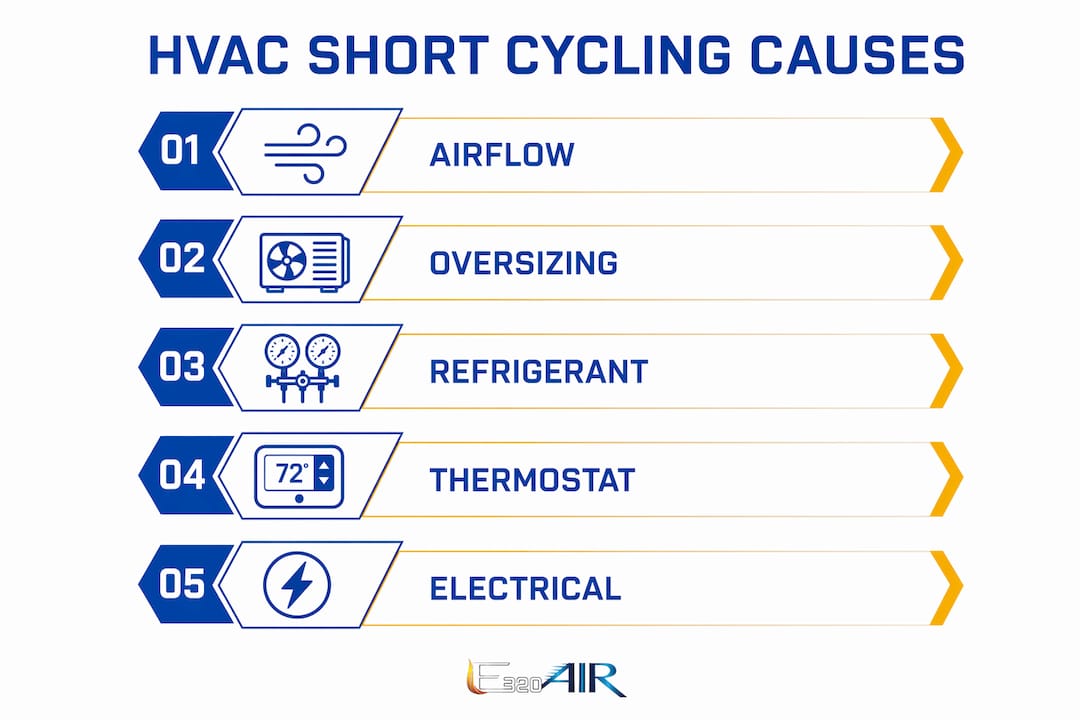
Short cycling happens when something forces the system to shut off before it finishes a full conditioning cycle. The most common triggers fall into five categories: airflow restrictions, oversized equipment, low refrigerant, thermostat problems, and electrical faults. Each one creates a different failure chain, but all of them produce the same result: a system that runs too briefly, too often.
Airflow restrictions
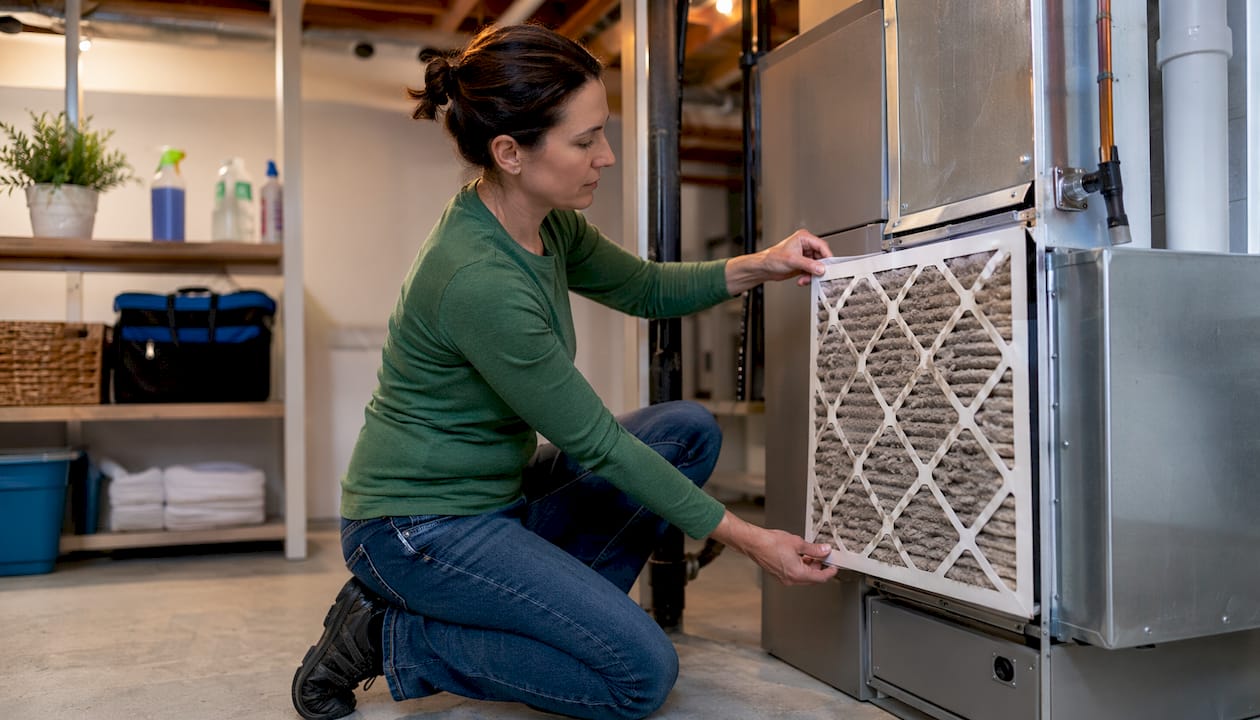
A dirty air filter is the single most common cause of short cycling. When airflow drops, the evaporator coil gets too cold and freezes over. The system's safety controls detect the problem and shut the unit down. Once the ice melts slightly, the system restarts, only to freeze again minutes later. Checking and replacing your filter every 30–90 days prevents this entire cycle from starting.
Blocked supply or return vents produce the same effect. Closed dampers, furniture pushed against registers, and debris in ductwork all restrict the airflow the system needs to run continuously.
Pro Tip: Walk through your home and confirm every supply and return vent is fully open and unobstructed. Closing vents to "save energy" in unused rooms actually raises static pressure and triggers short cycling.
Oversized HVAC units
An oversized air conditioner cools the space so fast that the thermostat reaches its set point in under five minutes. The system shuts off before it has run long enough to pull humidity out of the air. Oversized AC units satisfy the thermostat quickly but leave indoor humidity high, making the space feel clammy even at the correct temperature. In southern California's dry but occasionally humid coastal conditions, that moisture imbalance is noticeable and uncomfortable.
Proper HVAC system sizing requires a Manual J load calculation. Bigger is not better. An oversized unit will short cycle from day one, and no amount of maintenance will fix a fundamental sizing error.
Low refrigerant levels
Low refrigerant causes the evaporator coil pressure to drop. The coil freezes, the system's high-pressure or low-pressure safety switch trips, and the unit shuts down. This repeats every few minutes. Refrigerant does not get "used up" like fuel. A low charge always means a leak somewhere in the system. Topping off the refrigerant without finding and sealing the leak is a temporary fix at best.
Thermostat problems
A thermostat placed near a heat source or directly in the path of a supply register reads a false temperature. The system thinks the room is already at the set point and shuts off prematurely. Direct sunlight on the thermostat body produces the same false reading. Relocating the thermostat to an interior wall away from heat sources and airflow often resolves short cycling with no other repairs needed.
Electrical faults
A failing capacitor causes the compressor or fan motor to struggle at startup, drawing excessive current until a breaker or internal protection trips the unit off. Loose wiring connections produce intermittent shutdowns that look identical to refrigerant or airflow problems. These faults require a technician with a multimeter to diagnose accurately.
How short cycling damages your system and raises your bills
Every time your HVAC system starts up, the compressor draws 5–8 times its normal running amperage. That amperage spike lasts only a few seconds during a normal startup, but when a system short cycles 10–20 times per hour, those spikes add up fast. The result is a measurable increase in your monthly electric bill and accelerated wear on every electrical component in the system.
The compressor is the most expensive part of your HVAC system. Short cycling stresses it at startup without giving it time to build steady oil pressure for lubrication. Over time, that repeated stress leads to premature compressor burnout. Compressor replacement costs typically range from $3,000 to $15,000 depending on equipment size and class.
Short cycling also fails to remove humidity from indoor air. A properly running air conditioner needs at least 7–10 minutes of continuous operation to pull meaningful moisture out of the air. A system that shuts off after 3 minutes leaves that humidity behind. In a southern California home, that means sticky, uncomfortable air even when the thermostat reads the right temperature. Persistent indoor humidity also creates conditions that encourage mold growth, a problem covered in detail in this dehumidification and mold prevention guide.
The damage compounds quickly. A system that short cycles for even one full summer season can accumulate wear equivalent to several years of normal operation. Catching the problem early is far cheaper than replacing a compressor.
How to identify short cycling symptoms at home
Short cycling produces clear, recognizable signs. Knowing what to look for lets you catch the problem before it becomes expensive.
-
Count the cycles. Stand near your outdoor unit and time how long the compressor runs before shutting off. A healthy run time is at least 5–7 minutes. Runs shorter than 3–4 minutes signal a problem. Count how many times the system cycles in one hour. More than 5–6 cycles per hour is outside the normal range.
-
Check the air coming from your vents. If the air feels warm or only slightly cool, the system is not running long enough to fully condition the air. Clammy air at the correct temperature points to a humidity removal failure caused by short runs.
-
Note temperature inconsistency. Rooms that never quite reach the set temperature, or that swing several degrees above and below it, indicate the system is cycling off before the space is fully conditioned.
-
Inspect the thermostat location. Check whether the thermostat sits on an exterior wall, near a window with direct sun, or close to a supply vent. Any of those positions can cause false temperature readings and premature shutoffs.
-
Look at the air filter. Pull the filter and hold it up to light. If you cannot see light through it, restricted airflow is a likely cause of the short cycling.
Pro Tip: Use a stopwatch app on your phone to time compressor run cycles over a 30-minute window. Record the start and stop times. That data gives a technician a clear picture of the problem before they arrive.
A common homeowner mistake is assuming short cycling means the system needs replacement. Most cases are caused by fixable maintenance or control issues, not worn-out equipment.
DIY steps to reduce short cycling and when to call a pro
Several short cycling causes are within reach of any homeowner. Others require professional tools and training.
What you can do yourself:
- Replace or clean the air filter. Use the manufacturer's recommended MERV rating. A filter that is too restrictive causes the same airflow problems as a dirty one.
- Check every supply and return vent in the home. Open any that are closed and clear any obstructions.
- Evaluate thermostat placement. Move it away from direct sunlight, exterior walls, and supply registers if possible.
- Upgrade to a programmable or smart thermostat. A well-calibrated thermostat reduces false readings and gives you better control over cycle behavior. Use the air conditioner troubleshooting guide to walk through the basics before calling for service.
- Check the outdoor unit. Clear leaves, debris, and vegetation from around the condenser. Restricted airflow at the condenser causes high-pressure shutdowns that mimic other short cycling causes.
When to call a professional:
- The system short cycles even after you have replaced the filter and cleared all vents.
- You notice ice forming on the refrigerant lines or the indoor coil.
- The system trips the circuit breaker repeatedly.
- You suspect refrigerant loss, indicated by reduced cooling capacity alongside short cycling.
- The system is less than 10 years old and short cycling started suddenly without an obvious cause.
Routine preventive maintenance is the most effective long-term strategy. Annual tune-ups that include filter replacement, coil cleaning, refrigerant checks, and static pressure measurement catch the conditions that lead to short cycling before they cause damage. A maintenance schedule built around your system's age and usage keeps repair costs predictable and extends equipment life.
Key Takeaways
Short cycling is a diagnosable, often fixable condition that causes compressor damage, higher energy bills, and poor humidity control when left unaddressed.
| Point | Details |
|---|---|
| Healthy cycle frequency | A properly running system completes 3–5 cycles per hour with runs of at least 5–7 minutes each. |
| Top causes | Dirty filters, oversized equipment, low refrigerant, thermostat placement, and electrical faults each trigger short cycling. |
| Energy and cost impact | Each startup draws 5–8 times normal amperage; compressor replacement costs $3,000–$15,000 if short cycling goes undiagnosed. |
| First homeowner steps | Replace the filter, open all vents, and time compressor run cycles before calling a technician. |
| Professional diagnosis | Refrigerant leaks, electrical faults, and oversized systems require professional tools and cannot be resolved with DIY fixes alone. |
What I've learned after years of diagnosing short cycling in southern California homes
The most persistent misconception I encounter is that a bigger unit means better cooling. Homeowners upgrade to a larger system expecting faster relief on a hot day, and within weeks they are calling back because the house feels humid and the system runs constantly in short bursts. Oversizing is one of the most common and most preventable causes of short cycling I see, and it starts with skipping the load calculation.
The second thing I have learned is that short cycling rarely means the system is dead. Short cycling is a diagnostic clue, not a death sentence. I have resolved cases that looked like compressor failure with nothing more than a filter change and a thermostat relocation. Replacing a compressor without diagnosing the underlying airflow or refrigerant issue is one of the most expensive mistakes a homeowner can make, because the new compressor will fail the same way.
What actually protects your investment is consistent maintenance and early attention to symptoms. A system that gets annual tune-ups, clean filters, and prompt attention when something changes will outlast a neglected system by years. Southern California's climate is hard on HVAC equipment. The summers are long, the systems run often, and the wear adds up. Treating your HVAC system like the significant mechanical investment it is, rather than something to ignore until it breaks, is the single best decision you can make as a homeowner.
— Edward
E320air is ready to diagnose your short cycling problem
Short cycling left unaddressed turns a simple maintenance issue into a costly repair. E320air serves southern California homeowners with professional HVAC diagnostics, repair, and installation built around accurate diagnosis first.

Whether your system is cycling too fast, running too briefly, or struggling to hold temperature, the E320air team identifies the root cause before recommending any repair. Browse the problem-solving gallery to see real-world short cycling cases resolved, or visit E320air to schedule a diagnostic visit. Preventive maintenance plans are also available to keep your system running efficiently through every southern California summer.
FAQ
What is HVAC short cycling?
HVAC short cycling is when a system turns on and off more frequently than designed, with run times under 3–4 minutes instead of the healthy standard of 5–7 minutes per cycle.
Why does my air conditioner turn on and off every few minutes?
The most common causes are a dirty air filter, an oversized unit, low refrigerant, or a thermostat placed near a heat source. Each of these forces the system to shut off before completing a full cooling cycle.
Can short cycling damage my HVAC system?
Short cycling draws 5–8 times normal startup amperage on every cycle and prevents the compressor from building steady lubrication pressure, leading to premature compressor failure that costs $3,000–$15,000 to repair.
How do I know if my HVAC system is short cycling?
Time your compressor with a stopwatch. If it runs fewer than 5 minutes before shutting off, or cycles more than 5–6 times per hour, your system is short cycling.
Should I replace my HVAC system if it short cycles?
Not necessarily. Many short cycling cases are resolved with filter replacement, thermostat relocation, or refrigerant recharge. A professional diagnosis identifies whether the cause is a simple fix or a deeper equipment issue before any replacement is considered.