
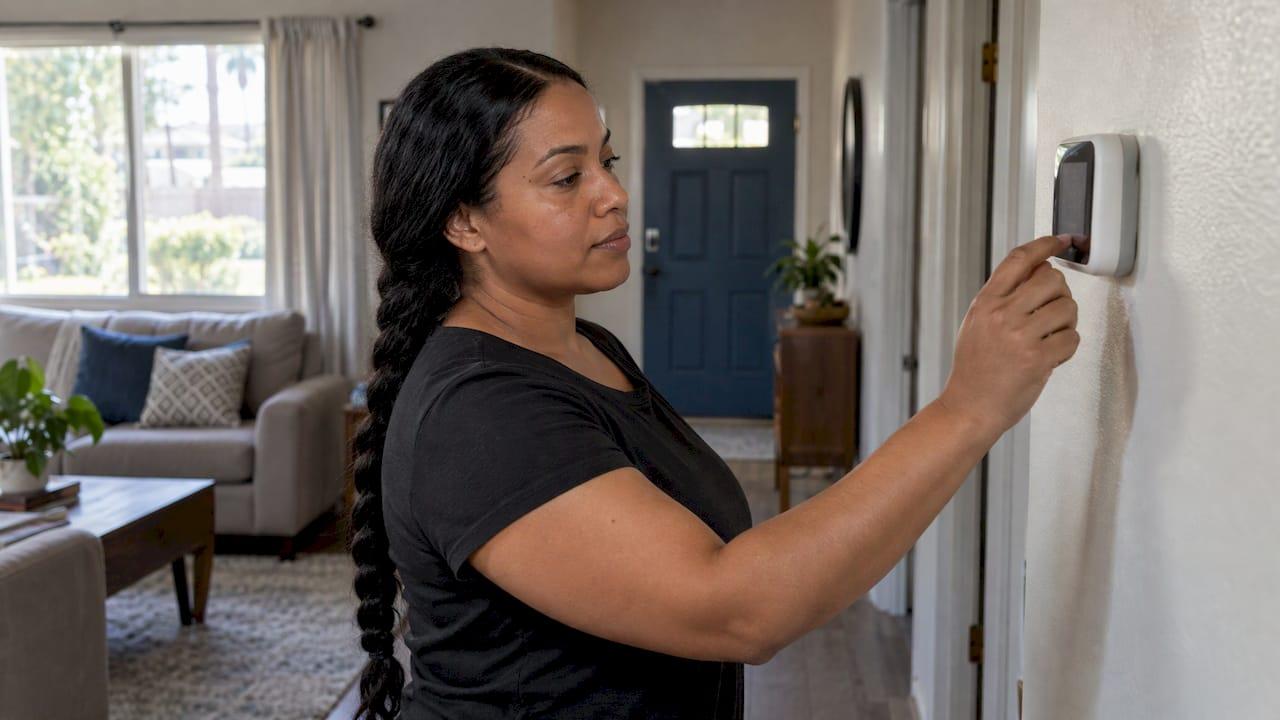
When smoke rolls into the Inland Empire, set your system to recirculate (or close the fresh-air intake), switch the thermostat fan from Auto to On, and install the highest-rated filter your system can handle, ideally MERV 13 or higher. Those three changes keep your HVAC cleaning the air already inside your home instead of pulling smoky air in. The part most homeowners get wrong is the filter: the right one depends on what your blower and filter slot can handle, and that is a question for an HVAC technician, which is what we are.
TL;DR
- Close the fresh-air intake or use recirculate mode, and keep windows and doors shut, as the EPA advises.
- Change the thermostat fan from Auto to On so the filter works continuously, not only while the AC or heat is running.
- Use a MERV 13 or higher filter if your system can take it, and swap it sooner than usual after smoke.
- Most central AC systems have no outdoor air intake at all. If yours has a ventilator or fresh-air duct, that is the part to shut off.
- Return to normal settings once the air clears, then air out the house.
Table of Contents
- The three settings that matter most
- What each type of system needs
- Choosing a filter your system can handle
- How often to change the filter in smoke season
- Build a cleaner-air room
- Keep smoke out and keep new pollution from forming
- Staying cool without letting smoke in
- Returning to normal settings
- Where a technician helps
- Our perspective
- Get your system ready before the next smoke event
- FAQ
- Sources
The three settings that matter most
Public health agencies agree on the core routine. The EPA says to close the fresh-air intake or set the cooling system to recirculate, use a MERV 13 filter or the highest your system can handle, and run the fan continuously to capture fine smoke particles.
1. Recirculate, not fresh air
Some systems have a damper or a dedicated duct that brings outdoor air into the return side. During smoke that air carries fine particles straight into your rooms. California's public health department says to close windows and doors and turn off ventilation fans that pull in outdoor air during smoke events, then restart them when smoke clears.
The same document notes that California's 2008 building standards require ventilation fans in new or extensively renovated homes, often running 20 to 30 minutes per hour. Those fresh-air connections to a forced-air system may be controlled by the thermostat or by a separate controller. If your house was built or remodeled in the last 15 years or so, look for a thermostat setting or a wall control labeled fresh vent or outdoor air supply.
2. Fan On, not Auto
In Auto mode the blower only runs when the system is heating or cooling. Filtration happens only while air moves through the filter, so Auto leaves long gaps. The CDPH guidance says that setting a modern forced-air system to circulate or on increases filtration and gives a significant indoor air quality improvement compared with running the fan only intermittently.
The EPA reports that a MERV 13 or higher filter with the fan running continuously can decrease PM2.5 by about 50%, while a typical low-efficiency filter run continuously may cut particle concentrations by about 24%. PM2.5 means particles smaller than 2.5 micrometers, the size range that gets deep into lungs and makes up much of wildfire smoke.

3. A filter that actually catches smoke
MERV is a 1 to 16 rating of how well a filter traps particles. Cheap fiberglass filters sit at the low end and let most smoke through. The EPA recommends MERV 13 or higher, a snug fit so air cannot slip around the edges, and changing the filter when it gets dirty or starts to smell.
What each type of system needs
Not every home runs the same equipment. Here is how the settings translate.
| System type | What to do during smoke |
|---|---|
| Central AC or furnace with a ducted return | Fan to On, MERV 13+ filter if compatible, windows and doors closed |
| Central system with a fresh-air duct or damper | Close the damper or select recirculate, then set fan to On |
| Ducted heat pump | Same as central AC: fan On, best compatible filter |
| Home with an HRV or ERV (a heat or energy recovery ventilator) | Turn it off or close its outdoor intake until smoke clears |
| Window AC | Use the recirculation option and close any fresh-air vent |
| Ductless mini split | Clean the indoor unit's filter; it recirculates room air, so keep it running |
The EPA's Best Practices Guide states that most residential refrigerant-based AC systems, including ducted heat pumps, have no outdoor air intake and simply recirculate indoor air through the filter section. For those homes the key moves are continuous fan operation and a MERV 13 or better filter. The same guide says HRVs and ERVs are not common in homes, and any fresh-air intake should be closed or set to recirculate.
For a commercial building the rule differs. The guide advises reducing outdoor air to a minimum while keeping positive building pressure, and never closing every intake completely. If you manage a shop, office or rental property, that balance is worth setting up once with a technician before smoke season rather than during an emergency.
Choosing a filter your system can handle
A denser filter resists airflow more. Pair a high-MERV filter with a weak blower or a tight filter slot and you can strain the system. The CDPH document warns that higher-performance filters increase airflow resistance that not all systems can handle, and tells homeowners to confirm compatibility with an HVAC technician or the system manufacturer. The EPA adds that most furnaces and HVAC systems can accommodate MERV 13 if the filter is replaced frequently, and that a professional may sometimes modify the system to take a higher-efficiency filter.
A few practical points:
- Check the slot. Many returns hold a 1-inch filter. Deeper pleats of 2 inches or more give more filter surface and less resistance. Washington State's health guidance recommends choosing the deepest pleat your system can accommodate, and considering a lower-rated prefilter upstream to extend the life of a MERV 13 filter.
- Make it fit. Gaps around the frame let smoke bypass the media.
- Stock up early. CDPH advises keeping high-efficiency filters on hand because they can be hard to find during smoke events, and AirNow suggests planning to replace filters more often than the manufacturer recommends during heavy smoke.
- Know what a filter does not do. MERV filters remove particles, not smoke smell or most gases. Washington's guidance notes that carbon filters can reduce some gaseous pollutants.
For sizing, replacement intervals and cleaning, our guides on HVAC filter replacement for California homes and HVAC filter essentials walk through the details.
How often to change the filter in smoke season
Smoke loads a filter much faster than ordinary dust. The EPA says to check filters often and replace them when they look dark brown or black. Washington's guidance suggests checking at least monthly during heavy use and more often during prolonged smoke. Ventura County's air district points to changing the filter every few weeks or even days during smoke events.
A simple routine for Riverside and San Bernardino County homes:
- Before the season, install a fresh filter and keep one or two spares.
- During smoke, pull the filter every few days and look at it against a light.
- Replace it as soon as it looks dark, and always after the smoke event ends, as CDPH advises.
- Write the install date on the frame so nobody guesses later.
A clogged filter also cuts airflow, which makes your system work harder in the heat. Inland Empire summers already put heavy load on equipment, as our look at how desert climate affects HVAC systems explains.
Build a cleaner-air room
HVAC settings do the most work when the rest of the house cooperates. The EPA suggests setting up a cleaner air room: pick a room big enough for everyone in the household, close its windows and doors without blocking emergency exits, and run the AC in recirculate mode with a compatible MERV 13 or higher filter.
Add a portable air cleaner. The EPA's filtration guide says to look for a clean air delivery rate (CADR) for smoke of at least two-thirds of the room's floor area in square feet, and for CARB certification so the unit produces little or no ozone. Ventura County's air district says a properly sized HEPA purifier can reduce indoor particulates by 90%, at about $75 for an average bedroom, when run continuously on its highest fan setting.

If you cannot find a purifier, the same district describes a DIY version: a 2012-or-newer 20-by-20-inch UL or ETL-listed box fan with a MERV 13 or higher filter taped to its back.
Keep smoke out and keep new pollution from forming
A few habits matter as much as the thermostat:
- Keep doors and windows closed, and use the shortest possible trips in and out.
- Skip candles, incense, gas or wood stoves, aerosols, smoking and vaping. The CDC lists burning candles, gas, propane, incense or wood indoors as sources to avoid.
- Avoid high-heat frying and non-HEPA vacuuming, which stir particles back into the air.
- Wipe settled dust with a damp cloth or mop instead of sweeping.
- When the air improves, open the house and flush it out. The EPA's guide suggests a post-event flush with increased outdoor air.
For homes with asthma or other sensitivities, our asthma-friendly HVAC setup guide covers the equipment side in more depth.
Staying cool without letting smoke in
Smoke events in Southern California often arrive with heat. The EPA says to run fans, window ACs or central AC to stay cool, with recirculation on, rather than opening windows. If a power outage or a failed system leaves you without cooling, that is the moment to call for emergency repair, not to crack the windows open. We provide around-the-clock service, including weekends and holidays.
The EPA's Best Practices Guide also notes that continuous fan-only operation during smoke can cut energy costs while still reducing smoke. If a hot afternoon does not call for cooling, fan-only mode with a good filter keeps the air moving and cleaned.
Returning to normal settings
The EPA's guide says modified HVAC settings should be temporary and restored when air quality returns to normal, though in smoke-prone western regions some changes may become permanent or seasonal. In practice:
- Check the air quality for your ZIP code on AirNow before you reopen anything.
- Open the fresh-air damper or turn the ventilator back on.
- Set the fan back to Auto if you prefer, or keep it On if you want constant filtration.
- Replace the filter that ran through the smoke.
- Open windows to flush the house.
In a long smoke episode, Washington's guidance suggests bringing in outside air during improved-air periods such as rain or wind shifts, to keep indoor CO2 below 800 ppm, and considering more outdoor ventilation if levels frequently exceed 1,000 ppm. A tightly sealed home with many people in it can build up carbon dioxide, so that balance matters on multi-day events.
Where a technician helps
The public guidance says the same thing in several places: confirm with an HVAC technician which filter your system can take, and have a professional modify the system when a higher-efficiency filter does not fit. That is routine work for a licensed, insured HVAC contractor. We cover all major brands, and the options below are the ones that come up before smoke season:
- A check of the return, filter slot and blower to confirm the highest-rated filter your system can accept.
- Routine maintenance so coils, blower and ducts are ready for a long run with the fan On.
- System enhancements and upgrades aimed at better indoor air quality, covered in our guide to top HVAC air quality improvements.
- Installation of new equipment, where a house with a tight or undersized filter slot is better served by a properly designed return. Mistakes made at installation are common, as we describe in common HVAC installation mistakes California homeowners must avoid.
We also work with commercial properties, where the outdoor air balance needs more care than a switch on a thermostat.
Our perspective
Most of the smoke-season calls that worry us have nothing to do with a broken system. They come from a filter that does not fit, a fresh-air setting nobody knew about, or a fan left on Auto for days of heavy smoke.
The settings themselves are simple. Recirculate, fan On, and the best filter your equipment can handle. The skill is in knowing what your equipment can handle, because the answer changes from one house to the next. Return size, blower strength and duct design all play a part.
That is why we think smoke preparation belongs with regular maintenance, not in a panic when the sky turns orange. A system that is checked before the season, with the right filter size known and spares on the shelf, can simply be switched to recirculate when needed. Our technicians are licensed and insured, and we are available around the clock, including weekends and holidays, when an AC fails in the middle of a smoke event.
If you want your home ready for the next one, start with the filter and the system that holds it.
Edward
Get your system ready before the next smoke event
We repair, maintain, upgrade and install heating, cooling and air quality systems for homes and businesses across the Inland Empire, from Corona and Riverside to Fontana, Redlands and Hemet. Prompt, transparent service, tailored energy-efficient solutions and flexible payment options, including financing, are part of how we work. If you want to know which filter your equipment can take, or whether it is time for an upgrade, start with our residential HVAC services, or see our HVAC installation page if you are replacing a system.
For a heater that fails when smoke and a cold snap overlap, our heater repair team is available. Business owners and property managers can find our commercial HVAC services, including routine maintenance and emergency repairs, in one place.
FAQ
Should my thermostat fan be on Auto or On during wildfire smoke?
Set it to On. In Auto, air only passes through the filter while the system heats or cools. The EPA recommends running the fan continuously with a MERV 13 or better filter, and the Ventura County air district advises On instead of Auto. Switch it back when the air clears if you prefer.
What MERV rating is best for wildfire smoke?
The EPA recommends MERV 13 or higher, as long as your system can handle it. Higher-rated filters resist airflow more, so confirm compatibility with an HVAC technician or your equipment manufacturer. Most systems can accommodate MERV 13 when the filter is replaced often.
Does recirculate mode work with central AC?
Most central AC systems and ducted heat pumps have no outdoor air intake and already recirculate indoor air. If your home has a fresh-air damper, ventilator or an outdoor-air setting on the thermostat, close or turn it off during smoke. Newer or heavily remodeled California homes are more likely to have one.
Will a MERV 13 filter remove the smoke smell?
Not fully. MERV filters capture particles but not most gases, which carry much of the odor. Washington State's health guidance says carbon filters can reduce some gaseous pollutants. Airing out the house once the air quality improves, and wiping settled dust, helps too.
How soon should I replace the filter after smoke?
Replace it after every smoke event, and check it every few days during one. The EPA says to change filters when they look dark brown or black. Keep spares on hand, since high-efficiency filters can sell out during an event.
Sources
- Reduce Your Smoke Exposure | US EPA
- Wildfire Smoke: Considerations for California's Public Health Officials | CDPH
- Strategies to Reduce Exposure Indoors | US EPA
- Indoor Air Filtration | US EPA
- Best Practices Guide for Improving Indoor Air Quality | US EPA
- Preparing for Smoke and Heat | US EPA
- Improving Ventilation and Indoor Air Quality During Wildfire Smoke Events | Washington State DOH
- Be Smoke Ready | AirNow.gov
- Wildfire Smoke | Ventura County APCD
- How to Create a Cleaner Air Room at Home | US EPA
- Safety Guidelines: Wildfires and Wildfire Smoke | CDC