
An asthma-friendly HVAC system does four things well: it filters fine particles with the right filter, holds indoor humidity between 30 and 50 percent, stays clean enough that the coil and drain pan do not grow mold, and is sized so it runs long enough to dry the air. None of this needs exotic equipment. Most of it is the right filter, the right maintenance and a system that fits your house.
Below, we walk through each piece, what the EPA and other health sources say, and what Inland Empire homeowners should watch for with our dry heat, dust and smoke seasons.
TL;DR
- Use the highest-rated filter your system can handle. The EPA recommends MERV 13 filters in ducted systems, and a technician can confirm your blower tolerates one.
- Aim for 30 to 50 percent indoor humidity. Too damp feeds mold and dust mites; too cold or dry air can irritate airways.
- Have the cooling coil and condensate drain pan inspected. The EPA notes they can harbor microbial growth.
- An oversized system short-cycles and dehumidifies poorly, so sizing matters as much as filters.
- Source control comes first. Ventilation and filtration support it but do not replace it.
Table of Contents
- Can air conditioning help or hurt asthma?
- How an HVAC system becomes an asthma trigger
- Choose the right air filter
- Keep humidity between 30 and 50 percent
- Sizing matters more than most people think
- Ventilation and source control
- Smoke and dust days in the Inland Empire
- An asthma-friendly maintenance routine
- Our perspective: start with the system, not the gadget
- When to call a professional
- How E320air can help
- FAQ
- Sources
Can air conditioning help or hurt asthma?
Both, depending on how it is run and maintained. According to the Cleveland Clinic, air conditioning filters some allergens and removes moisture, but air that is too cold or dry can irritate the airways and trigger symptoms in people with asthma. Poor maintenance can also contribute to mold.
That is the honest answer to "is AC good for asthma?": a clean, well-sized system with a good filter is usually a benefit, especially in an Inland Empire summer when closing the windows keeps out heat, pollen and dust. A neglected one can become a source of the problems you are trying to avoid.
Practical takeaways:
- Do not set the thermostat so low that the air feels sharply cold or dry if cold air is a trigger for you or your child.
- Keep windows closed while the system runs, and keep the filter fresh.
- If symptoms get worse whenever the system starts, treat that as a signal to have the system inspected, and talk with your doctor about your asthma action plan.
How an HVAC system becomes an asthma trigger
Your HVAC system moves every cubic foot of indoor air through itself several times a day. That is a benefit when the system is clean and a problem when it is not.
The EPA states that air conditioners and drip pans under cooling coils can support the growth of bacteria and fungi, and that cooling coils and condensate drain pans may serve as reservoirs or sites of microbial growth. The usual culprits we see in homes:
- A clogged condensate drain, which leaves standing water in the pan.
- A dirty evaporator coil, which stays damp and collects dust.
- Leaky or unsealed ducts that pull in attic or crawlspace air. See our guide on why ductwork matters.
- A saturated or missing filter, which lets dust coat the coil and blower.
Water problems are the ones to take seriously. Our article on preventing HVAC leaks covers early warning signs. If someone suggests duct cleaning for mold, read why you should ask for coil and drain pan photos first, because the source is often the coil, not the ductwork.
Choose the right air filter
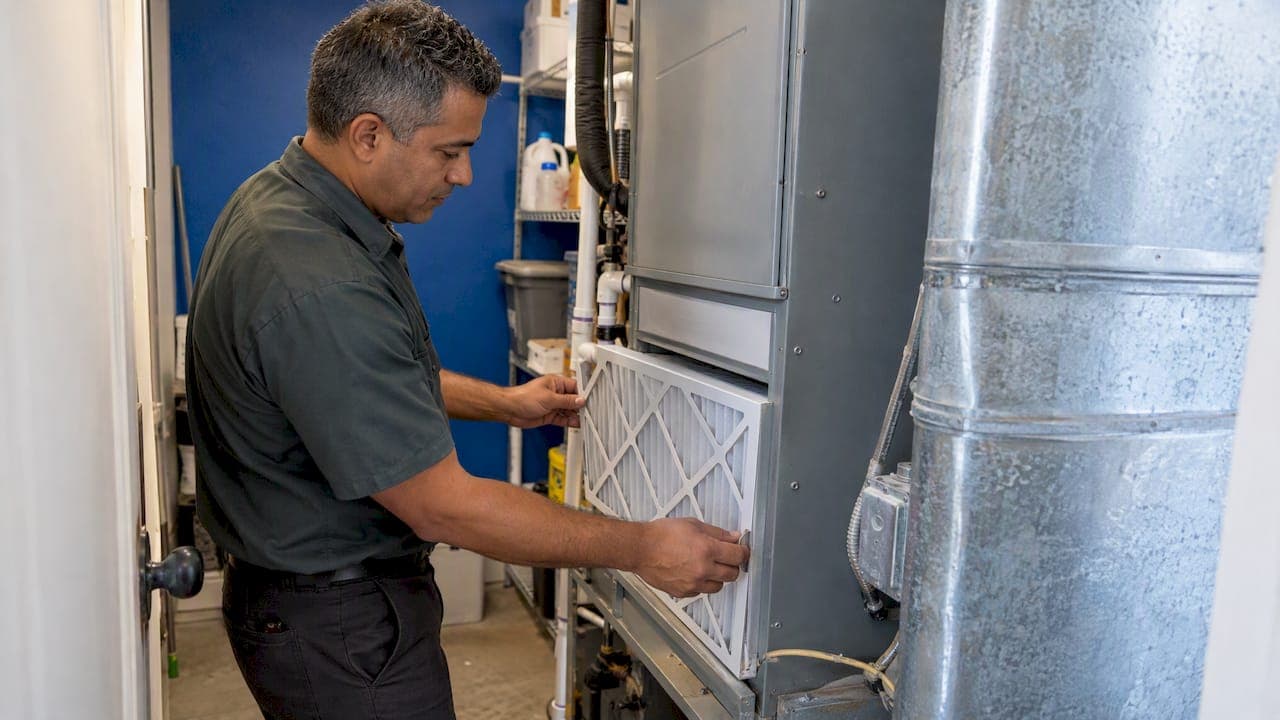
Filters are the cheapest and most effective upgrade. The EPA recommends MERV 13 filters in ducted systems for better filtration of particle pollution, including particles carrying pet allergens. The Indoor AirPlus program, which labels homes built with asthma-conscious features, also calls for properly designed HVAC systems with enhanced filtration.
Check before you upgrade
A denser filter resists airflow. Before you jump from a basic filter to MERV 13, check these:
- Your filter slot. Some return grilles and cabinets hold only a 1-inch filter, which can be too restrictive when pleated media is thick and dense. A deeper 4- or 5-inch media cabinet often handles higher ratings with less restriction.
- Your blower and duct design. A system with undersized returns can lose airflow with a tight filter, which hurts comfort and can freeze the coil.
- Your change schedule. A higher-rated filter loads up faster in dusty areas, so check it monthly and replace it as soon as it looks gray.
If you are unsure, ask a technician to measure static pressure with the new filter in place. Our HVAC filter essentials guide explains ratings and sizes in more detail.
Filters are not the whole answer
A filter only catches what passes through the system. Dust that settles on floors, pet dander on furniture and fumes from cleaning products never reach it. Run the fan on "auto" in most cases and keep up vacuuming with a sealed or HEPA-type vacuum.
Keep humidity between 30 and 50 percent
Humidity is the other lever. The EPA recommends indoor relative humidity between 30 and 50 percent, and notes that when it is warm, running the air conditioner can help lower humidity. Above that range, mold and dust mites thrive. Well below it, airways can dry and feel irritated.
In most of the Inland Empire, humidity is a lesser problem than in the Southeast. Summer indoor air is typically dry, and the risk is more about overly dry winter air from heating and irritation from dust. Still, damp spots happen: bathrooms without working fans, a leaking drain line, a slab-on-grade house with a plumbing leak, or a coastal-influence day in Corona or Murrieta. If you want to understand how moisture builds up in closed, damp spaces, this piece on keeping moisture and mold out explains the mechanism clearly.
How to know your number
Buy a small digital hygrometer, which costs little at a hardware store. Check it in the bedroom and the main living area for a week. If it reads above 50 percent for long stretches, look for a source (leaks, no bathroom ventilation, wet laundry drying indoors) before you buy any equipment. If it reads below 30 percent in winter, talk with us about humidification options that fit your system.
Sizing matters more than most people think
An oversized air conditioner cools the house quickly, then shuts off before it has removed much moisture. The National Center for Healthy Housing says systems should be sized according to ACCA Manual J, because oversized equipment may short-cycle, leading to insufficient dehumidification and potential mold growth.
If your system turns on and off every few minutes, read why an HVAC system short cycles. The cause may be a dirty filter or a thermostat issue, but it can also be size. When you replace equipment, insist on a real load calculation rather than a swap for the same tonnage. We cover this in why proper HVAC sizing maximizes comfort and savings and how HVAC design affects comfort.
Ventilation and source control
The EPA says source control is usually the most effective way to improve indoor air, while ventilation brings in fresh air to help reduce indoor pollutants. For an asthma household, that ordering is useful:
- Remove or reduce the source. Fragrance sprays, smoking, unvented combustion, damp carpets and mold.
- Ventilate where pollutants are made. Use a bathroom fan and a range hood vented outdoors.
- Filter what remains. That is where your HVAC filter earns its place.
The NCHH adds that dilution ventilation addresses low-level contamination throughout the home, and that its effectiveness depends on air changes and air cleaning. In plain terms: bringing in outside air helps only when outside air is cleaner than inside air.
Gas appliances need a specific note. The EPA says combustion appliances in Indoor AirPlus labeled homes must be properly vented to prevent pollutants from backdrafting indoors. If you have a gas furnace or water heater, have the venting checked during a tune-up. A furnace problem is also a safety matter, so if you smell gas or suspect carbon monoxide, leave the house and call 911 and your gas utility.
Smoke and dust days in the Inland Empire
Southern California homeowners deal with wildfire smoke, Santa Ana wind dust and ozone-heavy summer days. On those days, outdoor air is the pollutant source, so the best approach reverses the usual advice: keep windows and doors closed, avoid pulling in outdoor air where your system has that option, and keep a clean, well-fitted filter in place.
A few steps help:
- Put in your higher-rated filter before smoke season, not during it.
- Check the filter more often during smoke or dust events, because it can load quickly.
- Seal obvious gaps around doors, windows and attic access.
- Use your local air quality forecast to decide when to stay indoors, and follow your doctor's guidance if your asthma is not well controlled.
If your system has a fresh-air damper or a ventilation mode, ask your technician how to set it for smoky days. Settings differ by equipment, so we do not give a one-size rule here.
An asthma-friendly maintenance routine
The NCHH notes that regular HVAC maintenance and duct sealing can help minimize contamination and the spread of pollutants. A realistic schedule for an asthma household looks like this:
| Task | How often | Who |
|---|---|---|
| Check filter, replace when dirty | Monthly check | You |
| Clear the area around the indoor unit and return grilles | Monthly | You |
| Check the condensate drain and drip pan | Before cooling season, and again mid-summer | Technician or you if comfortable |
| Clean the evaporator coil if dirty | As found at tune-up | Technician |
| Tune-up of the cooling system | Once a year, before summer | Technician |
| Heating and venting check | Once a year, before winter | Technician |
| Duct leakage check | When comfort or dust is a problem, or after attic work | Technician |
Our guides on steps to winterize your HVAC system and how HVAC improves indoor air quality fill in the details. For a wider menu of upgrades, see top HVAC air quality improvements.
Our perspective: start with the system, not the gadget
We see homeowners spend money on add-ons while the basics are neglected. A plug-in gadget will not fix a coil caked with dust, a drain pan with standing water or a duct with a gap that pulls in attic air. So when a family with asthma calls us, we work in this order.

First we look at what exists: the filter and its fit, the coil, the drain, the ducts and the venting on any gas equipment. Many problems end there, with a cleaning, a repair or a better filter cabinet. Second, we look at whether the system suits the house, because size and airflow shape how well it filters and dries the air. Third, if the home needs more, we discuss options such as upgraded filtration or humidity control that match the equipment you own, not a package.
We tailor solutions to the home and aim to keep disruption low. Our technicians are licensed and insured, we work on all major brands, and we explain what we find before any work is agreed. If a repair is enough, we say so.
— Edward
When to call a professional
Call for service rather than waiting for the next scheduled tune-up if you notice:
- A musty smell when the system starts.
- Water around the indoor unit, or a rust-stained drain pan.
- Visible dark growth near vents, grilles or the unit.
- Asthma symptoms that reliably worsen indoors, especially after the system runs.
- Short cycling, uneven rooms or dust that returns within days of cleaning.
Persistent breathing problems at home are also a reason to see your doctor or allergist, who can tell you which triggers matter for you. An HVAC contractor can fix the system, but cannot diagnose asthma triggers.
How E320air can help
E320air serves Inland Empire homeowners, landlords and business owners across Riverside, San Bernardino, Moreno Valley, Fontana, Corona and nearby cities. We handle repairs, routine maintenance, system upgrades and new equipment installation, with service available around the clock, including weekends and holidays, and flexible payment options including financing.
If your system needs a full replacement, see our HVAC installation service. If your heater is behaving oddly before winter, our heater repair page explains how to reach us. For a general inspection, a filter fit check or an upgrade plan, start at e320air.com. Landlords and business owners can also look at our commercial HVAC services, and you can see examples of our work in the problem-solving gallery.
FAQ
Is AC good for people with asthma?
Often yes, when it is clean and well sized. It filters some allergens and removes moisture, but the Cleveland Clinic notes that air that is too cold or dry can irritate airways. Poor maintenance can lead to mold, so keep up the filter and coil care.
What kind of air is best for asthma?
Air that is clean of particles, moderately humid and free of strong fragrances or smoke. The EPA recommends keeping relative humidity between 30 and 50 percent. Pair that with a good filter and source control.
Do I need a MERV 13 filter?
The EPA recommends MERV 13 in ducted systems for better particle filtration, but not every system handles it well. Have a technician check your filter slot and airflow before switching. If your system cannot take it, a thicker media filter cabinet may solve the problem.
How often should I service my HVAC if someone in the house has asthma?
Check the filter monthly and book a professional tune-up once a year for cooling, plus a heating and venting check before winter. Add a visit any time you notice musty smells, water near the unit or worsening symptoms indoors.
Sources
- Can Air Conditioning Make You Sick? (Cleveland Clinic)
- Indoor AirPlus and Asthma (US EPA)
- Indoor Air Pollution: An Introduction for Health Professionals (US EPA)
- Care for Your Air: A Guide to Indoor Air Quality (US EPA)
- Ventilation and Indoor Air Quality (National Center for Healthy Housing)