
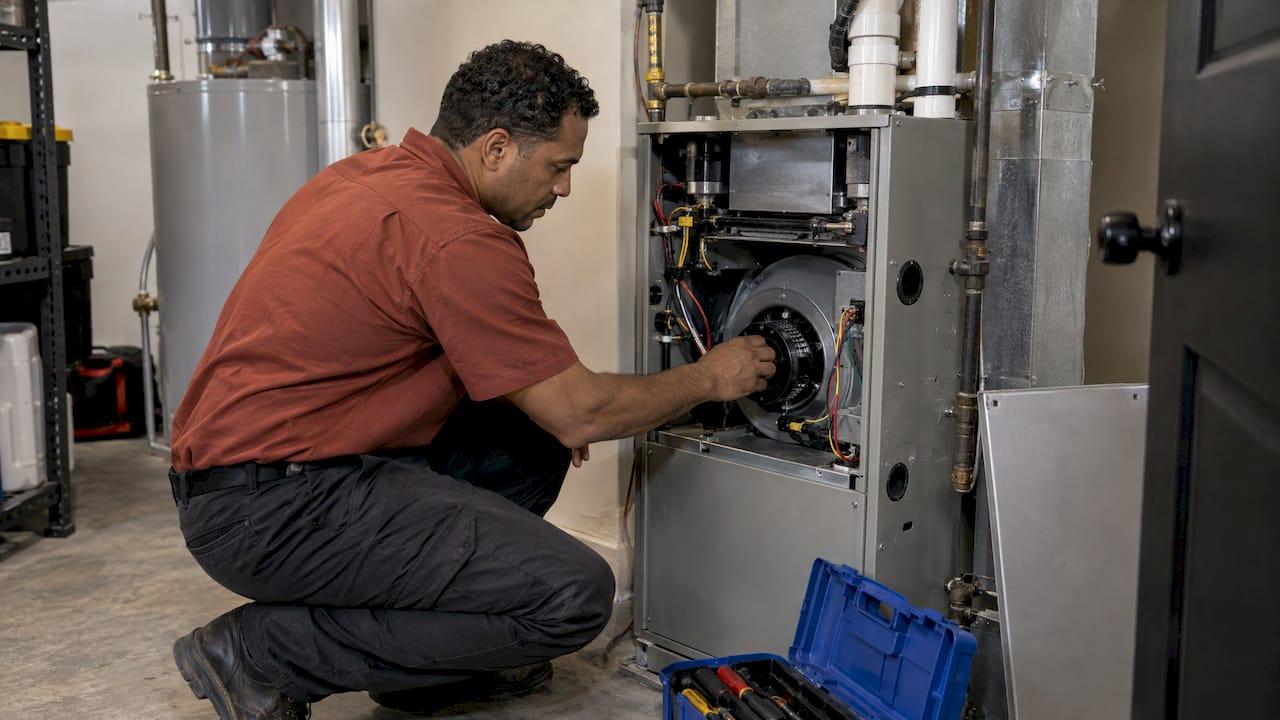
Call emergency HVAC service when waiting could put people at risk, damage your home, or leave you with no heating or cooling in dangerous weather. Call 911 first, not an HVAC company, if you smell gas, a carbon monoxide alarm is sounding, or you see smoke, sparks or fire. Most other problems, like weak airflow or a new rattle, can wait for a regular appointment as long as the system still keeps your home safe and comfortable.
This guide sorts HVAC problems into three groups: call 911, call an emergency technician, and book a normal visit. It also covers what to do in the minutes before help arrives and what to tell the person who answers the phone. We wrote it for Inland Empire homeowners, landlords and business owners, where a summer AC failure is a real health issue.
TL;DR
- Gas smell, a sounding CO alarm, smoke, sparks or fire: leave the building and call 911 before you call any HVAC company.
- Call emergency HVAC service for a complete loss of cooling in extreme heat, a complete loss of heat in freezing weather, water pouring from equipment, burning odors, or loud mechanical noises.
- Weak cooling, minor noises, uneven rooms and a thermostat that is a few degrees off can usually wait for a regular visit, unless a baby, an older adult or someone with a medical condition lives in the home.
- Turn off a leaking or burning-smelling system at the thermostat and breaker, then call. Do not keep running it.
- Have the temperature, system type, alarms, odors, ice and water details ready when you call so the technician can prepare.
Table of Contents
- Start here: when to call 911 instead of an HVAC company
- When to call emergency HVAC service right away
- Extreme heat and cold: when no AC or no heat becomes an emergency
- Water leaks: shut it off first
- What can usually wait for a regular appointment
- What to do while you wait for help
- What to tell the dispatcher
- Prevent the next emergency
- Perspective
- Emergency HVAC help across the Inland Empire
- FAQ
- Sources
Start here: when to call 911 instead of an HVAC company
An HVAC technician repairs equipment. Firefighters and the gas utility control an active life-safety scene. Turnkey Dispatch's emergency guide puts it this way: call 911 before an HVAC company when there is a suspected gas leak, a carbon monoxide alarm, fire, smoke, sparking, a serious electrical hazard, or a person with severe symptoms.
Gas smell
If you smell gas, do not go looking for the source. The same guide advises against operating lights, switches, phones, thermostats, plugs, appliances, vehicles, garage-door openers or valves in the affected area. Leave on foot right away, call 911 from a safe distance, then notify the gas utility or propane supplier. Stay out until responders or the utility say it is safe.

Only after that does an HVAC call make sense, because the furnace may need inspection before anyone relights it.
Carbon monoxide alarm
Carbon monoxide (CO) is colorless and odorless. The CPSC notes that it comes from burning fuels such as natural gas, propane, oil, kerosene, coal or wood. Early symptoms resemble the flu without the fever: headache, fatigue, shortness of breath, nausea and dizziness. High exposure can kill.
The CDC says that if the detector sounds, you should leave the house immediately and call 911, and that dizziness, nausea or light-headedness calls for immediate medical attention. The EPA adds that you should get fresh air, open doors and windows if you can do so on the way out, turn off combustion appliances, and tell the emergency room physician you suspect CO poisoning.
Do not silence the alarm and go back to bed. Move everyone, pets included, outside first.
Smoke, sparks, fire or a serious electrical problem
Smoke from a vent, sparking at the air handler or outdoor unit, or a breaker that trips again the moment you reset it are 911-first situations when you see flames, smoke or sparks. A faint burning smell with no visible smoke is a different case, covered below.
A person with severe symptoms
Confusion, fainting, a very high body temperature, or signs of hypothermia mean medical help comes first, and the HVAC call follows. We cover the temperature thresholds in the next section.
When to call emergency HVAC service right away
If nobody is in immediate danger but waiting would make things worse, this is the category for an emergency technician. Carrier's emergency guide lists the common cases: smoke or burning odors, a complete loss of heat in freezing temperatures, a complete loss of cooling in extreme heat, significant water leaks around equipment, and unusual noises that suggest serious equipment failure.
Here is how that looks in a typical Inland Empire home.
| Situation | What it means | What to do |
|---|---|---|
| AC dead, indoor temperature climbing in a heat wave | Health risk, especially for infants, older adults and people with medical conditions | Call emergency service now and move vulnerable people to a cooler place |
| Furnace will not start on a freezing night | Risk of dangerously cold indoor temperatures | Call emergency service; use safe layers and blankets while you wait |
| Water pouring from the indoor unit or ceiling | Property damage and possible electrical hazard | Switch the system off, then call |
| Burning or chemical smell, no visible smoke | Possible overheating or electrical fault | Shut the system down at the thermostat and breaker, then call |
| Grinding, screeching or banging from the unit | Possible failing motor, blower or compressor | Turn the system off and call |
| Ice covering the outdoor unit or lines | Airflow or refrigerant problem | Turn the system off to thaw and call |
Burning smells
A brief dusty smell when you fire up the furnace for the first cold day is common. A strong, persistent or chemical smell is not. Shut the system down and call. Our guide on stopping a burning AC smell safely explains the steps to take in the first half hour.
Loud mechanical noises
Grinding, screaming or banging means a part is failing, and running the system can turn a repair into a replacement. Turn it off and call.
Ice on the equipment
A frozen coil or line during summer usually points to restricted airflow or a refrigerant issue. Running a frozen system can damage the compressor. See why an HVAC system freezes in summer for the likely causes.

Extreme heat and cold: when no AC or no heat becomes an emergency
The line between uncomfortable and dangerous depends on the weather and on who lives in the house.
Trane's repair guide says that if it is not too hot or cold and you can get by with fans or extra layers, you can consider waiting until Monday. It also says that with elderly family members or infants at home, getting the system working again matters for their health. That is a good rule of thumb: the same breakdown is a nuisance for a healthy adult in April and an emergency for a grandparent in August.
Heat
The CDC describes heat stroke as the body no longer being able to regulate temperature, with body temperature rising to 106 degrees Fahrenheit or higher within 10 to 15 minutes. ABC7 Los Angeles reports that it is a life-threatening emergency and that you should call 911 if you suspect it.
Fans help less than most people think when it is very hot. Turnkey Dispatch advises using them only while the indoor temperature is below 90°F, the CDC threshold above which a fan can raise body temperature. It also recommends moving infants, older adults, people with medical conditions and pets to an air-conditioned place early, rather than waiting until the house is unbearable. A library, a relative's home or a public cooling center can buy you time while a technician is on the way.
In practice, if your indoor temperature is heading past the high 80s and your AC has quit completely, call for emergency service. Do not wait for the next day.
Cold
Inland Empire winters are mild compared with much of the country, but desert-edge nights in Hesperia, Beaumont, Banning and Yucaipa can drop hard. The Mayo Clinic News Network explains that hypothermia, a body temperature below 95°F, can also result from ongoing exposure to indoor temperatures below 50°F, and that you should call 911 if you suspect it.
If your furnace is dead on a cold night and you have no safe alternative, call emergency service. Never use a gas oven, a barbecue or a portable fuel-burning generator for warmth indoors. The EPA warns never to run a portable generator inside or within 20 feet of a building. Our no-heat guide for warm climates lists what to check first, and if the cause turns out to be hot water rather than your furnace, this walkthrough on what to check when hot water stops helps you narrow it down.
Water leaks: shut it off first
Water around HVAC equipment is an emergency because the damage compounds every hour. Trane says that if you see a puddle near your central AC, you should turn it off and call for repair, since running it without fixing the cause of the leak can damage the system.
What to do:
- Turn the system off at the thermostat.
- Switch off the breaker for the air handler or furnace if water is near the electrical components or dripping from a ceiling.
- Move belongings away from the wet area and soak up standing water.
- Call, and tell the dispatcher where the water is coming from.
A small amount of condensation on a hot day is normal. Steady dripping, a pooling puddle, or a stained ceiling is not. If you see ice, the leak may be a thaw from a frozen coil. For deeper causes, read how to diagnose evaporator coil leaks and prevent HVAC leaks.
Refrigerant problems
Hissing, oily residue near a refrigerant line and loss of cooling may signal a refrigerant leak, though these signs do not prove one. Turnkey Dispatch notes that work opening the refrigerant circuit needs a technician with EPA Section 608 certification, so this is not a homeowner job. Turn the system off and call a licensed contractor.
What can usually wait for a regular appointment
Not every breakdown is urgent. These are generally fine to schedule during business hours, provided the weather is mild, nobody in the home is vulnerable, and there is no smell, water, smoke or alarm:
- Weak cooling or slow heating. The system still runs but the house takes longer to reach the set temperature. A dirty filter is the first thing to check, and a technician can look at the rest.
- Uneven temperatures between rooms. This is a comfort and efficiency issue, often tied to ducts, dampers or system sizing.
- Minor, new noises. A light rattle or hum that comes and goes deserves a visit soon, but a quiet grind or bang does not belong in this list. When in doubt, treat it as a loud noise and shut the system off.
- Thermostat that seems off. A few degrees of drift or a blank display can be a battery or settings problem.
- Higher utility bills. A sign the system is losing efficiency, which routine maintenance often catches.
- A system that is simply old. If repairs are becoming frequent, a planned replacement beats an emergency one. Our post on HVAC replacement signs explains what to watch for.
A useful test: if you can say yes to all of these, you can wait. The house is within a safe temperature range, no one in it is at higher risk, nothing smells like gas or burning, there is no water, and no alarm is going off. If any answer is no, call sooner.
Waiting is not the same as ignoring. A small problem left alone through a Riverside summer tends to fail on the hottest day of the year, when every contractor is busiest. Booking a maintenance visit in spring and fall is the cheapest way to avoid that.
What to do while you wait for help
- Gas smell: leave, call 911, notify the utility, stay out.
- CO alarm: move everyone outside to fresh air and call 911. Do not go back in to find the cause.
- Water: system off, breaker off if needed, protect floors and furniture.
- Burning smell: system off at the thermostat and breaker. See our HVAC emergency shutoff procedure for California homeowners.
- Heat: keep fans only while the indoor temperature is under 90°F, drink water, close blinds, and move vulnerable people somewhere cool.
- Cold: layer clothing and blankets, close off unused rooms, and never use fuel-burning appliances for indoor heat.
You may also find our contractor's checklist of six signs to call a pro after an HVAC outage useful for the longer view.
What to tell the dispatcher
Turnkey Dispatch suggests reporting the indoor temperature, outdoor conditions, who is affected, the system type, any alarms, ice, water, odors and what the breaker is doing. That information lets the technician bring the right parts and decide who goes first. Have these ready:
- Your address and a callback number.
- What stopped working and when.
- The indoor temperature and whether infants, older adults, people with medical conditions or pets are home.
- Furnace, heat pump, AC or package unit, and roughly how old it is, if you know.
- Smells, sounds, ice, water, error codes or a tripped breaker.
Prevent the next emergency
Most after-hours calls trace back to something a tune-up would have flagged. The EPA recommends having fuel-burning appliances, including gas furnaces, gas water heaters, ranges, dryers and fireplaces, inspected by a trained professional at the start of every heating season, and the CPSC likewise urges an annual professional inspection of fuel-burning heating systems.
CO alarms matter just as much. Per the EPA fact sheet, put one in a central location on every level, at least 15 feet from fuel-burning appliances, test monthly, and interconnect them so that when one sounds, all do. The CPSC recommends alarms that meet the current UL 2034 standard, with battery backup, on every level and outside sleeping areas.
Perspective
Most emergency calls we hear about did not start as emergencies. They started as a strange sound, a weak airflow, or a smell that homeowners hoped would go away. By the time the system quits on the hottest or coldest night, the repair is bigger, the wait is longer, and the stress is higher.
Our view is simple. Know your three categories: call 911 for gas, CO, smoke and fire; call an emergency technician for a complete outage in extreme weather, active leaks and burning smells; schedule everything else. And do not let a household with a baby or an older adult sit in a hot house to save a service call.
We built our service around that reality. Our licensed and insured technicians work on all major brands, we are available around the clock including weekends and holidays, and we aim to be prompt and transparent about what is wrong and what it will take to fix it. When an old system keeps failing, we can also talk through upgrades and replacement, with flexible payment options including financing, so you choose on your schedule rather than in a crisis.
Edward
Emergency HVAC help across the Inland Empire
If your system is down now and nobody is in danger, we can help. E320air handles residential and commercial repairs, routine maintenance, upgrades and installations for homes and businesses from Riverside and Moreno Valley to Fontana, Corona and Hemet. For a furnace that will not start, go to our heater repair page. For businesses, our commercial HVAC and emergency repairs page explains how we can help keep a site running. To see everything we do, visit E320 Air.

If the problem is an aging system that keeps breaking, HVAC installation is worth a conversation before the next heat wave.
FAQ
Is a broken AC an emergency?
It is when the outage happens during extreme heat or when infants, older adults or people with medical conditions are in the home. Call emergency service if indoor temperatures are climbing and you cannot cool the home safely. If the weather is mild and everyone is comfortable, a regular appointment is usually fine.
Should I call 911 or an HVAC company for a gas smell?
Call 911 first from outside, then the gas utility or propane supplier. Do not operate switches, phones or appliances inside. Call an HVAC company only after responders or the utility say the home is safe.
Can I keep running my AC if it is leaking water?
No. Turn it off and call for repair, because running it without fixing the cause can damage the system. If water is near electrical parts or coming through a ceiling, switch off the breaker too.
Can I call for emergency maintenance on my AC?
Yes, emergency service covers urgent repairs such as a total cooling failure, leaks, burning smells and loud noises. Routine tune-ups are better scheduled ahead of the season. Regular maintenance is the best way to avoid needing emergency help.
When should I get my AC serviced?
A common approach is a check before the cooling season starts, and a furnace inspection before heating season. In the Inland Empire that usually means spring for the AC and early fall for the furnace.
Sources
- HVAC Emergency Guide, Turnkey Dispatch
- Emergency HVAC Repair, Carrier
- HVAC Repair Guide for Homeowners, Trane
- AC Leaking Water, Trane
- CPSC: Install a carbon monoxide alarm
- CPSC Carbon Monoxide Fact Sheet
- CDC: CO Poisoning podcast script
- EPA: Protect Your Family from Carbon Monoxide
- EPA Carbon Monoxide Poisoning Fact Sheet
- Mayo Clinic News Network: The polar vortex and treating hypothermia
- ABC7 Los Angeles: Why you shouldn't use a fan during extremely high temperatures