
Attic ventilation and your HVAC system work as one team. A balanced attic keeps heat and moisture from building up above your ceiling, so your air conditioner runs less and your ducts, insulation and roof last longer. In Riverside, San Bernardino, Fontana, Corona and the rest of the Inland Empire, where summer afternoons regularly pass 100°F, that attic is the hottest space your cooling system has to fight.
This guide explains how venting works, how to tell whether yours is doing its job, when an attic fan helps or hurts, and what to do about heat waves, Santa Ana wind days and winter thermostat settings.
TL;DR
- Attic ventilation lets heat and moisture leave the attic, so your AC works less in summer and your insulation stays dry in winter.
- A balanced attic should stay within about 10 to 20°F of the outdoor temperature. Much hotter than that points to a ventilation problem.
- California's code generally calls for 1 square foot of vent opening per 150 square feet of attic area, split between low intake vents and high exhaust vents.
- Powered attic fans can pull cooled air out of your house through ceiling gaps, so they are not a quick fix for a hot house.
- In winter, lower your thermostat 5 degrees by day and 10 degrees at night or when you are out, and keep your system serviced before heat waves.
Table of Contents
- How attic ventilation works with your HVAC system
- How hot is too hot in your attic?
- What California requires for attic vents
- Attic fans: when they help and when they hurt
- When ducts and the air handler live in the attic
- Heat waves in Riverside and the Inland Empire
- Santa Ana wind days
- Winter thermostat settings in Riverside
- Our perspective on attic ventilation
- Let us look at your system
- FAQ
- Sources
How attic ventilation works with your HVAC system
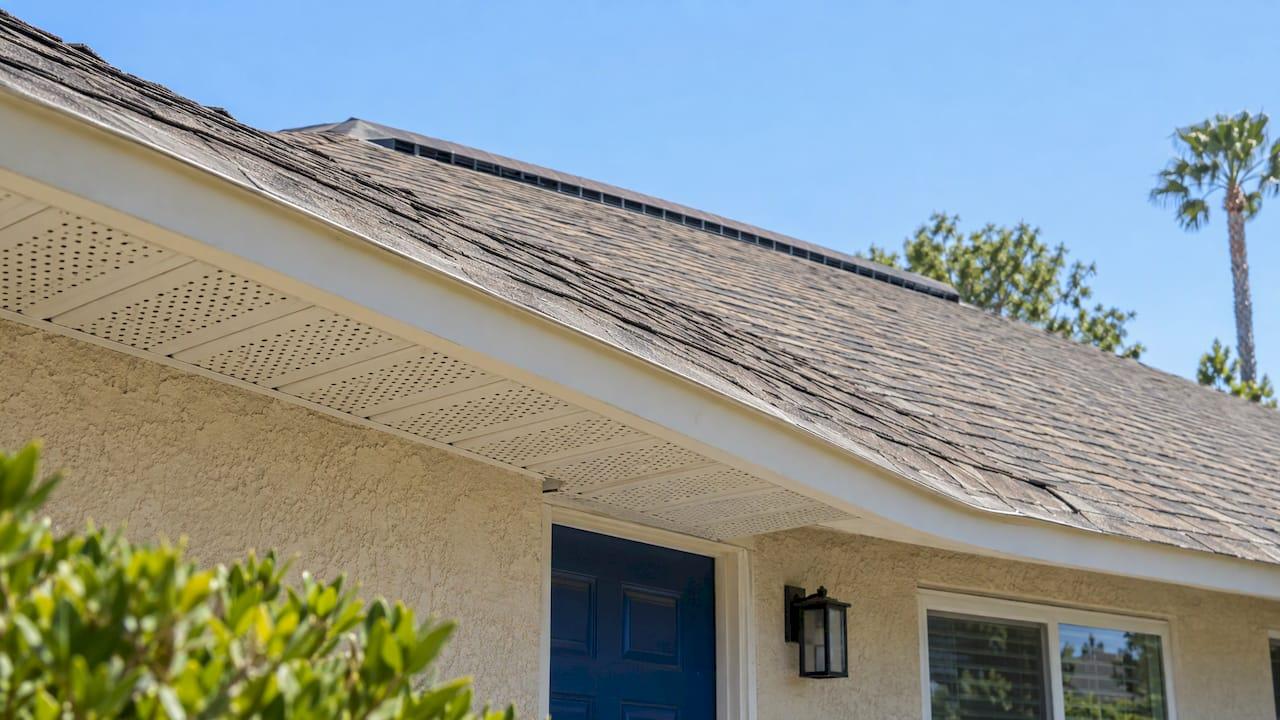
An attic vent system has two parts: intake vents low at the eaves (soffits) and exhaust vents high near the ridge. Cooler outside air enters low, warms up, rises and leaves through the top. That movement is what keeps the attic from becoming a heat trap.
According to the Home Ventilating Institute, attic ventilation evens out attic and outdoor temperatures through the year. In summer that helps cool the living area below and reduces how hard the air conditioner works. In winter it stops moist air from condensing on the underside of the roof, which causes mildew, wood rot, rusted fasteners and wet insulation that no longer insulates well.
The heat load is real. The same source notes roof shingles can reach 150°F, and hot ceiling drywall radiates that heat down into your rooms. Your AC then has to remove it.
ENERGY STAR adds that in winter, outdoor airflow keeps the attic cold, which lowers the chance of ice dams. In summer it carries super-heated air out and protects shingles. Ice dams are rare here, but the summer benefit matters across the whole Inland Empire.
How hot is too hot in your attic?
You can judge your attic with a simple number: the gap between attic and outdoor temperature.
A roofing industry test on a 98°F day found that a properly balanced system should hold the attic within 10 to 15 degrees of the outside air, with 20 degrees as the maximum. A difference above 20 degrees suggests a ventilation problem worth investigating. In the same test, balanced ventilation cut the maximum roof deck temperature from 146.5°F to 124°F and the maximum attic temperature from 123.2°F to 113.9°F.
For a 100°F day, one roofing contractor's 2026 estimates look like this:
| Attic type on a 100°F day | Typical attic temperature |
|---|---|
| Well ventilated, lighter roof | 120 to 130°F |
| Standard attic, dark shingles | 130 to 150°F |
| Poorly ventilated | 160°F or more |
That source also says attics often run 20 to 60°F hotter than the outside air, so treat these as ranges, not exact readings. Insulation, roof color and duct location all shift the numbers.
Signs your attic is working against your AC
You cannot see attic temperature from the living room, but the symptoms show up downstairs:
- Upstairs rooms stay warmer than the rest of the house, even with the AC running all afternoon.
- The system runs long cycles on hot days and your summer bills climb.
- Ceilings feel warm to the touch in the evening.
- Rooms at the far end of the duct run lag behind.
These symptoms also come from duct, sizing or return air problems, not just venting. Our guide to uneven home cooling shows a simple 3 to 4°F room-to-room test that helps separate the causes.
What California requires for attic vents
California's rules give a clear target. The 2025 California Energy Commission single-family compliance manual says that when work is done in an existing attic, ventilation must meet Section R806 of the building code. That means a minimum net free ventilating area of 1/150 of the attic area. It can be reduced to 1/300 if the openings are spread evenly, with exhaust within 3 feet of the ridgeline and intake in the bottom third of the attic. Openings should be between 1/16 and 1/4 inch in size, and baffles belong at the eaves when ceiling insulation sits next to the vents.
A plain-language version, also given by the Florida Solar Energy Center: codes generally ask for 1 square foot of free vent area per 150 square feet of ceiling, intake and exhaust should have equal open area, and a continuous baffle at the eaves keeps insulation from blocking airflow.
A worked example
Take a 1,500 square foot single-story home in Moreno Valley with a 1,500 square foot attic. At 1/150, you need 10 square feet of net free vent area, or about 5 square feet of intake low and 5 square feet of exhaust high. At the 1/300 option, with vents placed correctly, it is 5 square feet total. Vent packaging lists net free area, so you can add it up rather than guess.

The most common failure is simple: blown-in insulation pushed over the soffit vents. Intake air is then cut off, and the exhaust vents have nothing to pull from.

Do not mix exhaust types
Adding a second kind of exhaust vent, such as a turbine on a ridge-vented roof, can backfire. The same roofing article explains "short-circuiting": air flows mainly between the two vent types along the easiest path, leaving other parts of the attic poorly vented.
Attic fans: when they help and when they hurt
A fan sounds like an easy answer to a hot attic. The research is less encouraging for your cooling bill.
The U.S. Department of Energy's Building America Solution Center explains that most heat moves from roof to attic floor by radiation, not by air, so a fan has limited effect on the rooms below. Studies it cites generally show fans lower the cooling load only slightly or moderately and often cause more energy loss than they save. The main problem is pressure: a fan creates negative pressure in the attic and draws conditioned air out of the house through ceiling gaps. In summer that pulls hot, moist outside air in and raises A/C use. In winter it can pull cold air into living areas and may backdraft combustion appliances such as a gas furnace or water heater.
ENERGY STAR gives the same warning: if soffit vents are blocked and the attic is not sealed from the house, attic fans suck cool conditioned air up into the attic and raise summer utility bills.
A 1979 National Bureau of Standards study of seven test houses found average maximum attic temperatures of 96°F and concluded that a power exhauster was not required and might even increase energy use.
The practical order of operations is: clear the intake vents, check the baffles, air-seal the ceiling, and only then talk about adding exhaust. A fan on a leaky ceiling can make a hot house hotter.
When ducts and the air handler live in the attic
Many Inland Empire homes have the air handler and ductwork in the attic. That makes the attic temperature your equipment's operating environment. Cool air travelling through ducts in a 130°F attic gains heat before it reaches the room.
The Florida Solar Energy Center notes that where ductwork must be in the attic, reflective roof finishes or radiant barriers plus thorough duct sealing are recommended. For attics with ductwork and an air handler, the California compliance manual also requires air-sealing the ceiling and insulating the attic floor over conditioned space to R-49, with recessed can lights insulated over or IC-rated. Prescriptive ceiling insulation is R-49 in climate zones 1 to 4, 6 and 8 to 16.
Insulation and ventilation are partners. An attic insulation upgrade explains when and how much to add, and insulation sits on the attic floor, so keep it from covering the eave vents. For the duct side, read why ductwork matters for efficiency and comfort and our homeowner's guide to ductwork.
One more point: oversized equipment short-cycles and never evens out the house. Insulation and HVAC sizing are linked, so fix the attic before you size a new system.
Heat waves in Riverside and the Inland Empire
During a multi-day heat wave in Riverside, Corona or Hesperia, your system runs for hours with no break, and a hot attic adds to the load. Lawrence Berkeley National Laboratory's heat wave guidance says to insulate the attic first for the best return, and that venting the attic correctly is relatively inexpensive: in summer, sun-heated attic air needs a vent to escape.
Before the hot months, a short list helps:
- Look at the soffit vents from outside. Are they open, or painted or stuffed shut?
- Look in the attic from the hatch (do this early in the morning, before it heats up) for insulation piled against the eaves.
- Check that the air filter is clean and that every supply and return vent in the house is unobstructed.
- Notice whether the system struggles at the hottest hour. If it cannot keep up, call before the next heat wave, not during it.
If the system fails at night or on a holiday, our six signs of an emergency HVAC outage tell you when to call.
Santa Ana wind days
Santa Ana winds bring dry, gusty air and plenty of dust and debris to the valleys. For your HVAC, the sensible routine is plain: keep the outdoor unit clear of leaves and debris, change the filter on schedule, and avoid opening the attic access on a dusty day. Dry, windy days are also when a strained system with restricted airflow shows its weakness, so see our explainer on HVAC airflow and CFM. If you want better indoor air during dusty seasons, ventilation systems for Southern California homes are worth reading about.
Winter thermostat settings in Riverside
Inland Empire winters are mild, but cold mornings still run the heater. California's Cool California program advises turning the thermostat down 5 degrees during the day and 10 degrees before you sleep or when you are away, which can save 5 to 20% on space-heating costs.
A practical schedule:
- Home and awake: pick a comfortable setting, then drop it 5 degrees during the day when rooms are empty.
- Asleep or away: set it 10 degrees lower, with a program that warms the house before you wake.
- Heat pumps: the 2025 California Energy Code generally lets supplementary heat run only below 35°F, and applicable thermostats must show the outdoor temperature and lock out supplementary heat above 35°F. In our mild climate, that means big setbacks usually should not trigger backup heat.
A dry, clean attic also pays off in winter, because wet insulation loses effectiveness. If your heater short-cycles or struggles on a cold morning, see our heater repair page.
Our perspective on attic ventilation
Homeowners often ask us whether a bigger air conditioner will fix a hot house. In many cases the answer starts above the ceiling. Heat in the attic, ducts running through it and insulation that does not match the vents all raise the load that the equipment has to carry.
That is why we treat the attic and the HVAC system as one problem. Our technicians are licensed and insured, they work on all major brands, and they plan tailored, energy-efficient solutions with minimal disruption. When a system upgrade or a new installation is on the table, we look at the whole house, including ductwork and airflow, so the equipment you buy matches the home you have.
Our advice: get the attic in order before the first heat wave, not during it, and let your HVAC contractor judge your ducts, airflow and equipment together.
Edward
Let us look at your system
E320air serves homeowners, landlords, property managers and business owners across the Inland Empire with repairs, routine maintenance, new equipment sales, system upgrades and installations for air conditioning, heating and air quality. Service is available around the clock, including weekends and holidays, and flexible payment options including financing are available.

If your home runs hot upstairs or your bills climb every summer, start with our residential HVAC and system enhancements, or see HVAC installation if you are replacing equipment. Business owners can look at commercial HVAC and maintenance.
FAQ
How hot should an attic be on a 100 degree day?
A balanced attic should stay within roughly 10 to 20°F of the outdoor temperature, so about 110 to 120°F. Typical attics with dark shingles reach 130 to 150°F, and poorly ventilated ones can hit 160°F or more. A gap above 20 degrees is a sign to have the ventilation checked.
Do I need an attic fan if I have ridge vents?
Generally no. Ridge vents let hot air escape on their own, and adding a fan can short-circuit the airflow and pull conditioned air out of your living space. Make sure the soffit intake vents are open first.
How much attic ventilation does California require?
The code calls for 1 square foot of net free vent area per 150 square feet of attic, which can be reduced to 1/300 when vents are split between the ridge area and the lower third of the attic. The 2025 compliance manual applies this when work is done in an existing attic.
Can a hot attic damage my HVAC system?
It makes the system work harder, especially when the air handler and ducts sit in the attic. Heat gain in the ducts means longer run times, and extra heat and moisture also shorten shingle life and can cause rot in roof framing.
Sources
- Attic Ventilation, Home Ventilating Institute
- Attic Ventilation, Home Ventilating Institute (powered ventilators)
- About Attic Ventilation, ENERGY STAR
- Attic Insulation and Ventilation, FSEC
- How Hot is Too Hot in the Attic?, Roofing Contractor
- How Hot Is an Attic on a 100°F Day?, MainLine Roofing Pros
- 2025 SFCM Chapter 9, California Energy Commission
- Attic Ventilation Fans, Building America Solution Center
- Summer attic and whole-house ventilation, NIST
- Keeping Cool Efficiently During Heat Waves, Lawrence Berkeley National Laboratory
- Energy Actions, Cool California
- What's New for Single-Family Residential, California Energy Commission
- Attic Insulation Upgrade: When, What and How Much